The Challenge
Automating Complex Rotor Welding
Welding large multi-vane rotor assemblies requires precise torch positioning, consistent weld penetration, and access to challenging joint geometries. The manufacturer’s existing manual welding process was labor-intensive and difficult to standardize, creating opportunities to improve weld consistency and production efficiency.
Key challenges included:
- Complex geometries requiring multi-axis positioning for precise weld placement.
- Consistency issues due to variations in manual welding techniques.
- High labor costs and difficulty finding skilled welders.
- Integration with existing fixtures and workflow to minimize downtime.
The customer required a robotic welding solution capable of delivering repeatable, high-strength welds while improving productivity, safety, and overall process control.
The Solution
Custom Robotic MIG Welding with Servo-Driven Positioning
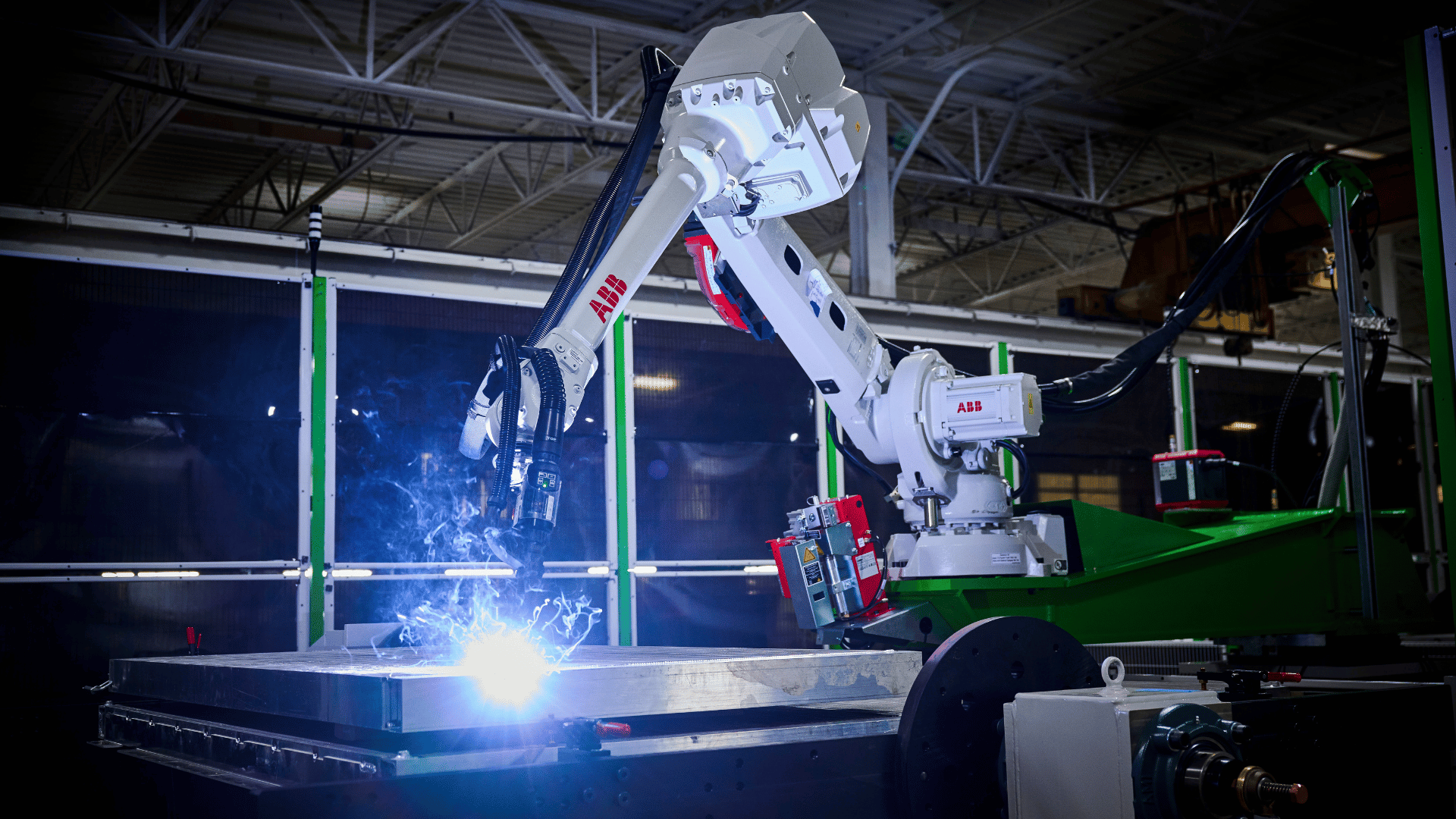
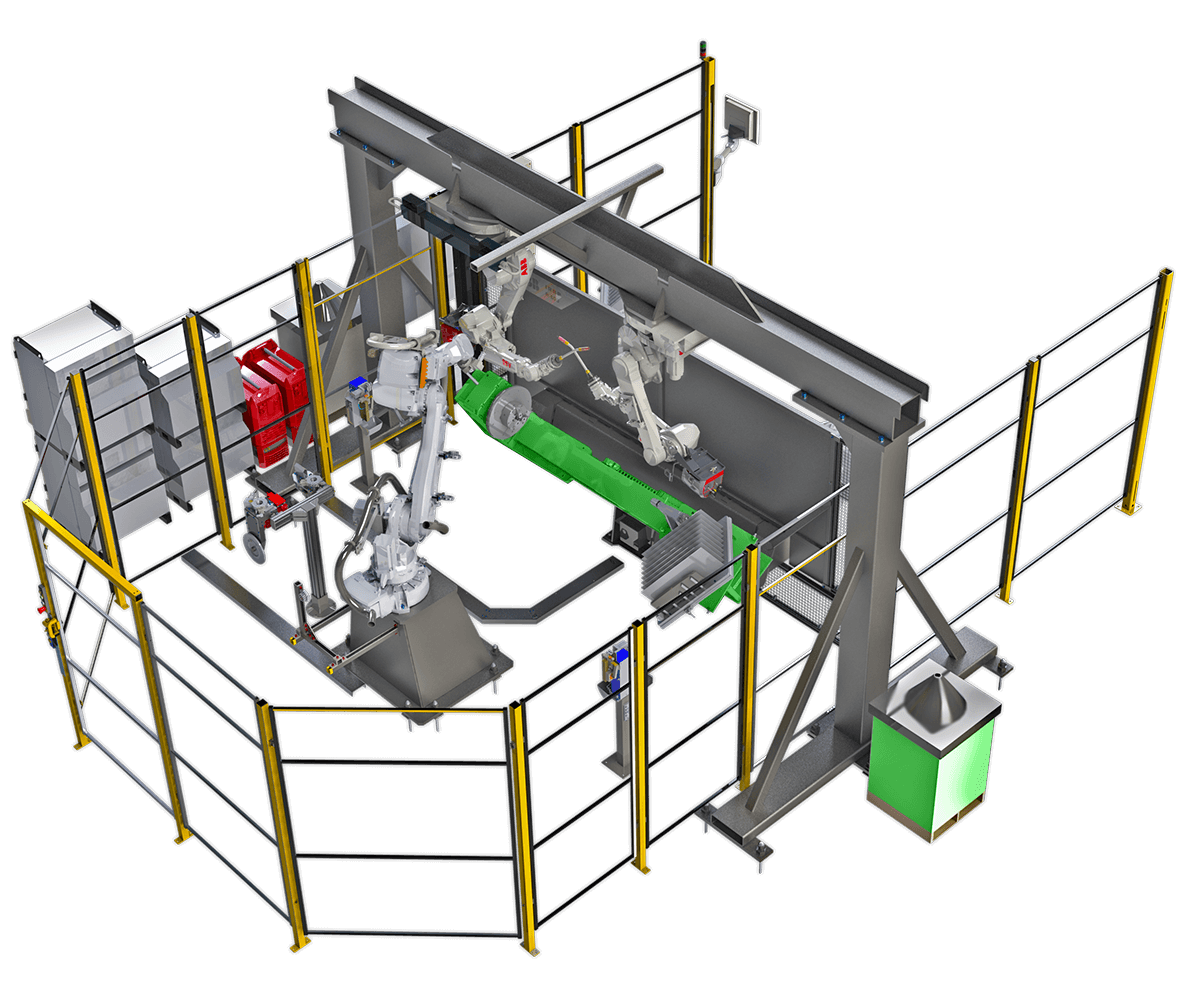
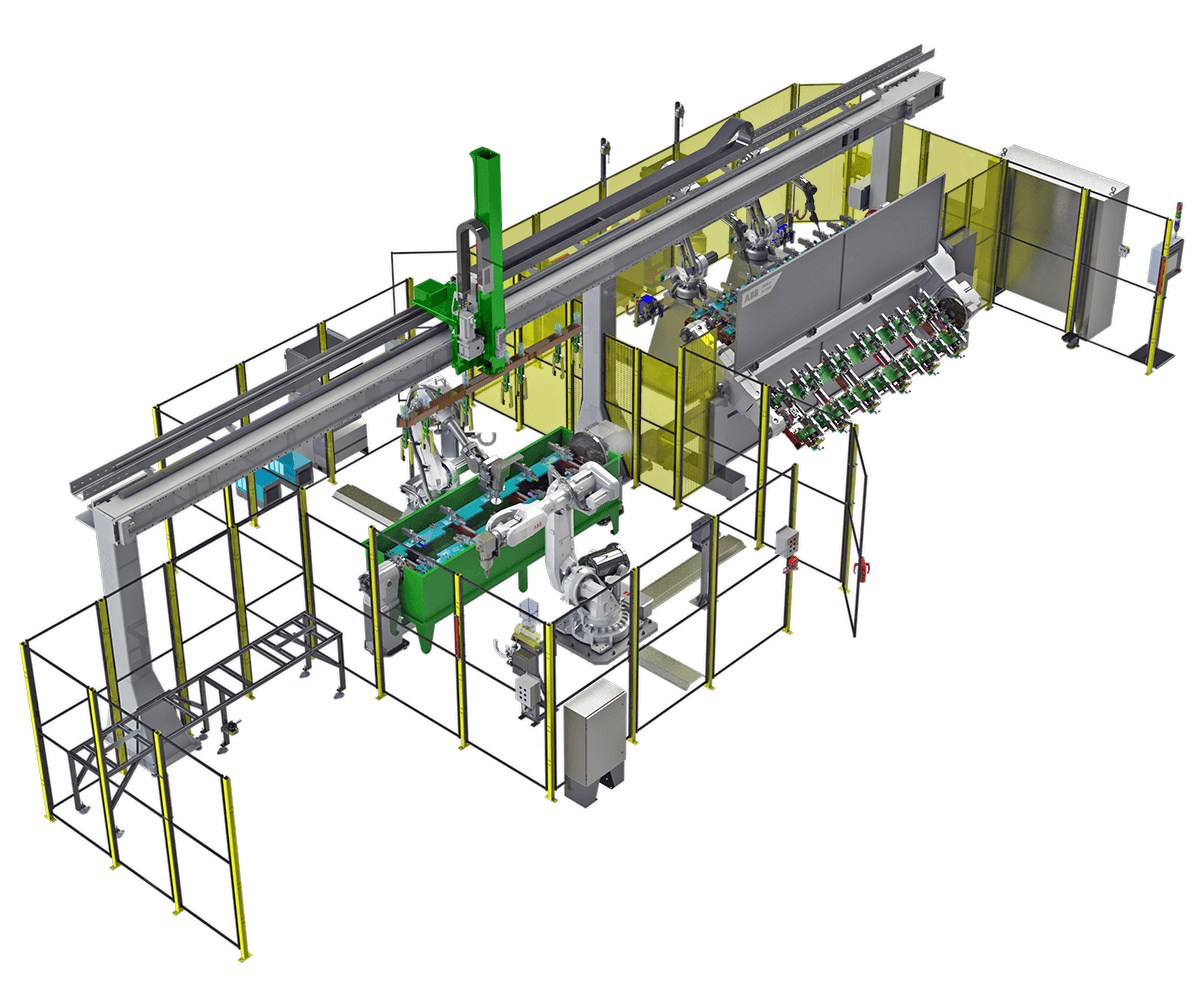
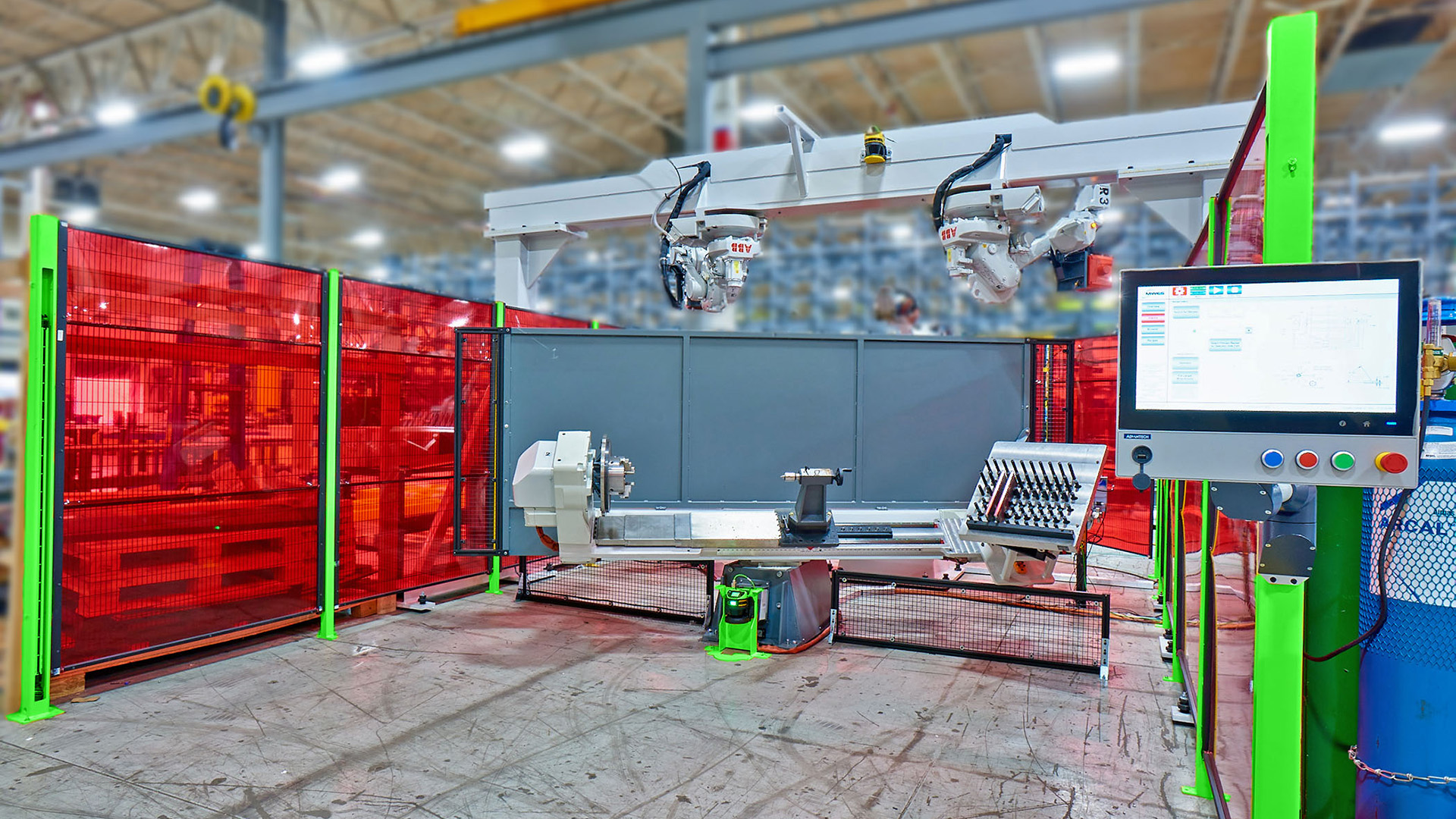
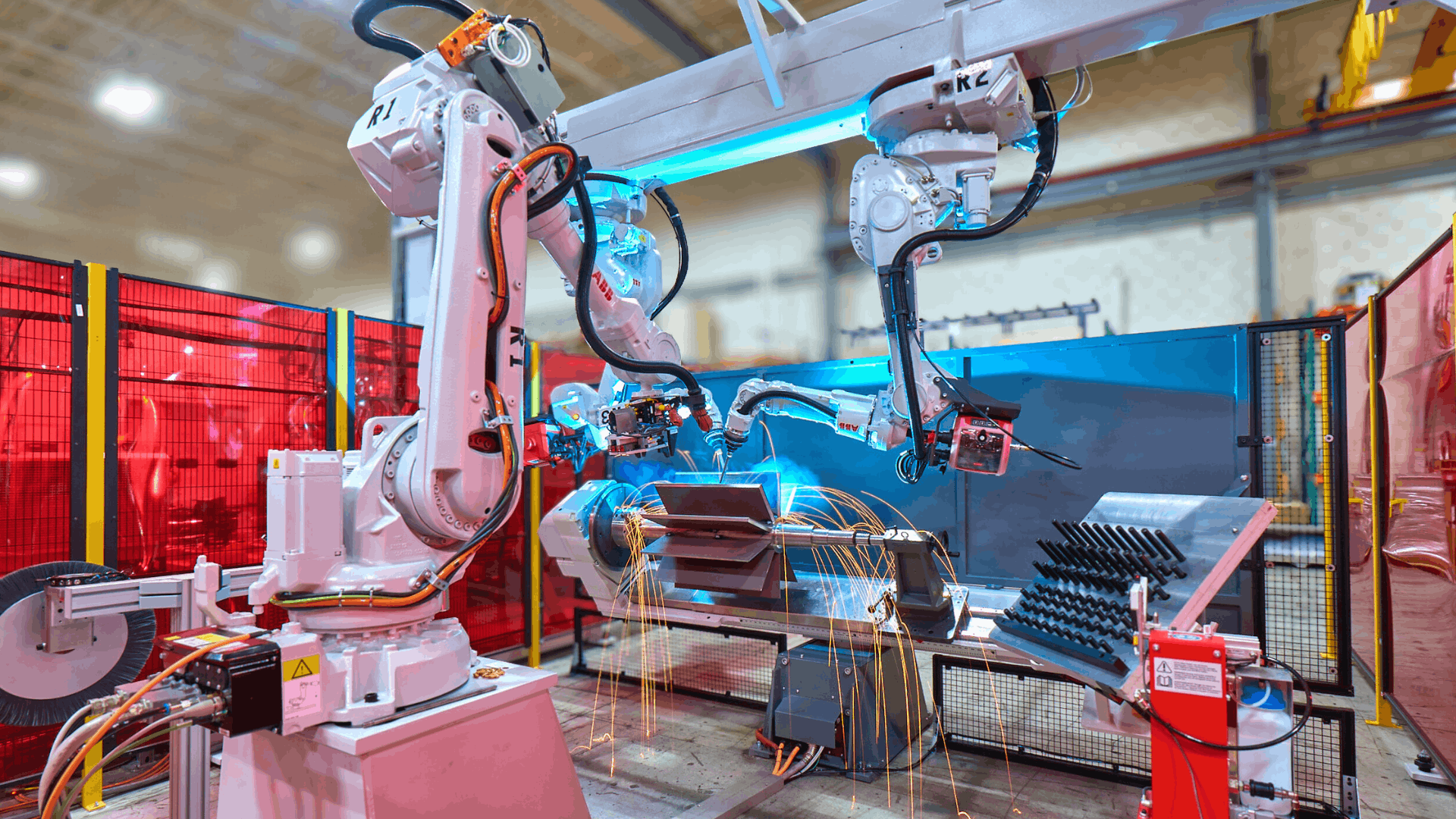
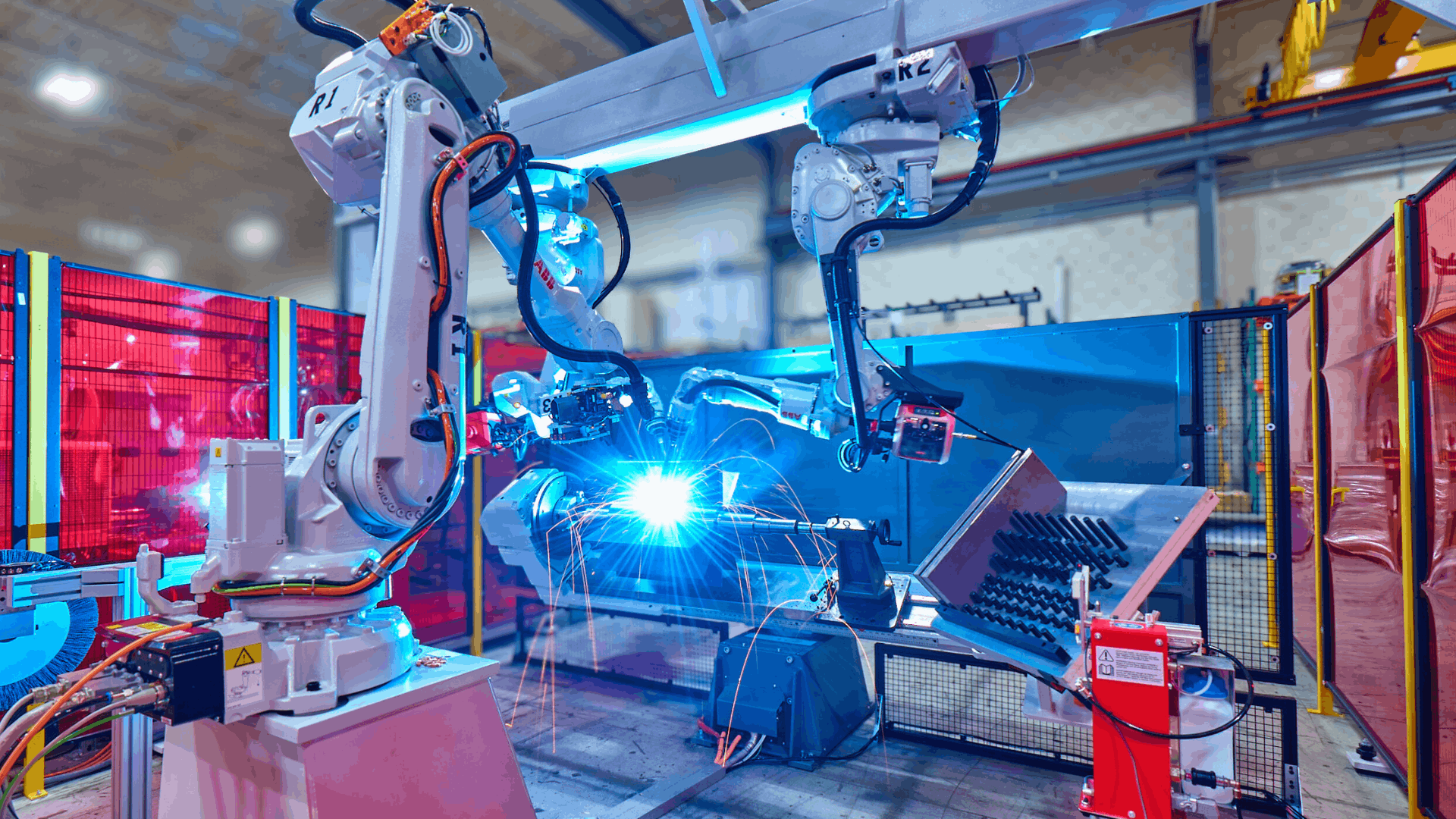
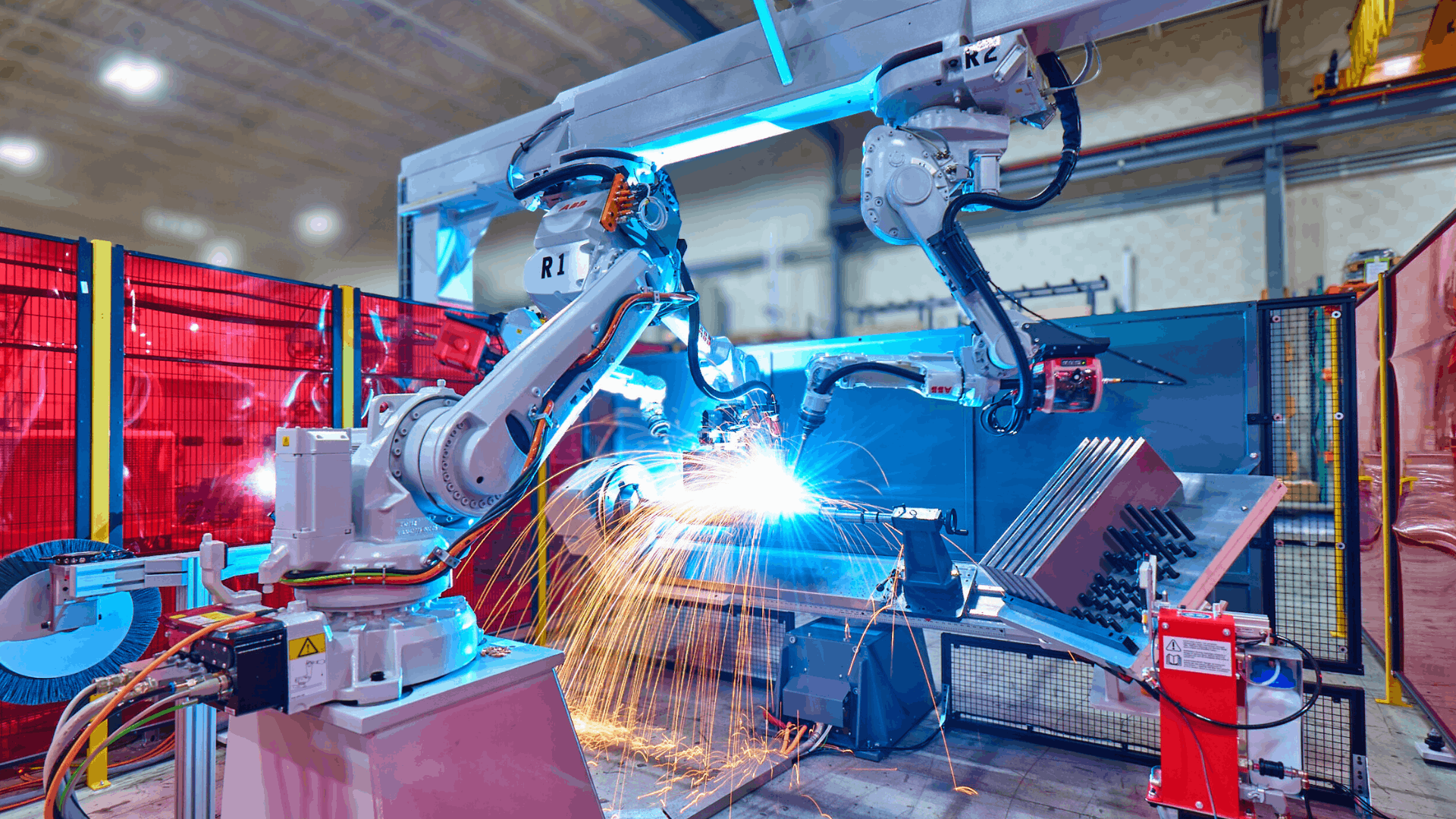
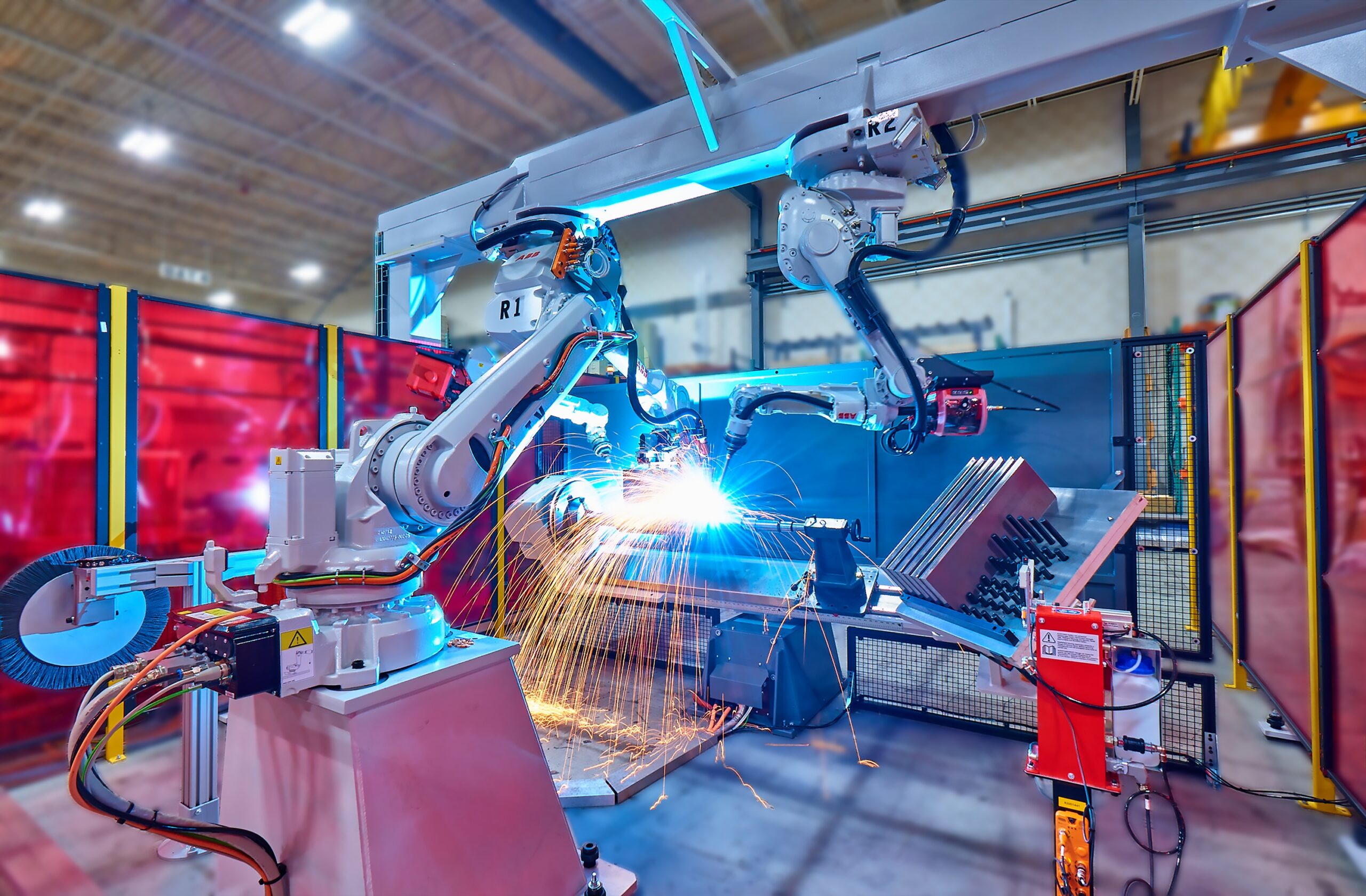
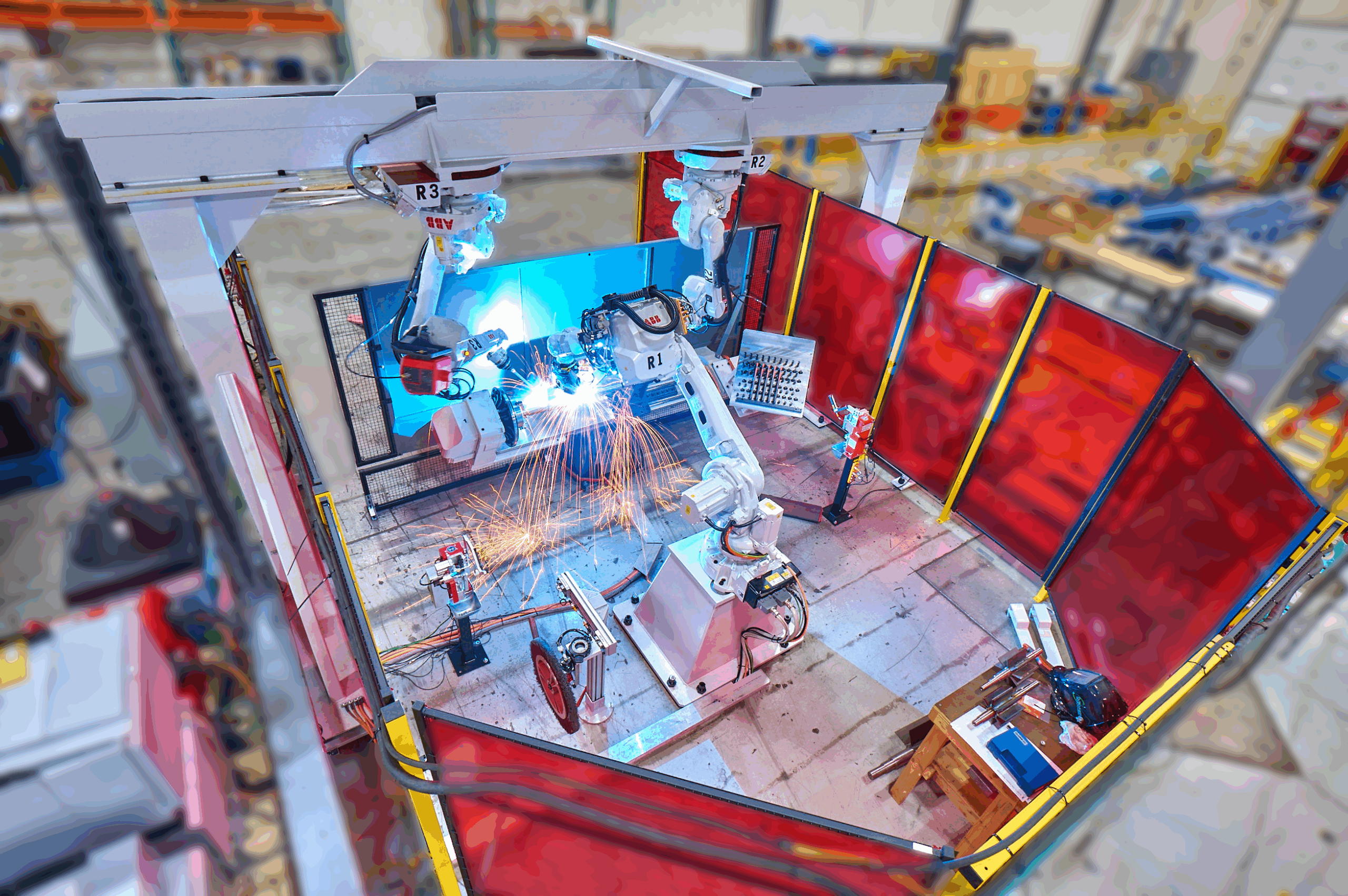
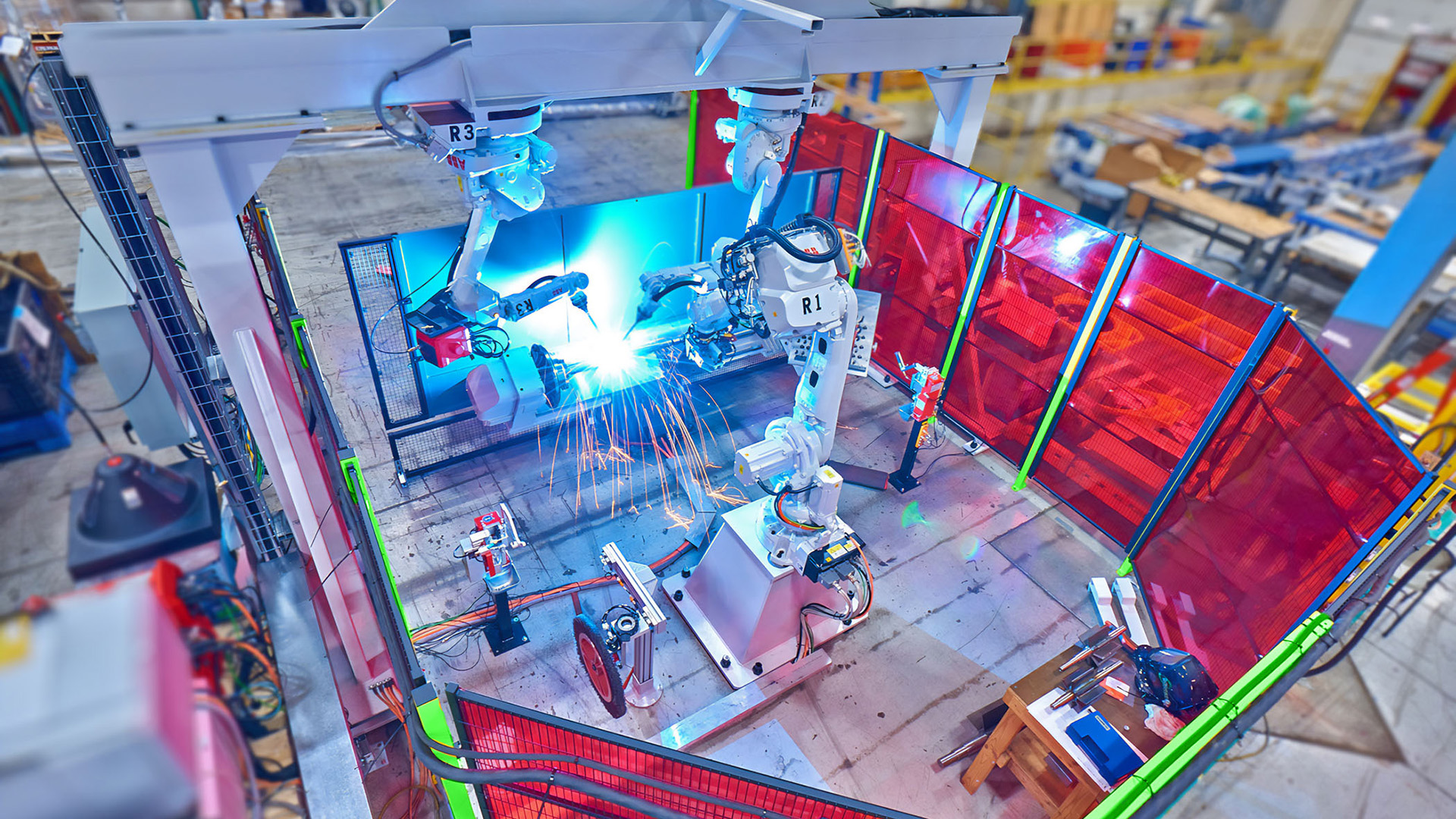
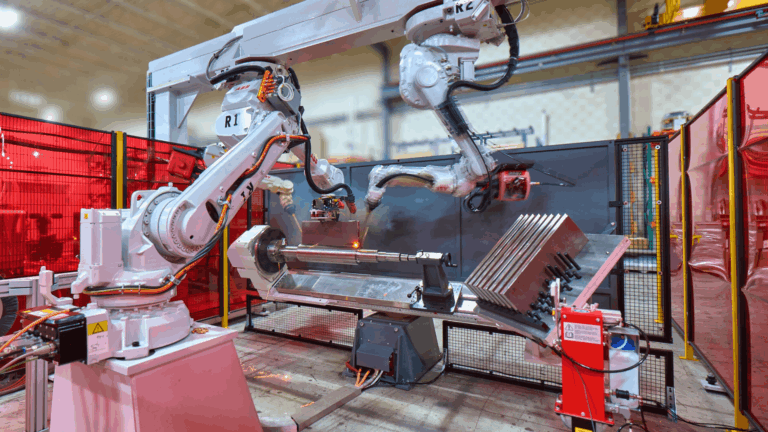
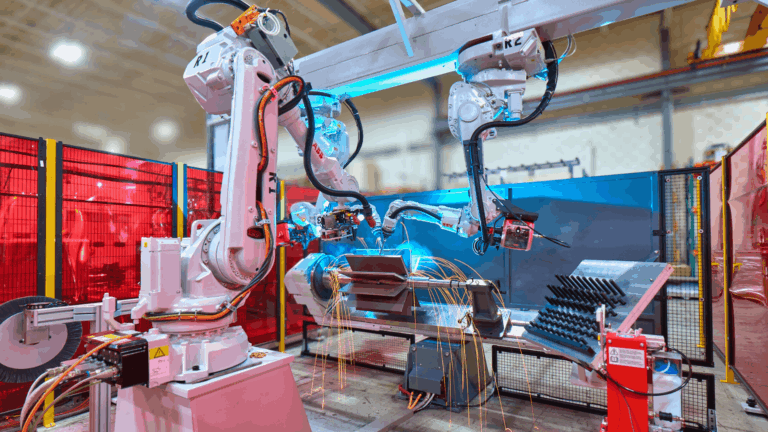
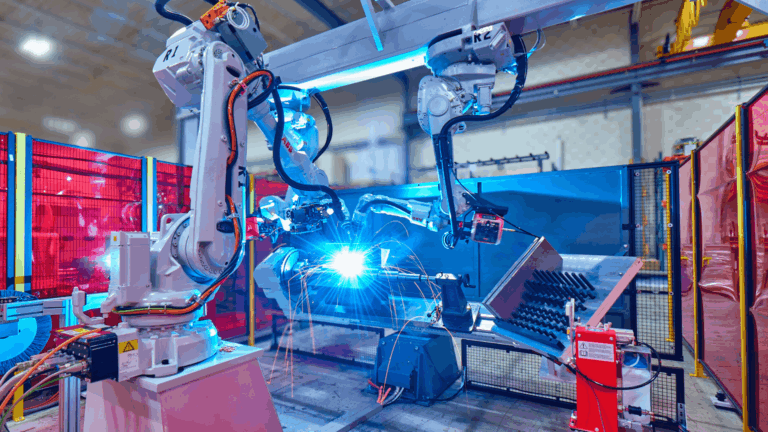
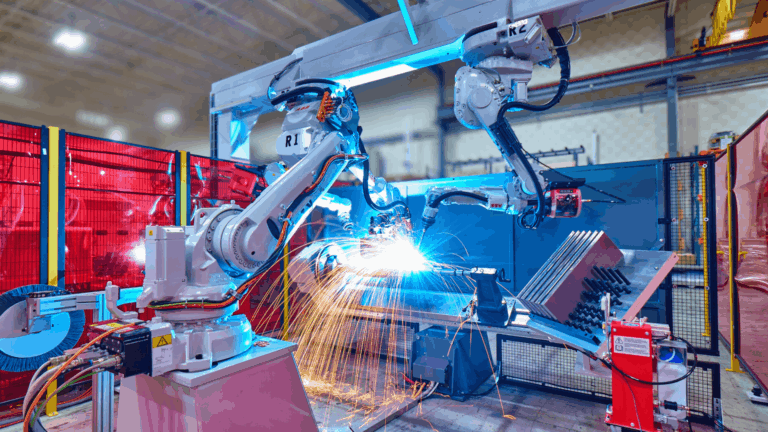
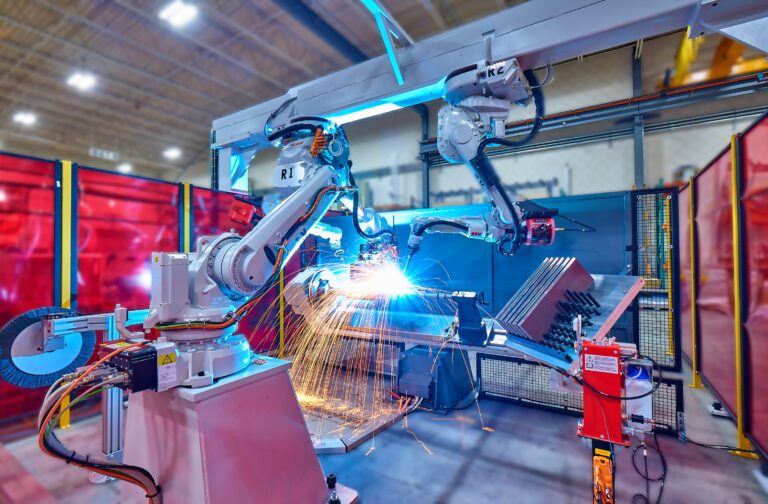
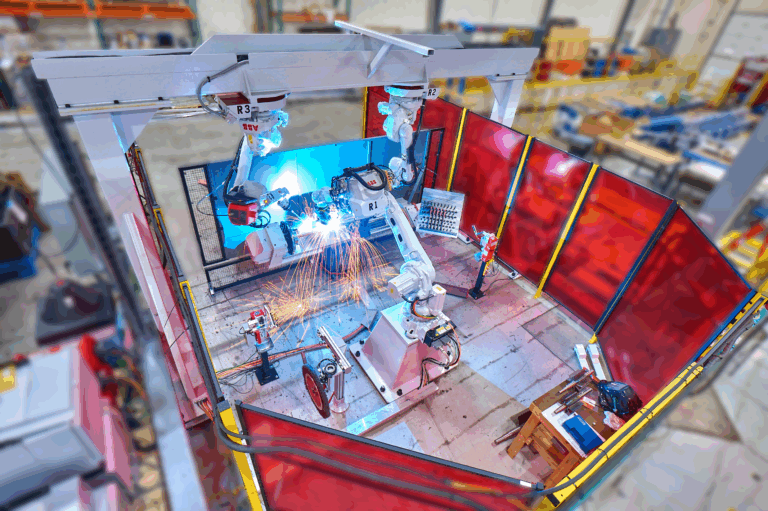
MWES engineered a custom robotic welding cell featuring an ABB IRB 800 industrial robot mounted on a servo-driven track. This extended the robot’s working envelope, allowing it to reach weld locations across the large rotor assemblies.
A dual-axis servo-driven positioner rotates and manipulates each assembly to provide optimal welding angles and access to complex joints. The system coordinates robot movement, part positioning, and MIG welding parameters throughout the automated welding sequence.
Key system features include:
- ABB Industrial Robot with Servo Track: Extended reach for welding large, complex assemblies.
- Dual-Axis Servo Positioner: Precise part manipulation for improved weld access and positioning.
- Automated MIG Welding: Repeatable welding parameters and consistent weld quality.
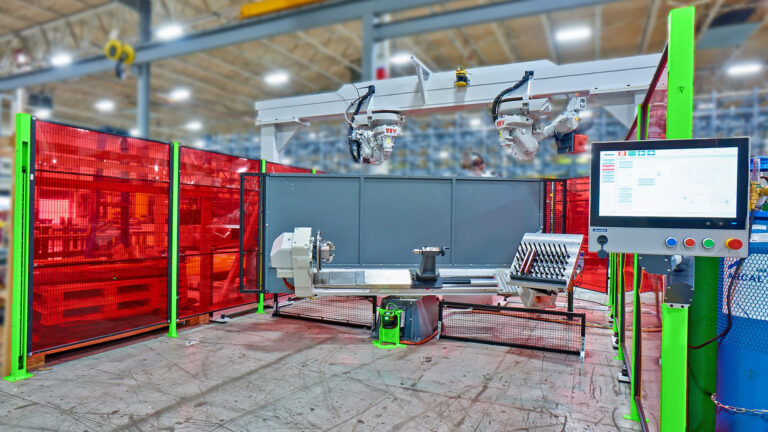
- Integrated Safety Systems: Light curtains, interlocked access points, and designated operator loading areas.
- Operator HMI: Simplified program selection, component verification, and cycle monitoring.
- Existing Equipment Integration: Designed to work with the customer’s material handling and inspection processes.
Once the assembly is loaded and verified, the system executes the programmed welding sequence, coordinating robotic motion and part positioning for consistent results.
The Results
Up to 40% More Throughput with Robotic Welding Automation
By replacing labor-intensive manual welding operations with an integrated robotic welding system, MWES helped the manufacturer improve productivity and process consistency.
The automated system delivered:
- Up to 40% increased throughput through consistent, automated welding cycles.
- Improved weld consistency with reduced scrap and rework.
- Reduced labor requirements, allowing one operator to oversee the welding process.
- Improved operator safety by reducing exposure to welding hazards.
- Improved production capacity and reduced process variability.
The result is a robotic welding solution engineered to handle demanding rotor geometries while improving productivity, repeatability, and long-term manufacturing efficiency.
Automate Your Complex Welding Applications
From large industrial weldments to intricate multi-axis assemblies, MWES designs custom robotic welding systems that address challenging part geometries, labor constraints, and production requirements.
Contact MWES to discuss your robotic welding automation project.