The Challenge
Automating Multiple Welding Operations on Large Pressure Vessels
Pressure vessel fabrication requires precise positioning and welding of flanged couplings, fittings, and circumferential seams. The size and cylindrical geometry of these assemblies create challenges related to weld accessibility, part handling, and consistent positioning.
The manufacturer needed a flexible automation solution capable of handling pressure vessels ranging from 24 to 36 inches in diameter and up to 10.5 feet in length.
The application also required coordination between fitting placement and welding operations, with the ability to accommodate different vessel configurations without extensive manual repositioning.
MWES needed to develop an integrated system combining robotic material handling, multi-axis motion, heavy-duty part positioning, and automated welding within a dual-station configuration.
The Solution
Two Robots, Two Stations, Multiple Welding Processes
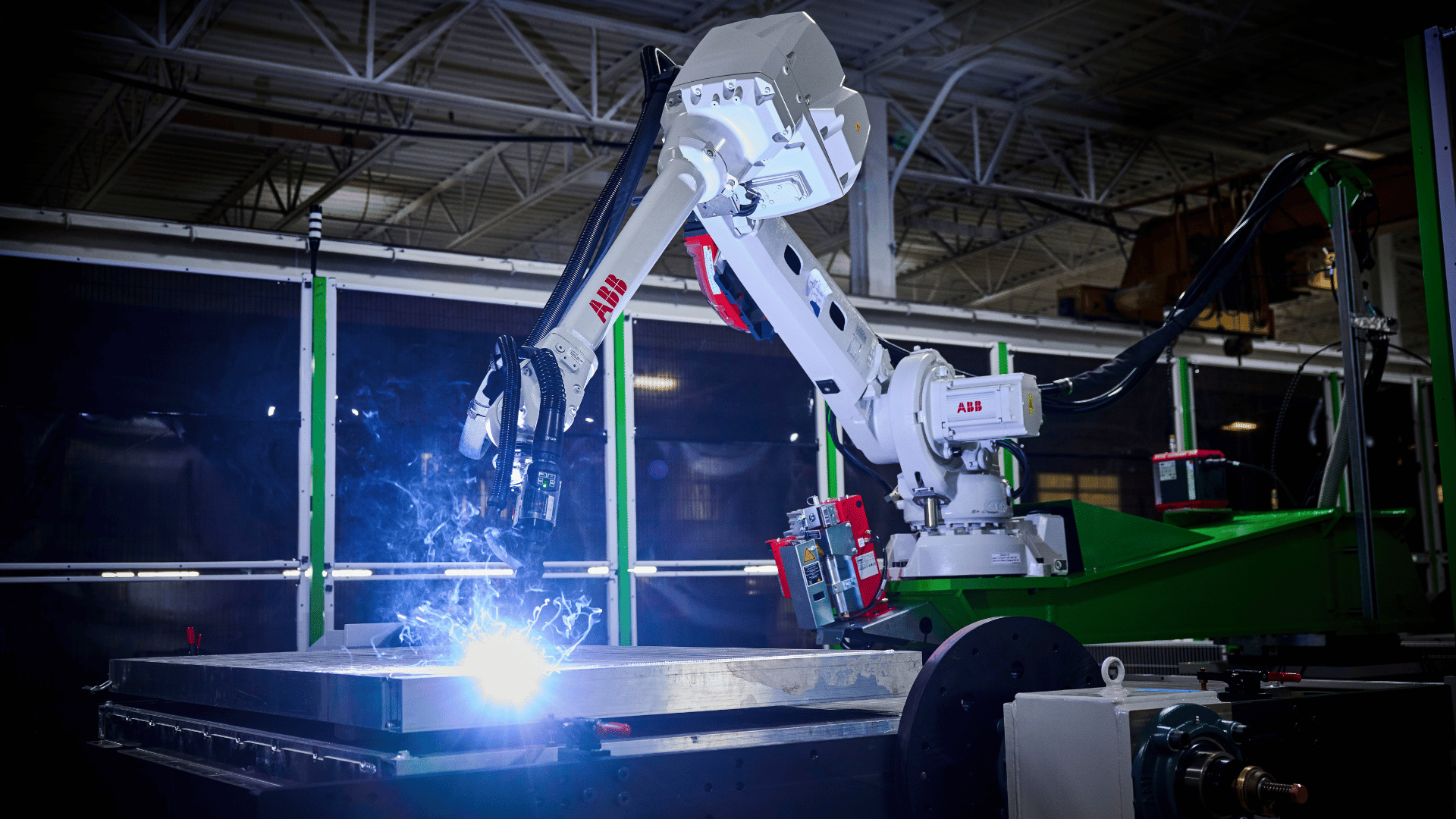
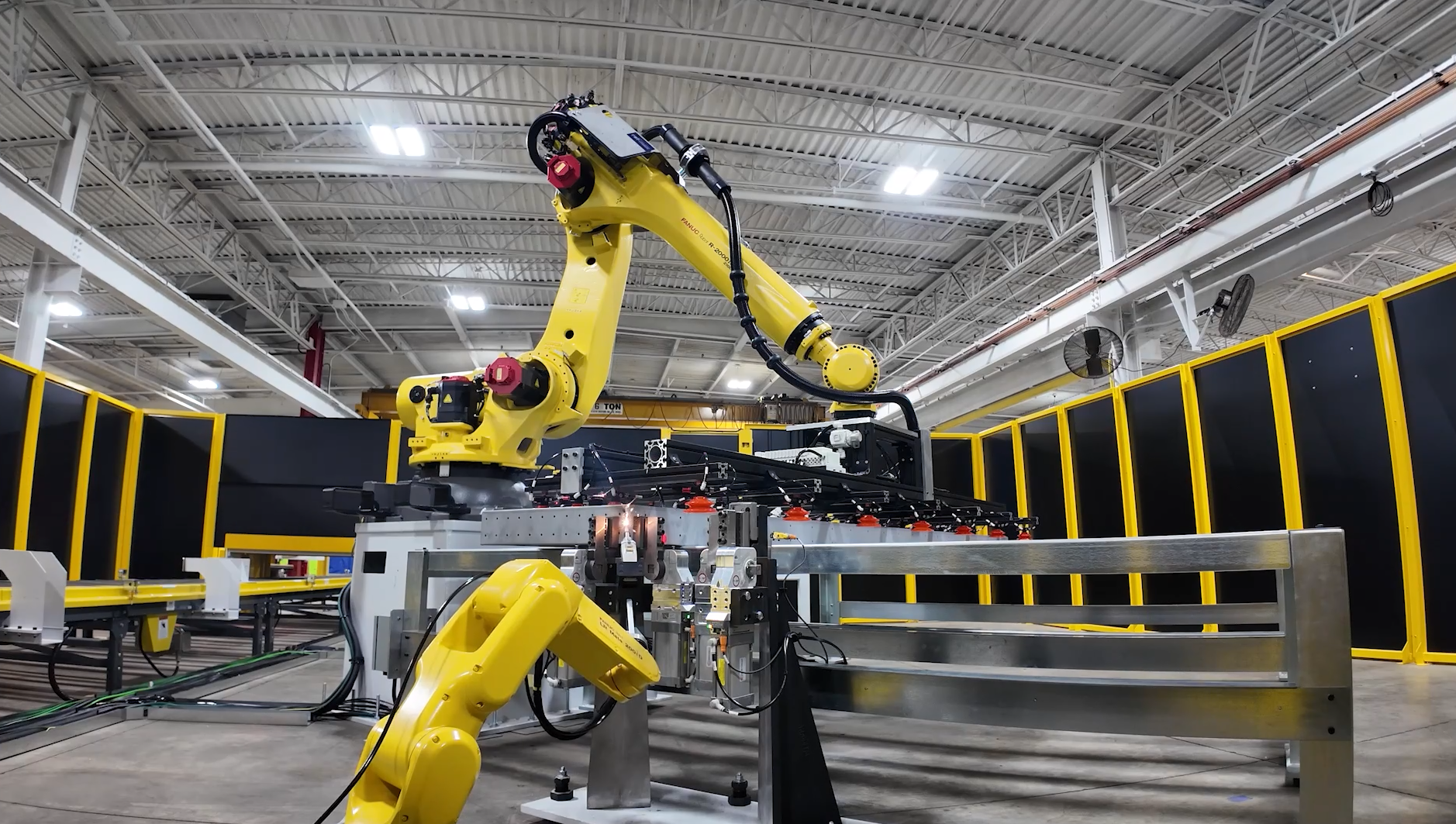
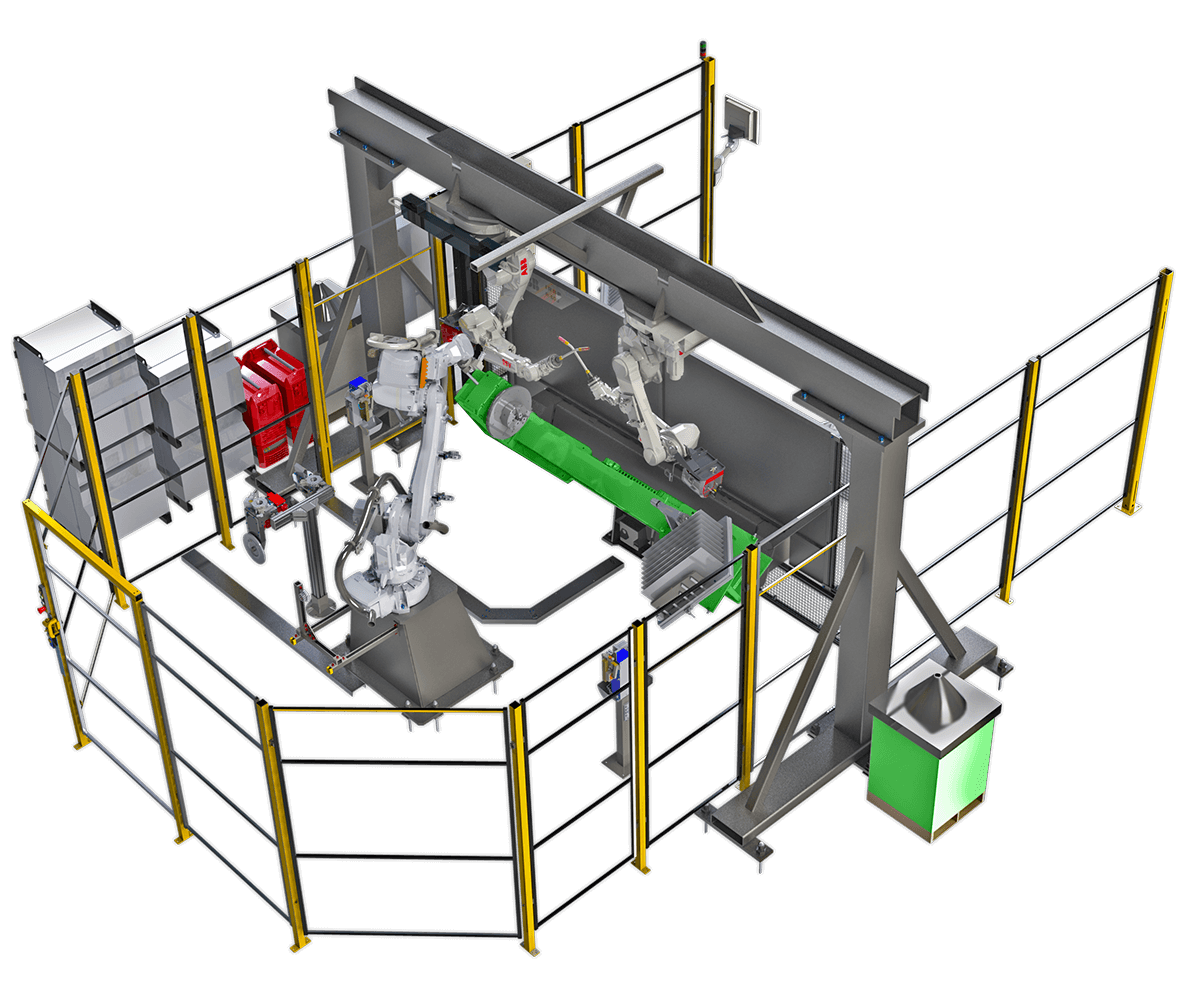
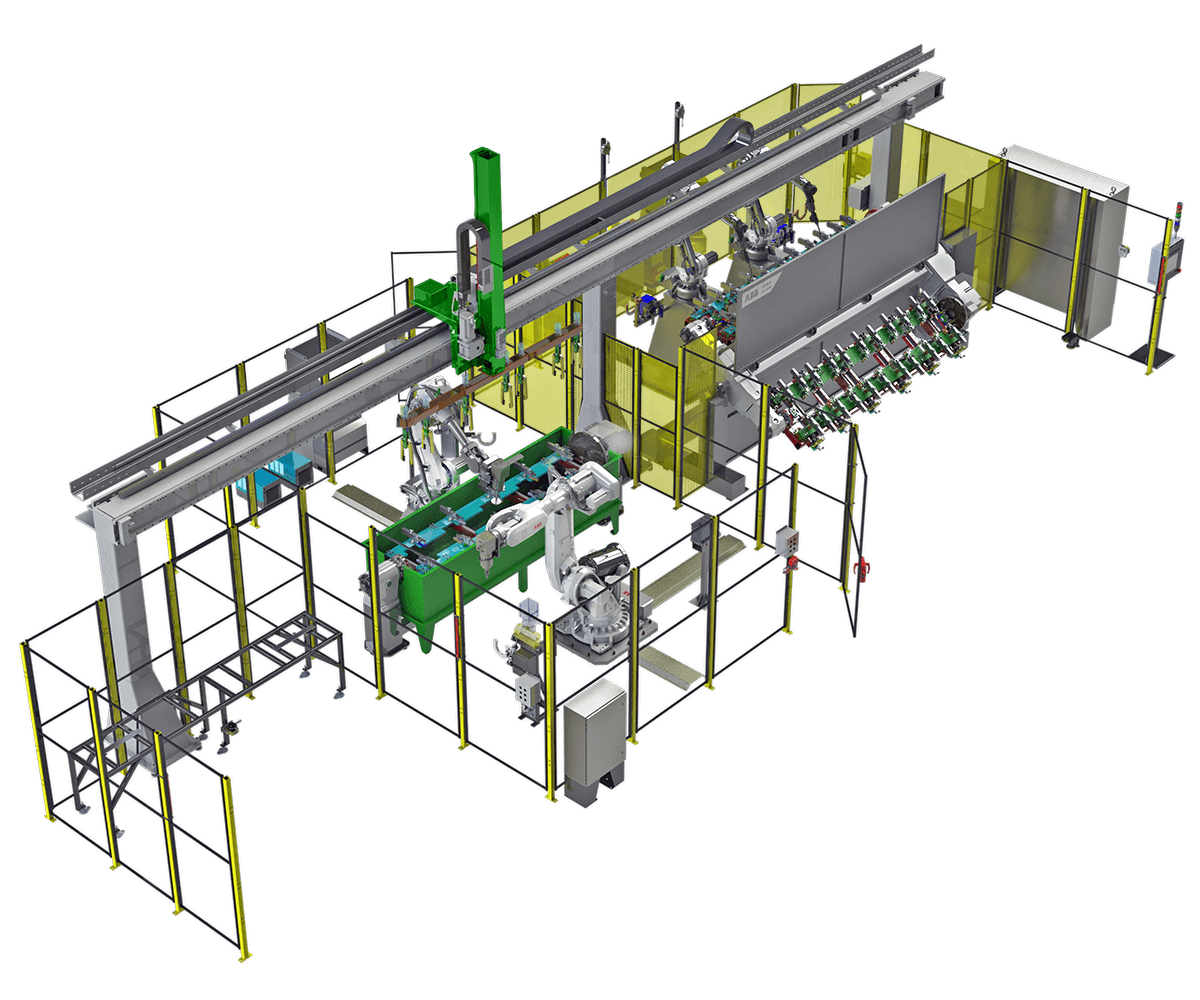
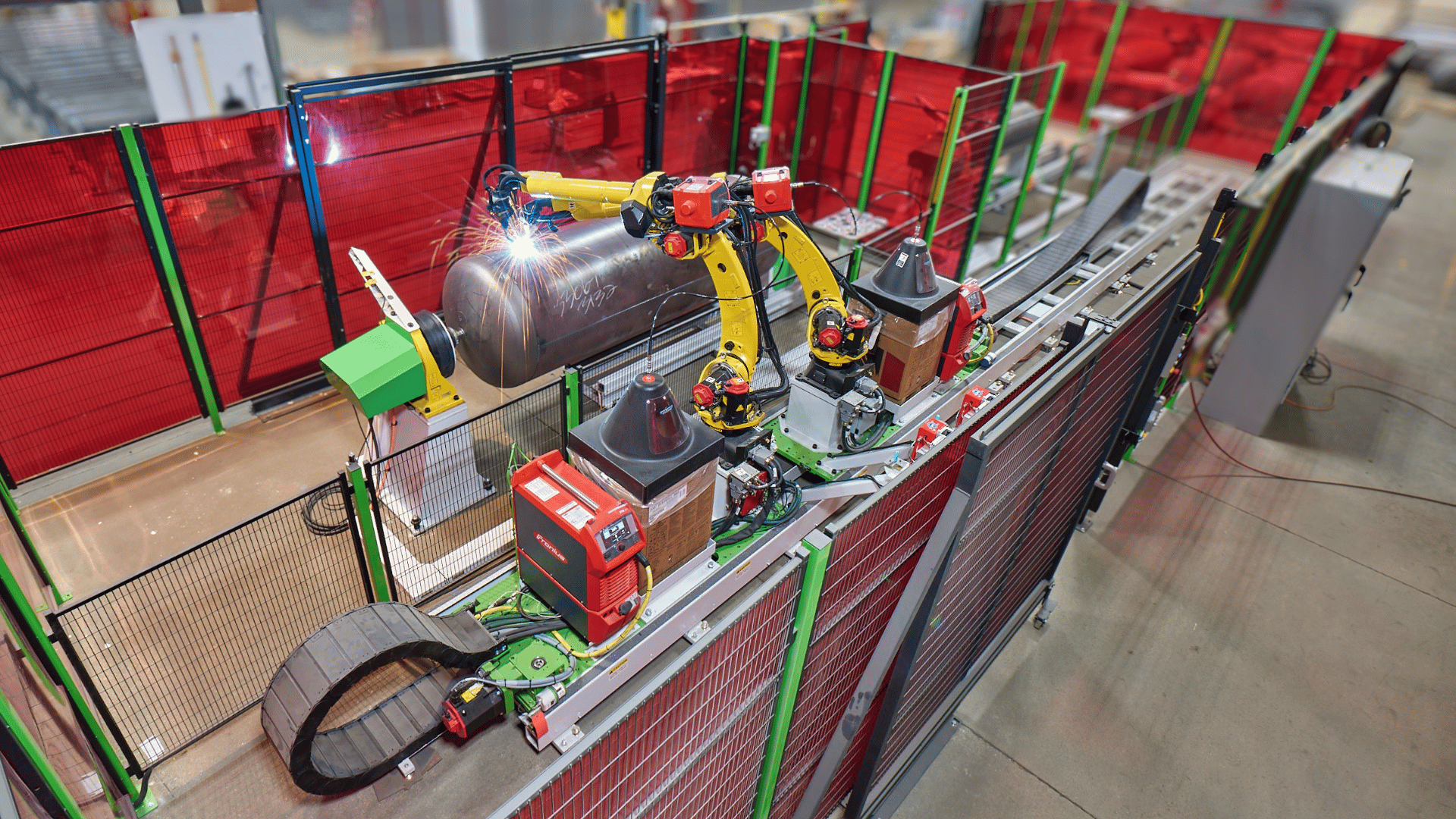
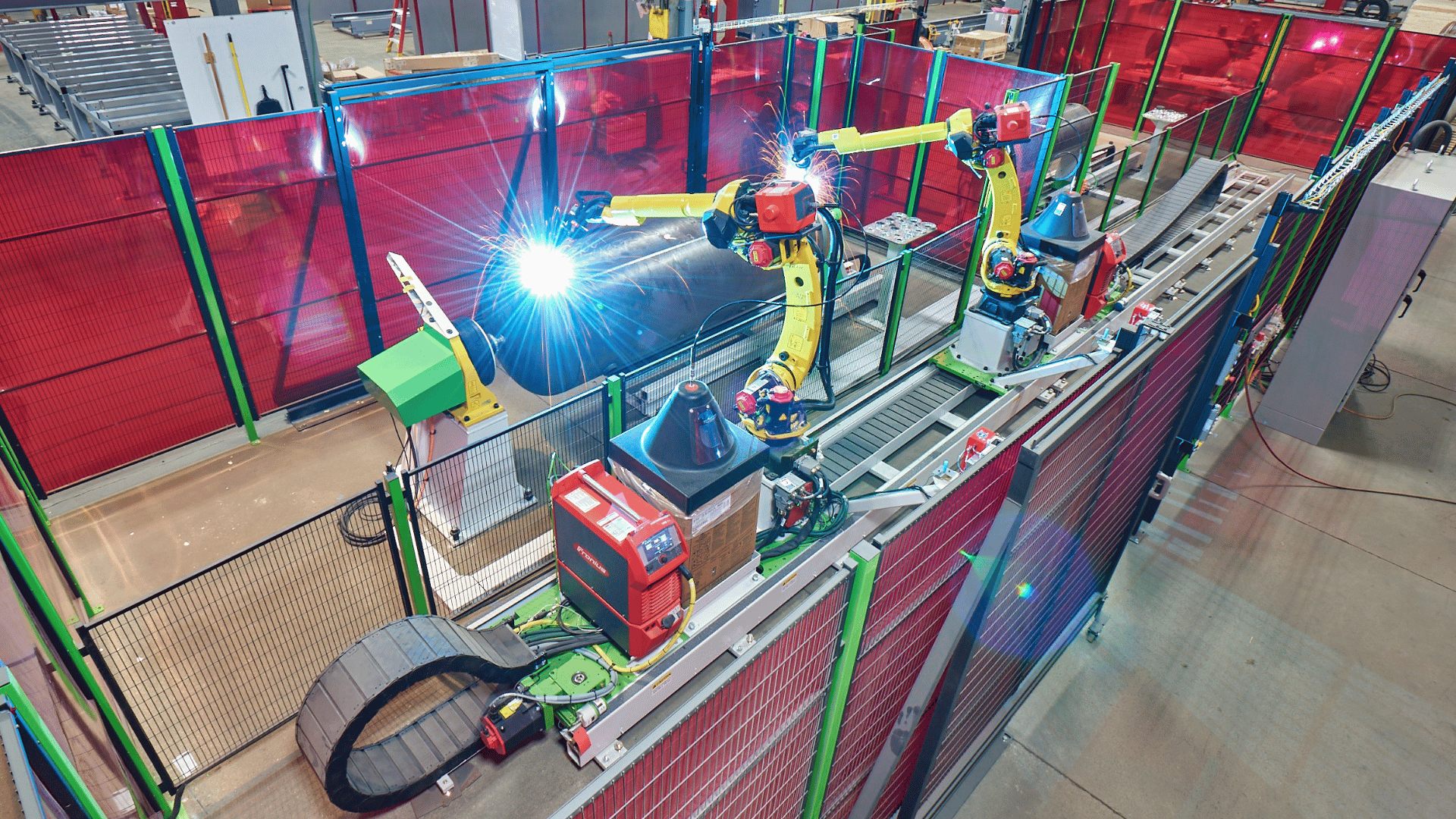
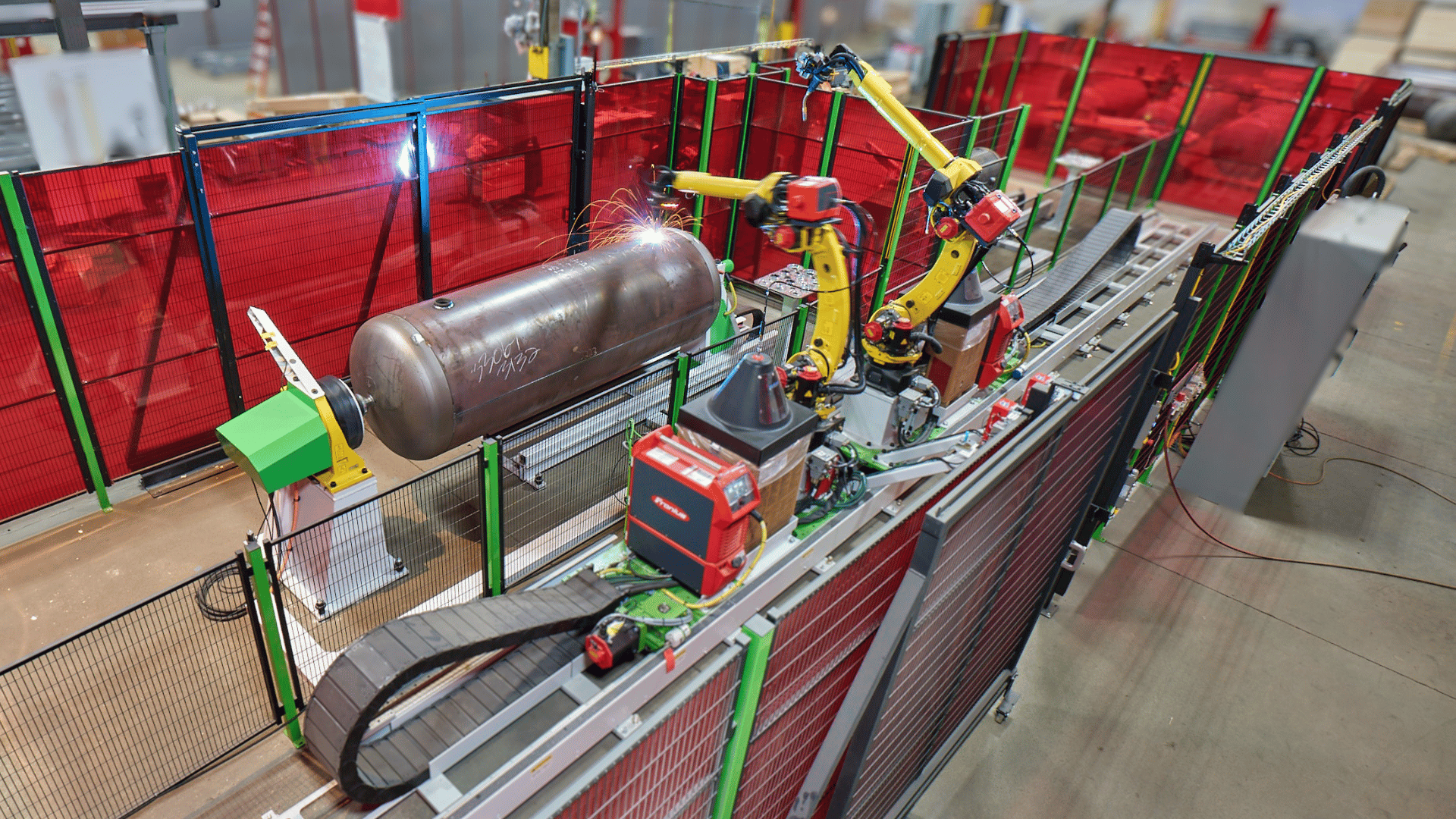
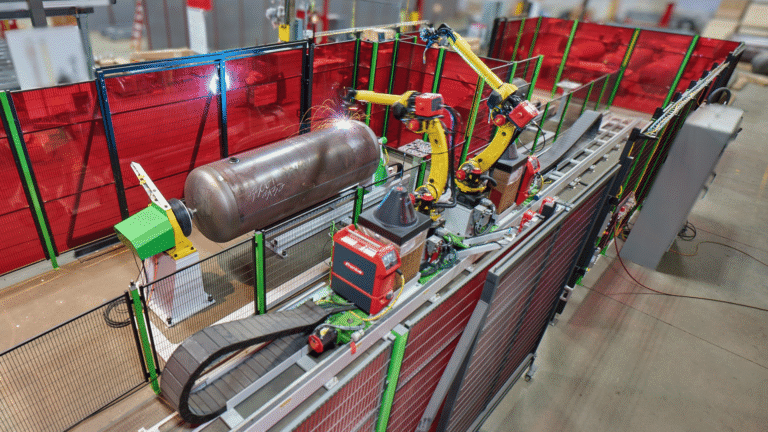
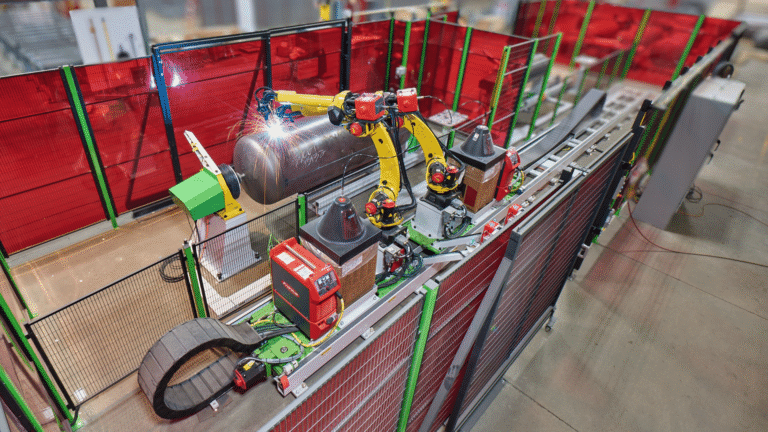
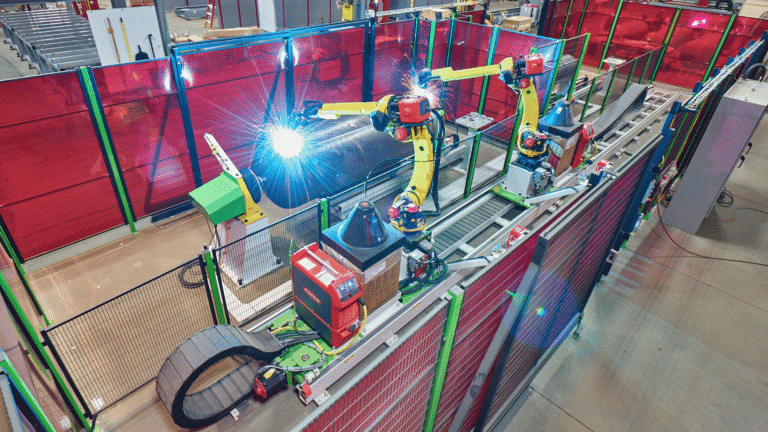
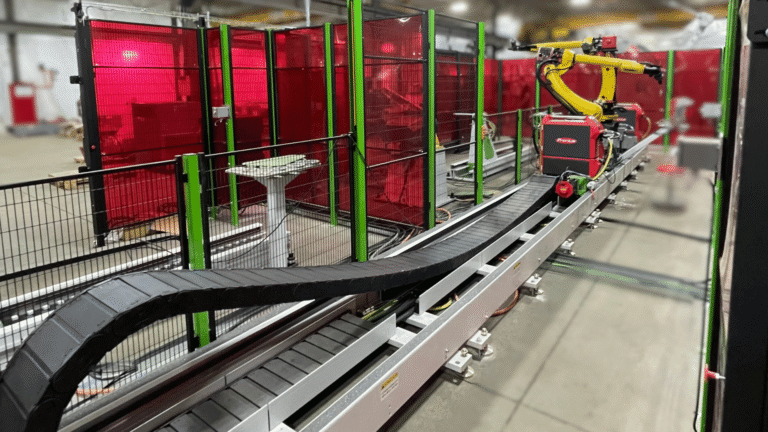
MWES designed a dual-station robotic welding cell featuring two FANUC ARC Mate 120iD/12L industrial robots mounted on a shared 8-meter servo-driven travel track.
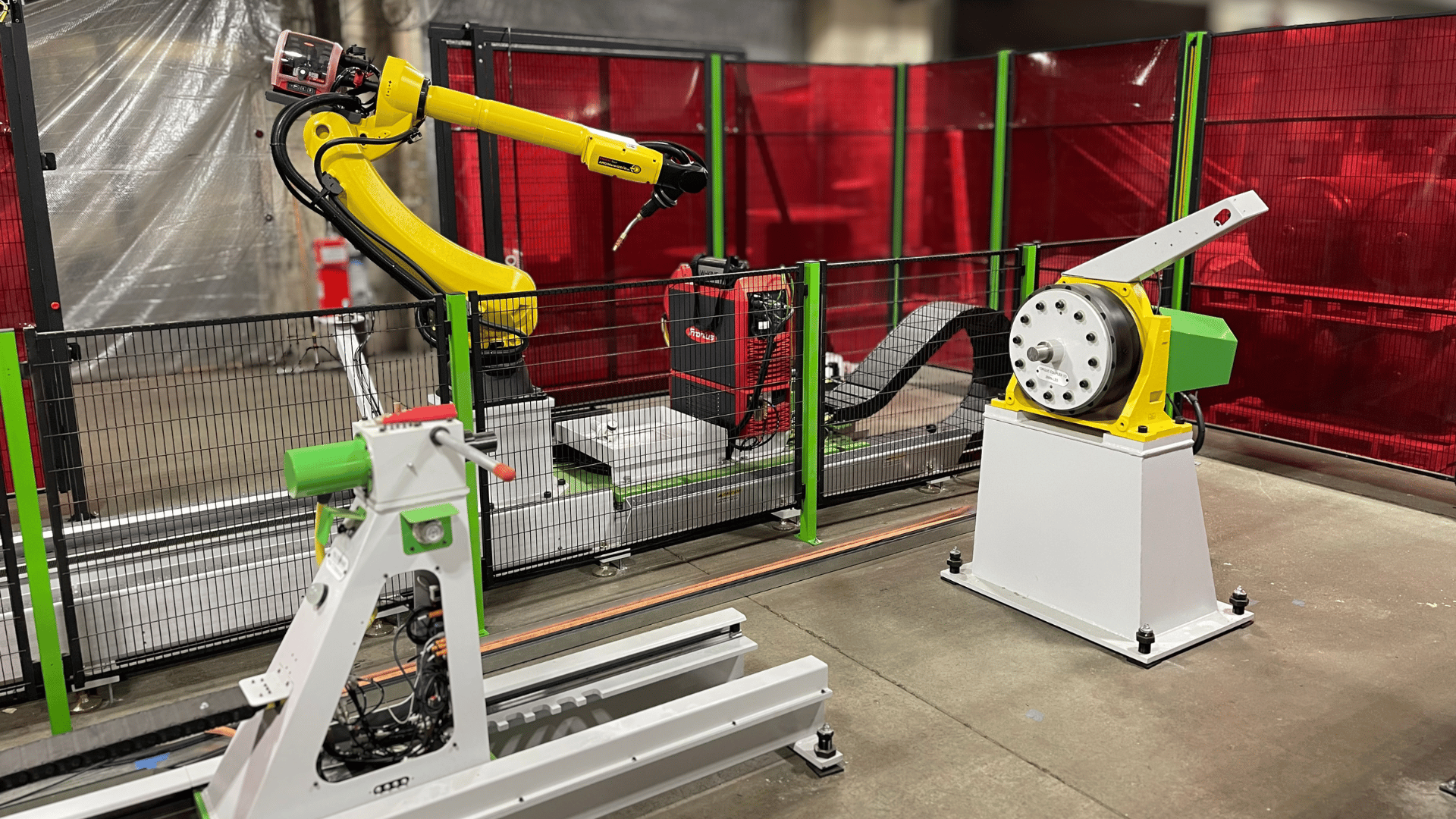
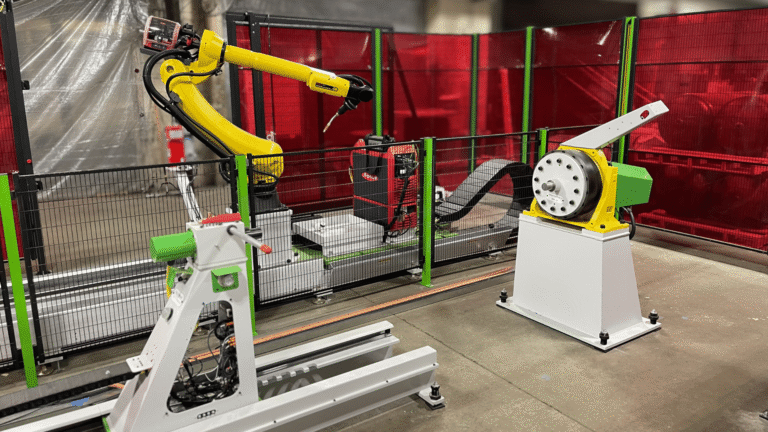
Each station incorporates a 1,500 kg servo-driven headstock positioner and adjustable tailstock to support and rotate pressure vessels throughout the welding process.
One robot features a combination pneumatic gripper and welding torch, allowing it to pick and position flanged couplings before transitioning to welding operations. The second robot performs tack welding to secure the fittings before completing the required welds.
Once the fittings are welded, both robots perform circumferential seam welding using coordinated robot and positioner motion.
Dual FANUC Robots with Extended Travel
The system incorporates two FANUC ARC Mate 120iD/12L industrial robots equipped for robotic welding.
Both robots are mounted on individual carriages along an 8-meter servo-driven robot travel unit (RTU), extending their working envelopes and providing access to welding locations across the pressure vessels.
The travel track is integrated with the robot controller, allowing coordinated movement between the robots, linear travel axes, and servo-driven positioners.
This configuration enables the robots to perform multiple operations across two welding stations without requiring operators to manually reposition the vessels during welding.
Automated Flange & Fitting Placement
One robot incorporates custom end-of-arm tooling that combines a pneumatic gripper with a welding torch.
The robot picks flanged couplings and fittings from dedicated part trays and positions them at designated locations on the vessel.
While the handling robot holds the fitting in place, the second robot performs tack welding to secure it. Once positioned and tacked, the welding process continues to complete the required attachment welds.
This integrated approach combines material handling and welding operations within the same robotic system.
Dual-Station Welding Configuration
The system features two separate welding stations, each equipped with a servo-driven headstock positioner and adjustable tailstock.
Operators use overhead lifting equipment to load pressure vessels into the positioners before securing them for automated welding.
The dual-station configuration provides flexibility to process different vessel sizes and configurations while allowing the robotic system to service both work areas.
Dedicated positioning equipment at each station supports consistent part orientation and coordinated welding operations.
Heavy-Duty Servo-Controlled Weld Positioners
Each welding station incorporates a 1,500 kg-capacity servo-driven headstock positioner with an adjustable tailstock.
The positioners securely support and rotate pressure vessels to present the required weld locations to the robots.
During circumferential seam welding, the positioners coordinate vessel rotation with robotic motion, allowing the welding torches to follow the girth seams around the cylindrical assemblies.
Custom tooling accommodates different vessel configurations and mounting requirements.
Integrated Fronius Welding Technology
The system incorporates two Lincoln Electric Power Wave R450 welding power sources with AutoDrive wire feeders and water-cooled welding torches.
Integrated touch sensing and through-arc seam tracking support weld joint location and robotic path adjustments.
Additional features include automated torch cleaning, wire cutting, and anti-spatter application to support consistent robotic welding operations.
Custom Controls & Safety Integration
MWES integrated the robots, travel track, weld positioners, welding equipment, and operator controls into one coordinated automation system.
The cell includes perimeter guarding, arc-flash curtains, interlocked access gates, emergency stops, and operator control stations.
Custom robotic programming coordinates fitting placement, tack welding, circumferential welding, and movement between the two stations.
The Results
Integrated Material Handling & Welding for Complex Pressure Vessel Fabrication
The custom system brings robotic material handling, automated fitting placement, and multiple welding operations into one integrated manufacturing solution.
Key system capabilities include:
- Dual-robot welding: Two FANUC ARC Mate robots coordinate material handling, fitting placement, and welding operations.
- Automated fitting placement: Custom gripper and welding torch tooling enables robotic pickup, positioning, and tack welding of flanged couplings.
- Extended robotic reach: An 8-meter servo-driven travel track provides access to multiple welding locations across two stations.
- Heavy-duty part positioning: Two 1,500 kg servo-controlled positioners support and rotate large pressure vessel assemblies.
- Automated circumferential welding: Coordinated robot and positioner motion enables welding of vessel girth seams.
- Flexible part configurations: Programmable automation accommodates pressure vessels of different diameters, lengths, and fitting arrangements.
- Integrated welding technology: Lincoln Electric welding equipment, seam tracking, and automated torch maintenance support repeatable welding operations.
By combining robotic material handling with coordinated multi-axis welding, MWES developed a custom welding automation solution designed around the challenges of large cylindrical fabrications.
Explore Custom Robotic Welding Solutions
From automated fitting placement to complex multi-robot welding systems, Midwest Engineered Systems designs and integrates welding automation tailored to each manufacturer’s parts, processes, and production requirements.