

The Challenge
Transforming a Manual Assembly Process into an Automated Production Cell
Building truck body wall assemblies required multiple manual operations across several workstations. Material preparation, adhesive application, positioning, fastening, and sealing all depended on manual labor, making process consistency and throughput difficult to improve.
The customer needed an automated solution capable of:
- Preparing steel stakes and aluminum skins for assembly
- Applying plasma treatment and adhesive tape prior to bonding
- Automatically loading and positioning multiple components
- Drilling and riveting with repeatable accuracy
- Applying sealant consistently across every assembly
- Supporting multiple wall sizes and configurations within the same system
The solution also needed to accommodate both truck body sidewalls and front walls while maintaining precise alignment throughout the assembly process.
The Solution
A Fully Integrated Robotic Wall Assembly Cell
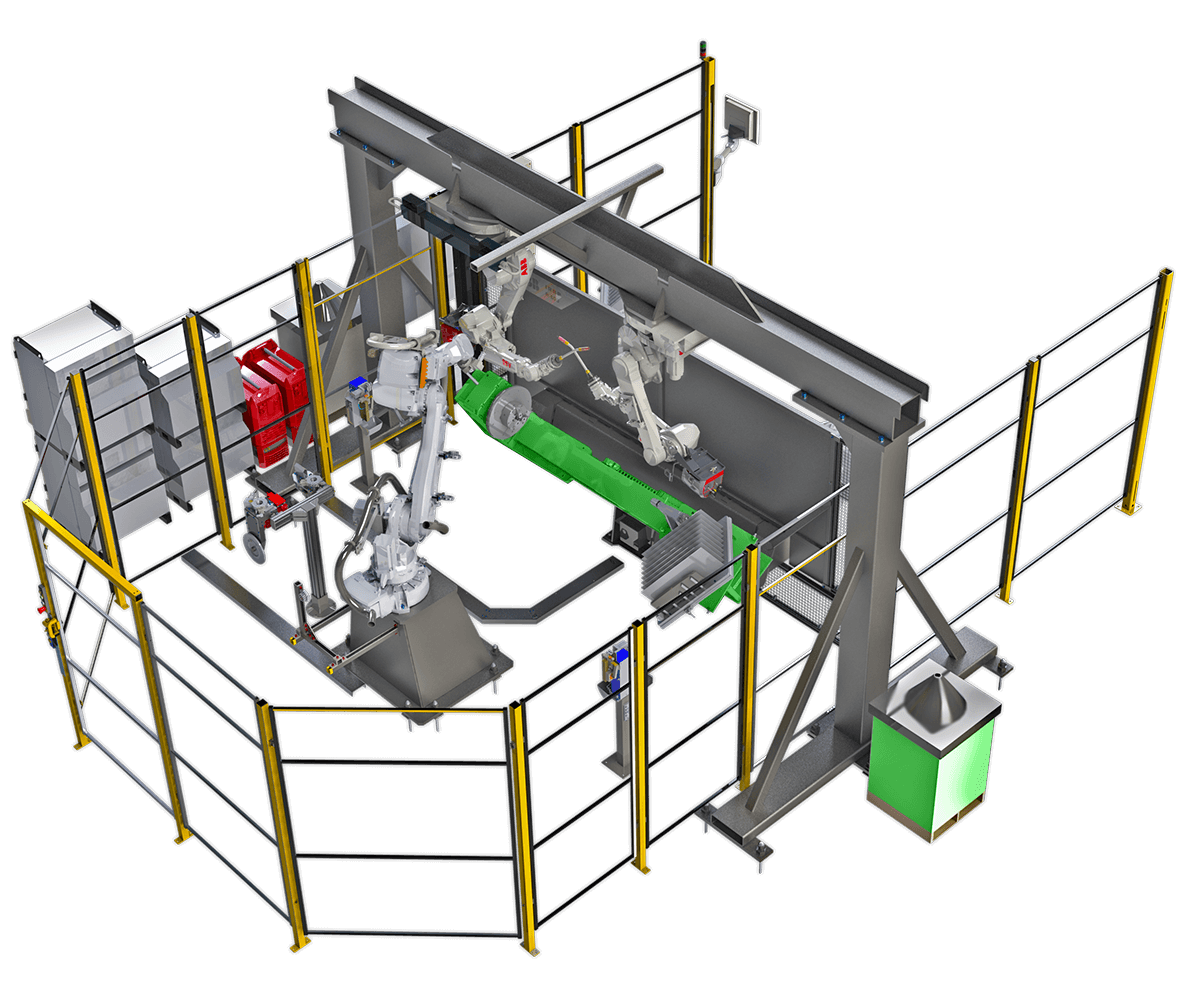
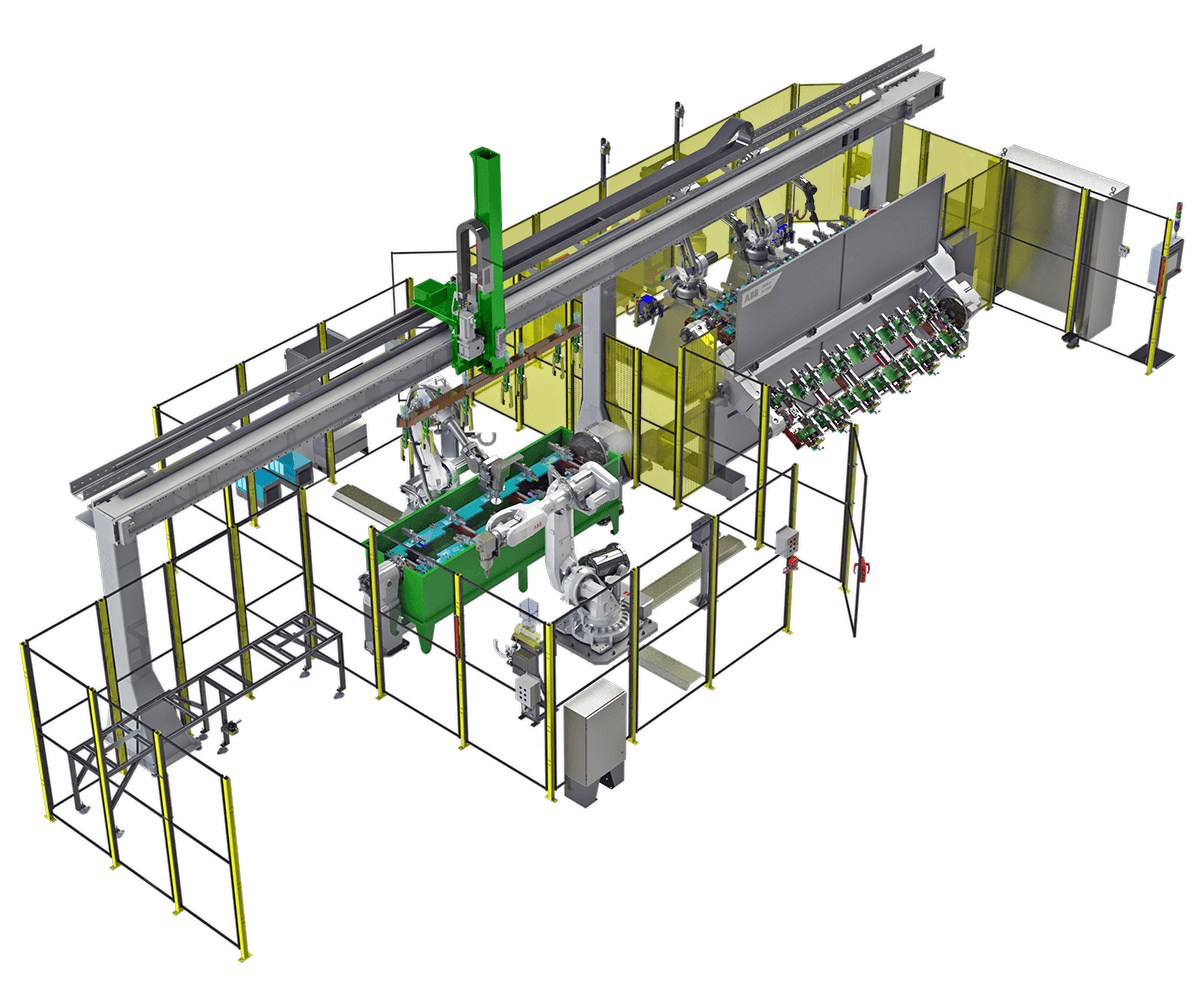
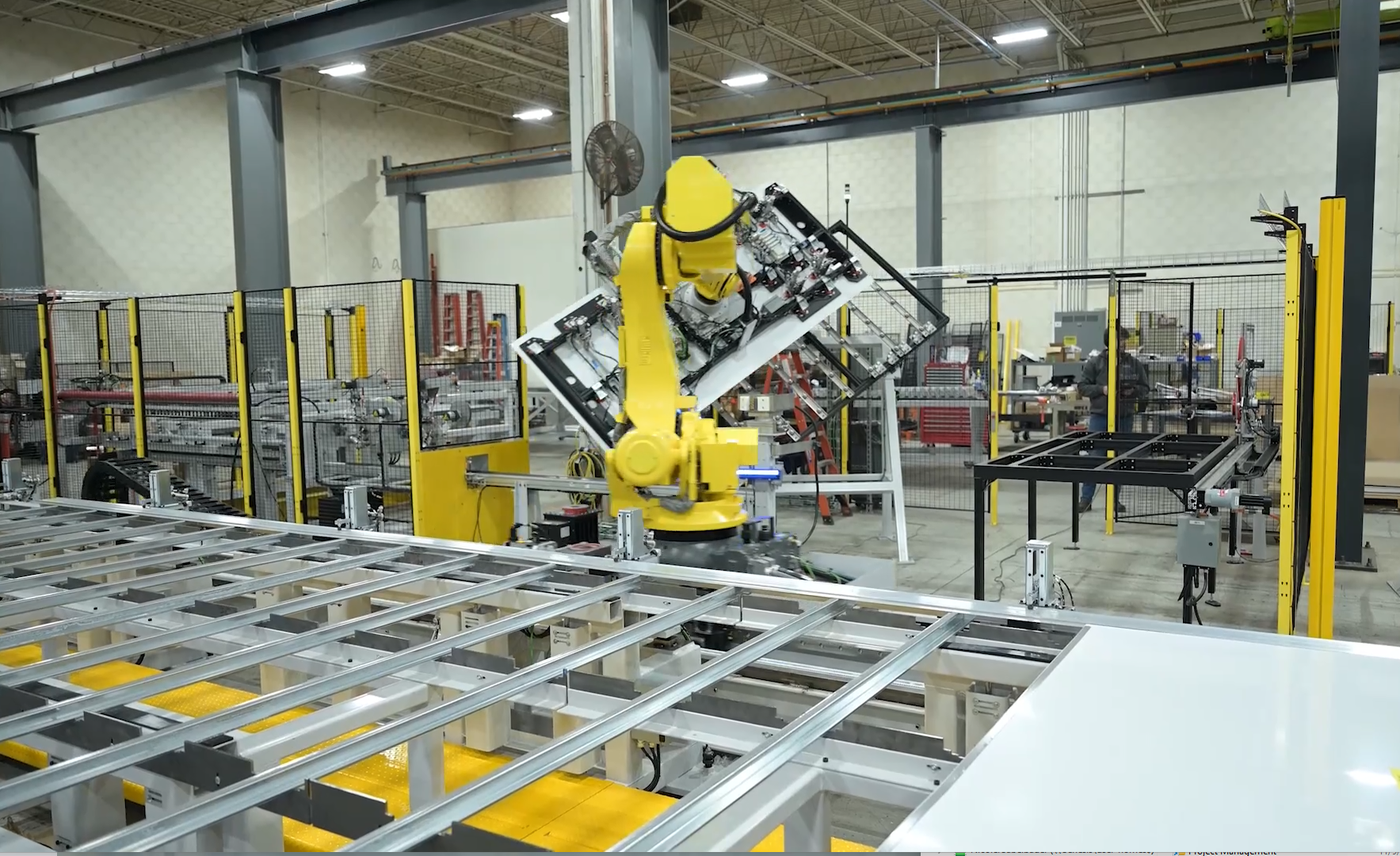
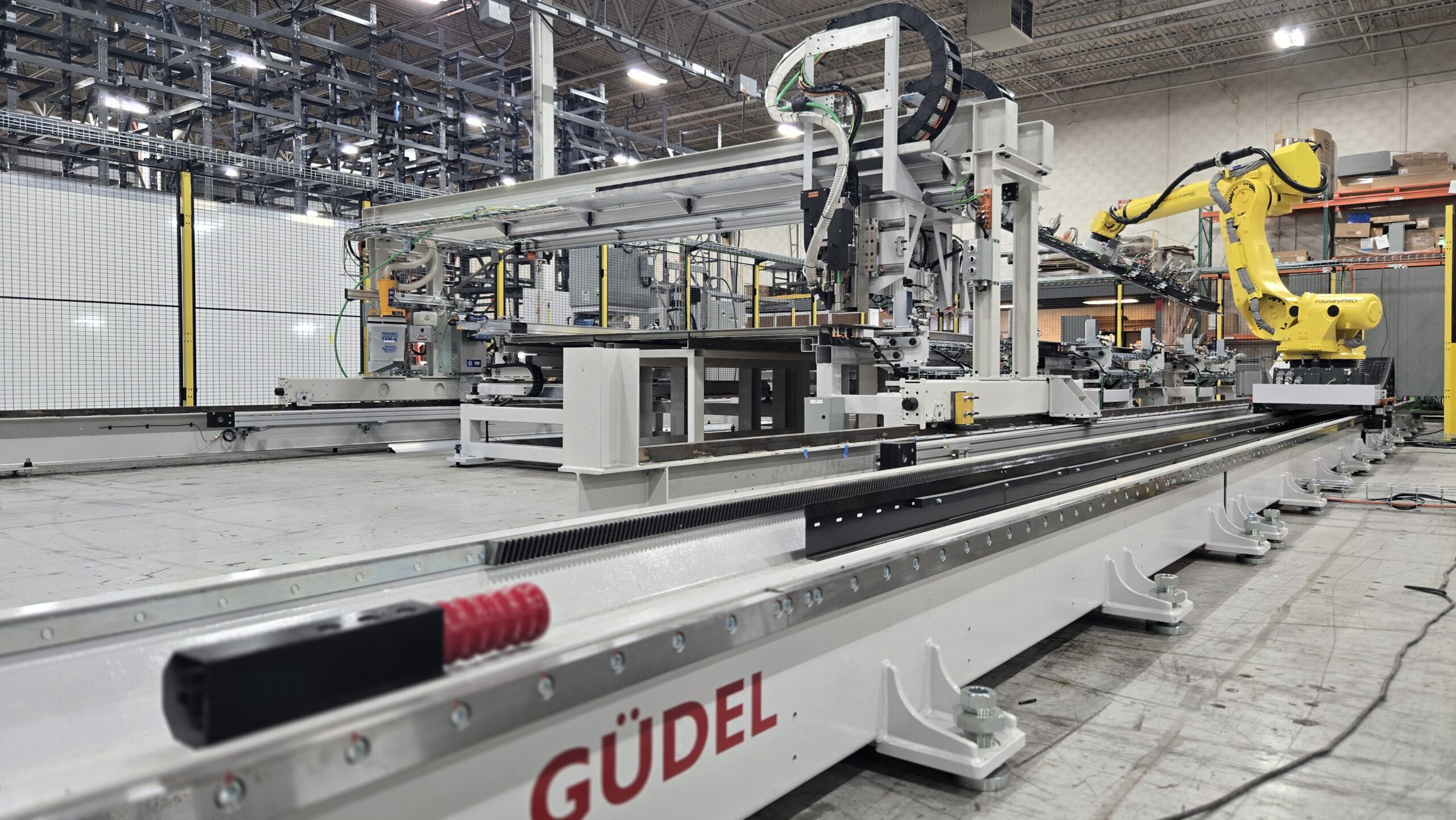
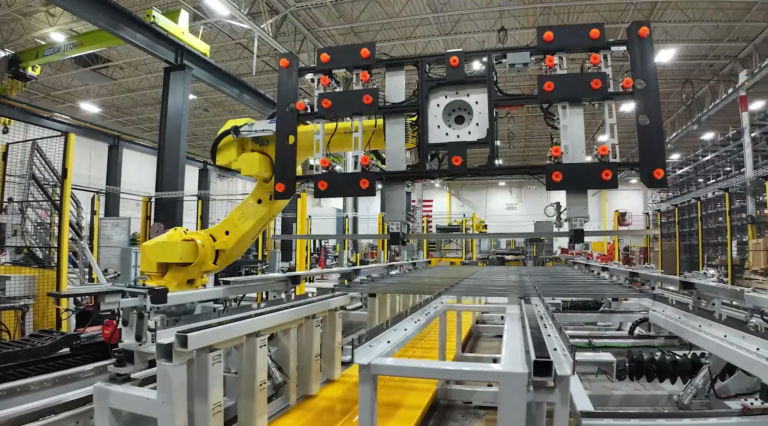
MWES engineered a complete automated manufacturing cell that combines robotic material handling, surface preparation, adhesive application, fastening, and assembly into one coordinated process. The automated system accurately positions wall skins, rails, and structural components before assembly, ensuring repeatable alignment while reducing operator involvement. Integrated automation synchronizes part handling, positioning, and fastening preparation, allowing manufacturers to improve throughput while maintaining consistent build quality across varying truck body configurations.
Automated Material Preparation
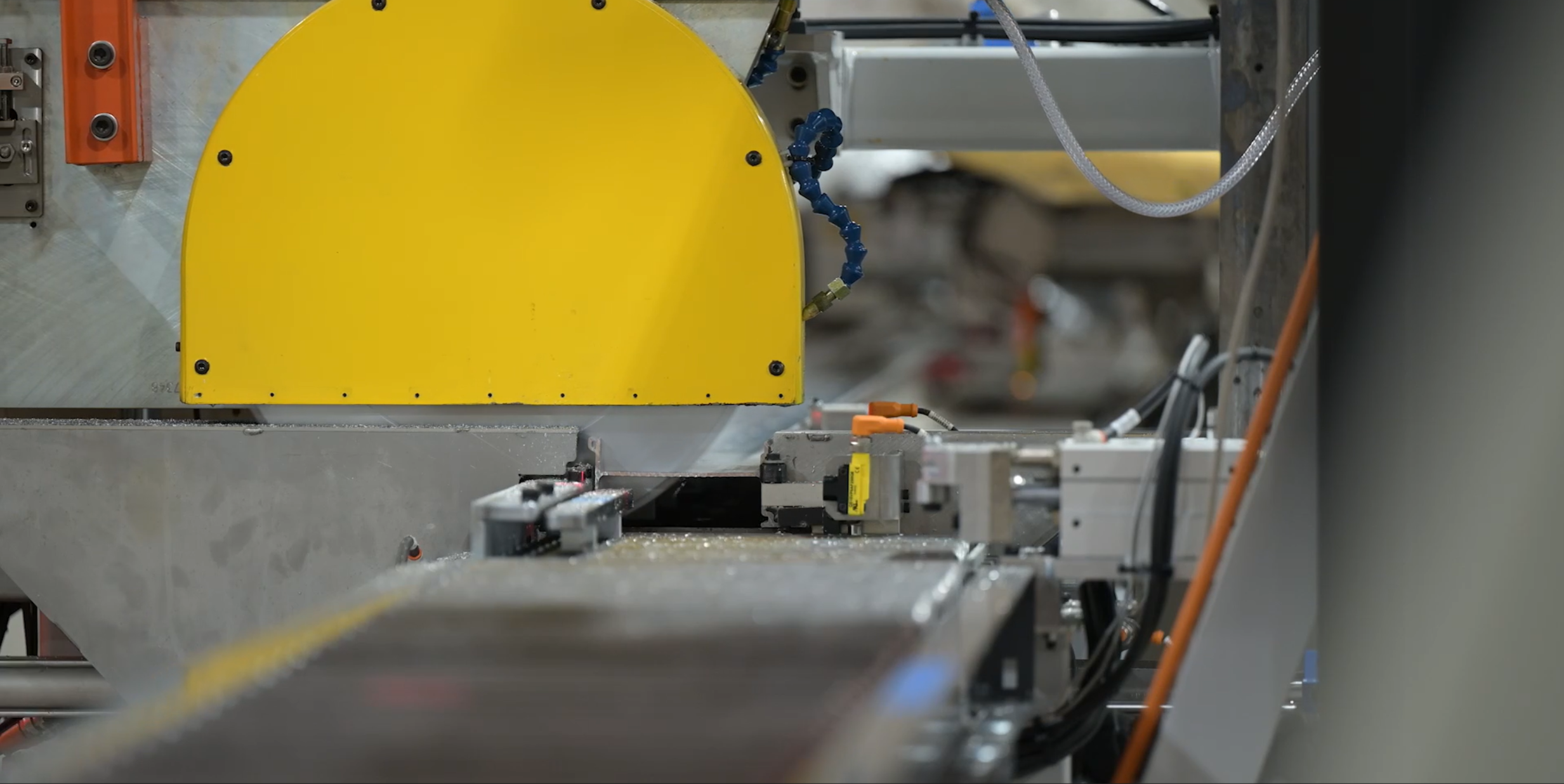
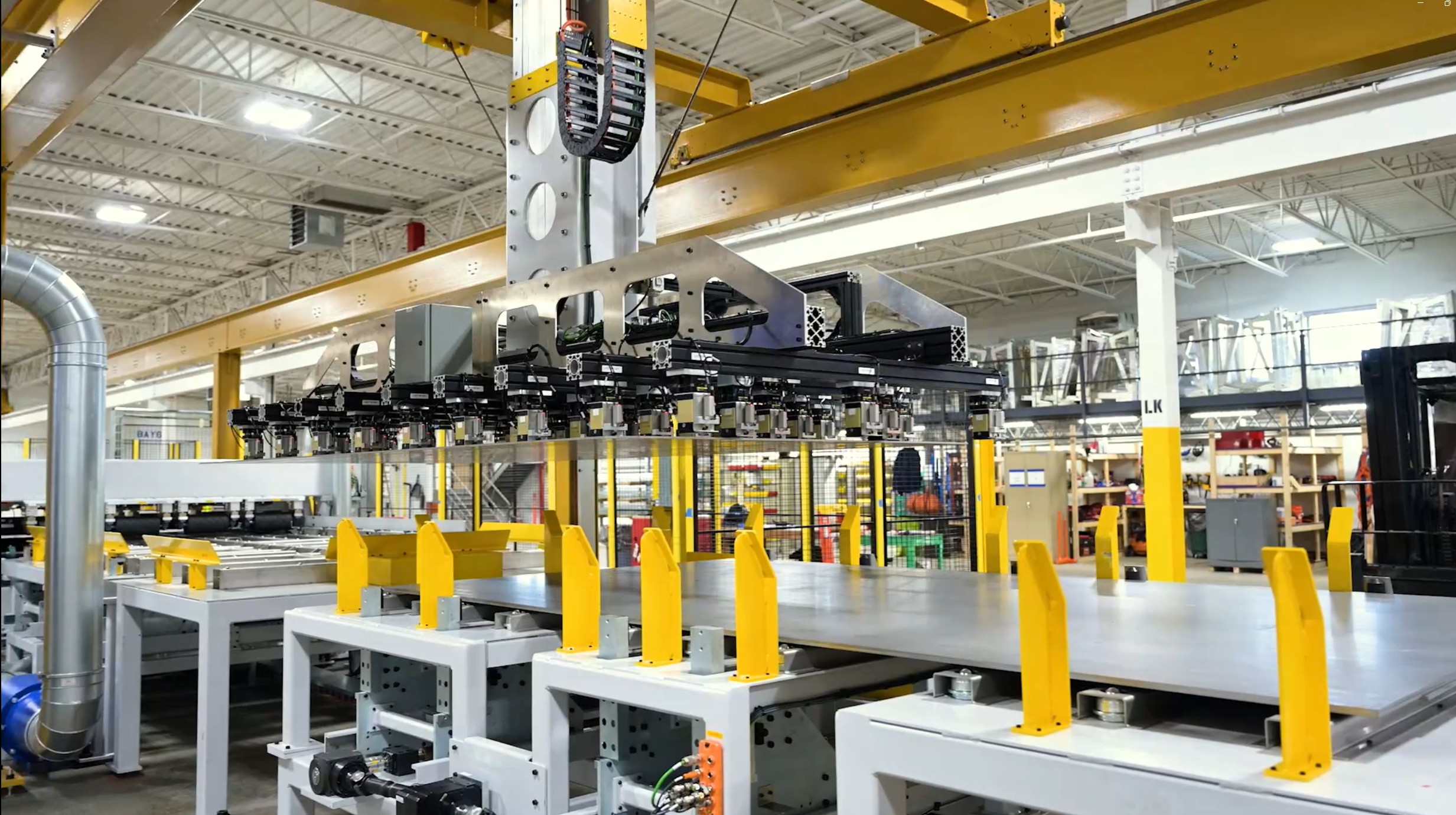
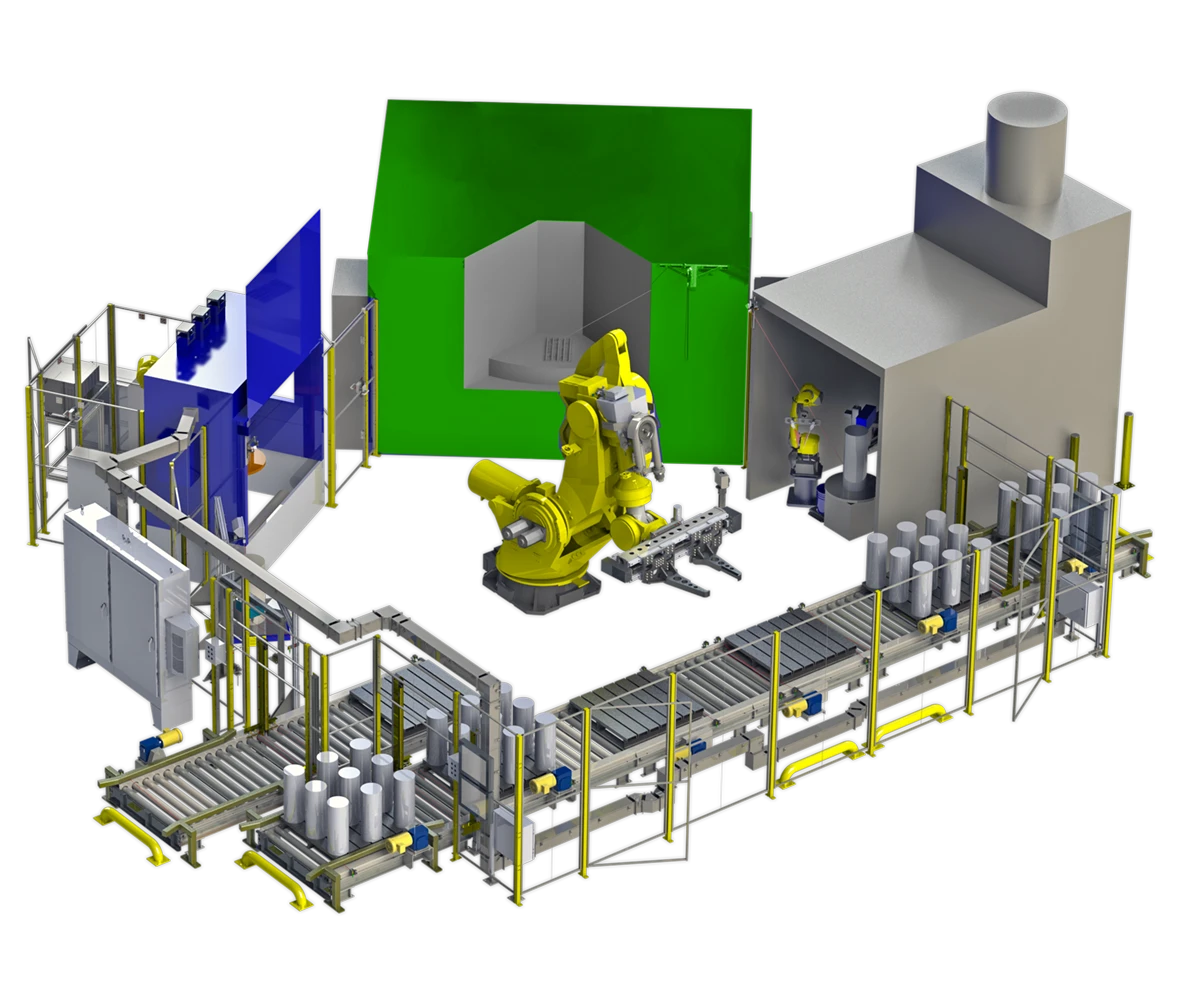
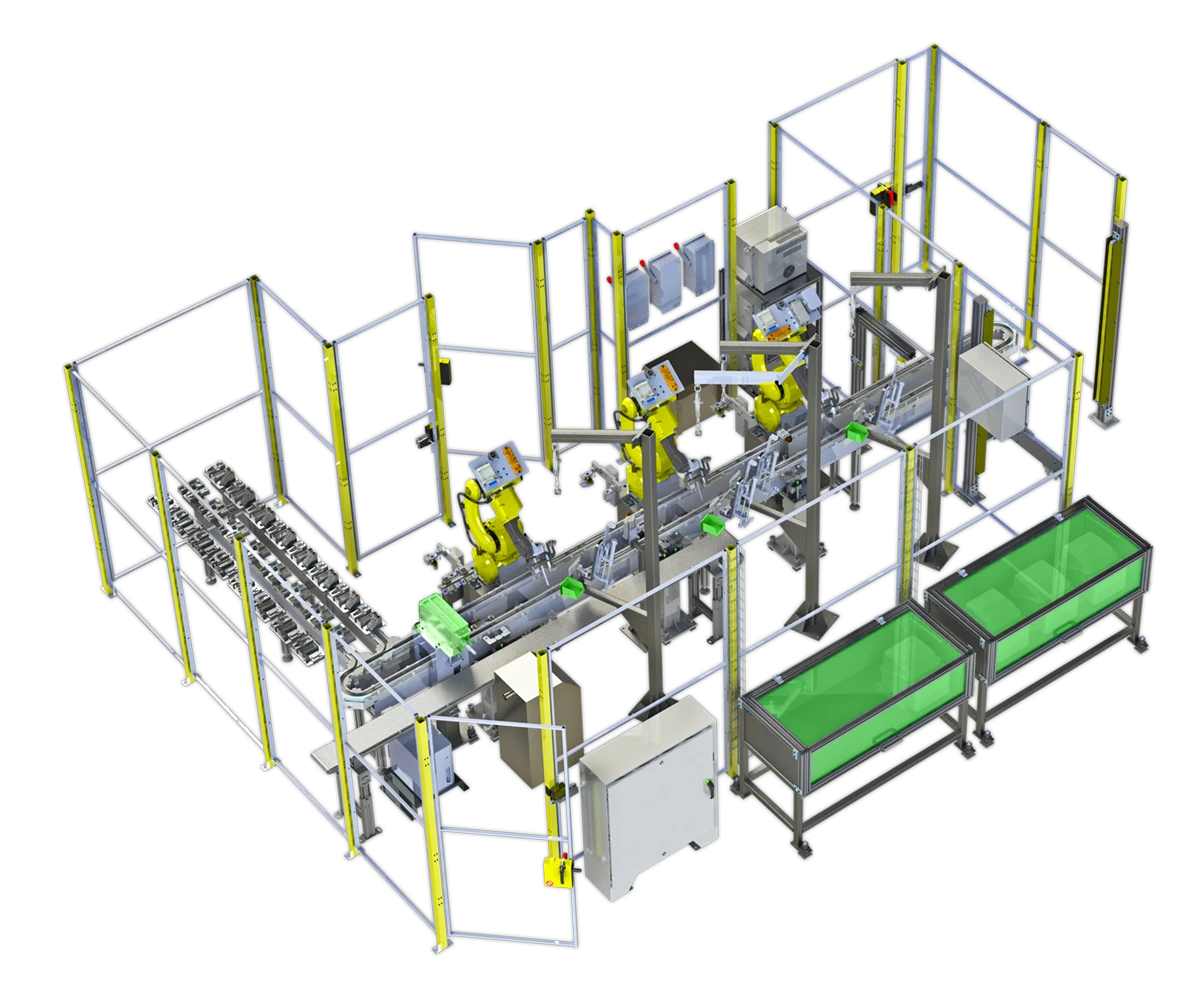
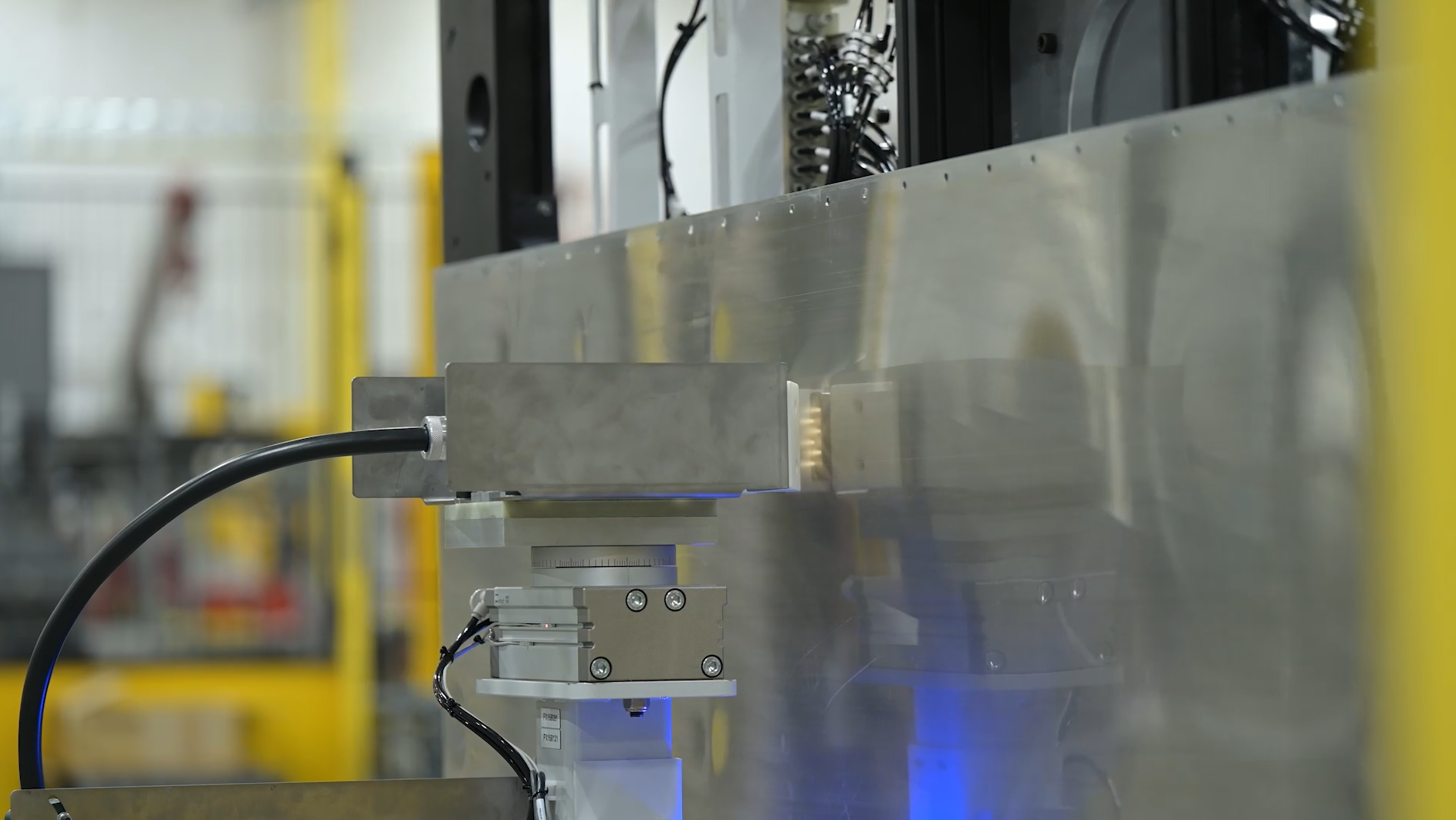
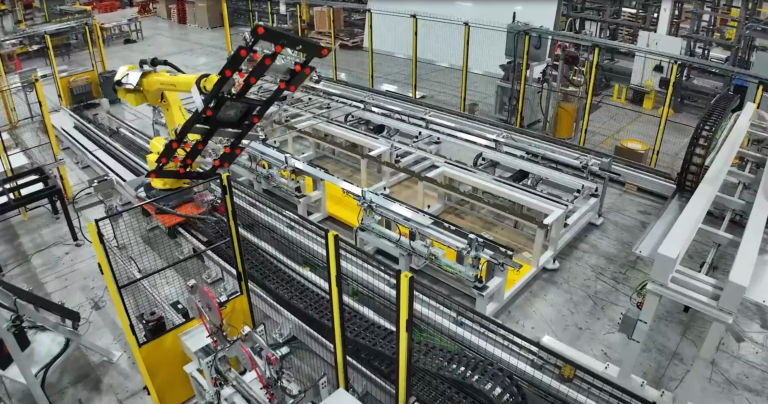
Steel stakes are automatically picked from storage, plasma treated, and prepared with adhesive tape before being transferred into the assembly fixture. Aluminum skins are squared, plasma treated, taped where required, and robotically positioned into the fixture.
Robotic Component Handling
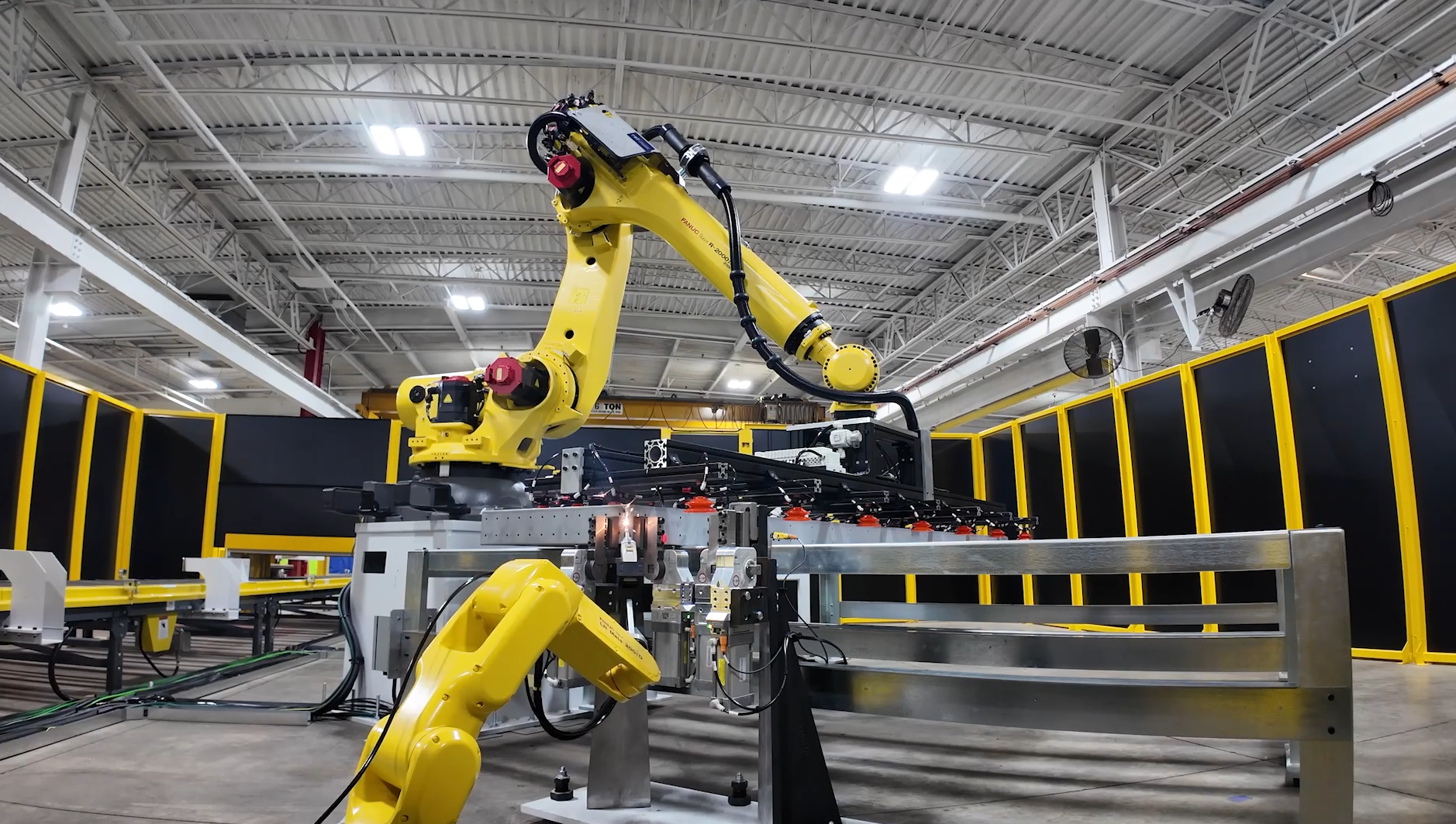
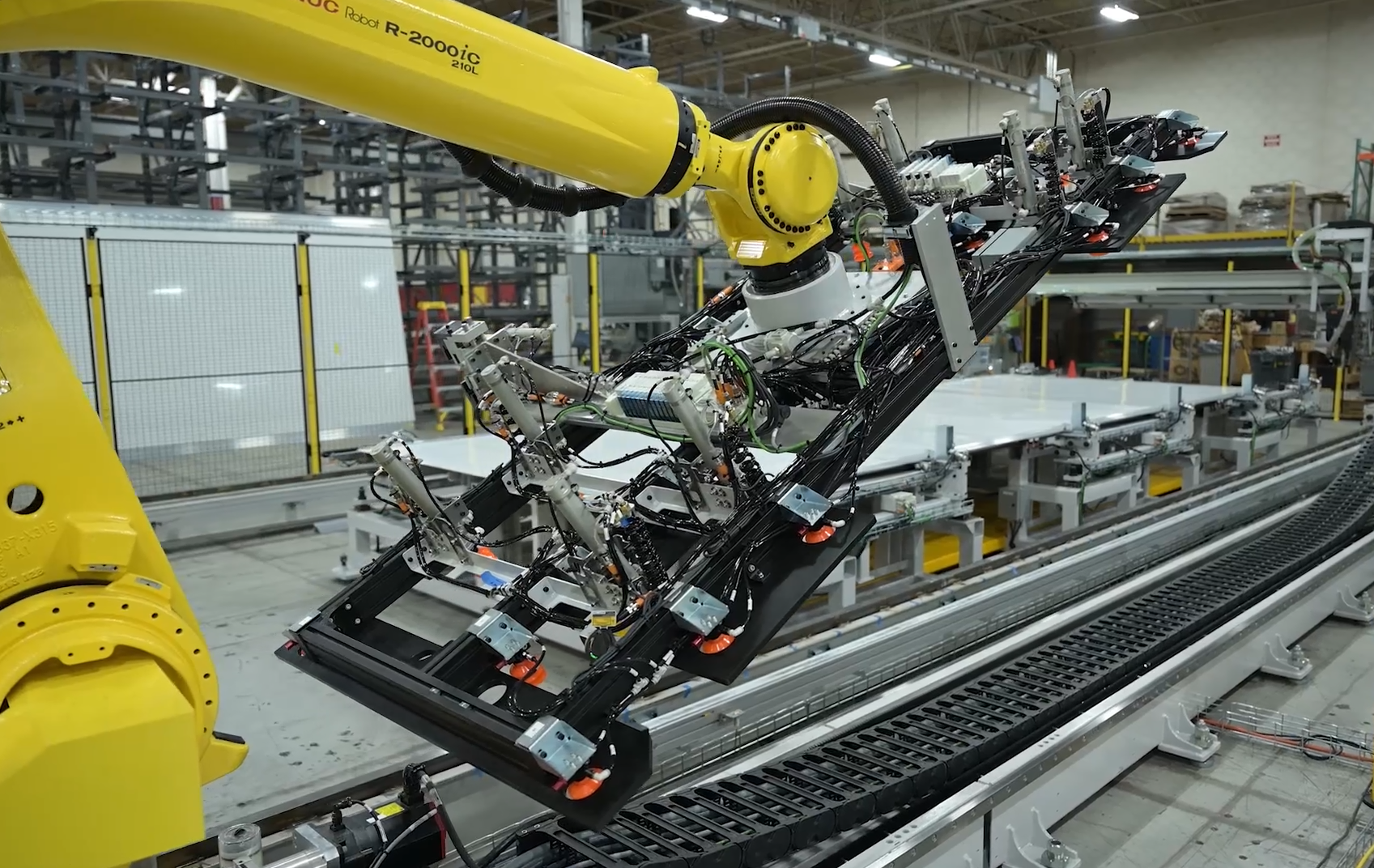
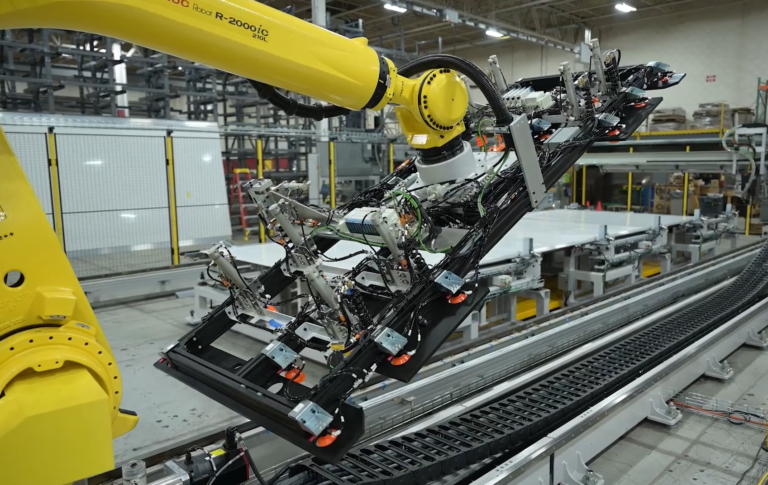
A FANUC robot mounted on a seventh-axis floor track loads stakes and skins into the assembly fixture using dedicated end-of-arm tooling. Automated rail placement and servo-controlled fixturing ensure accurate positioning across multiple product sizes.
Automated Fastening and Sealing
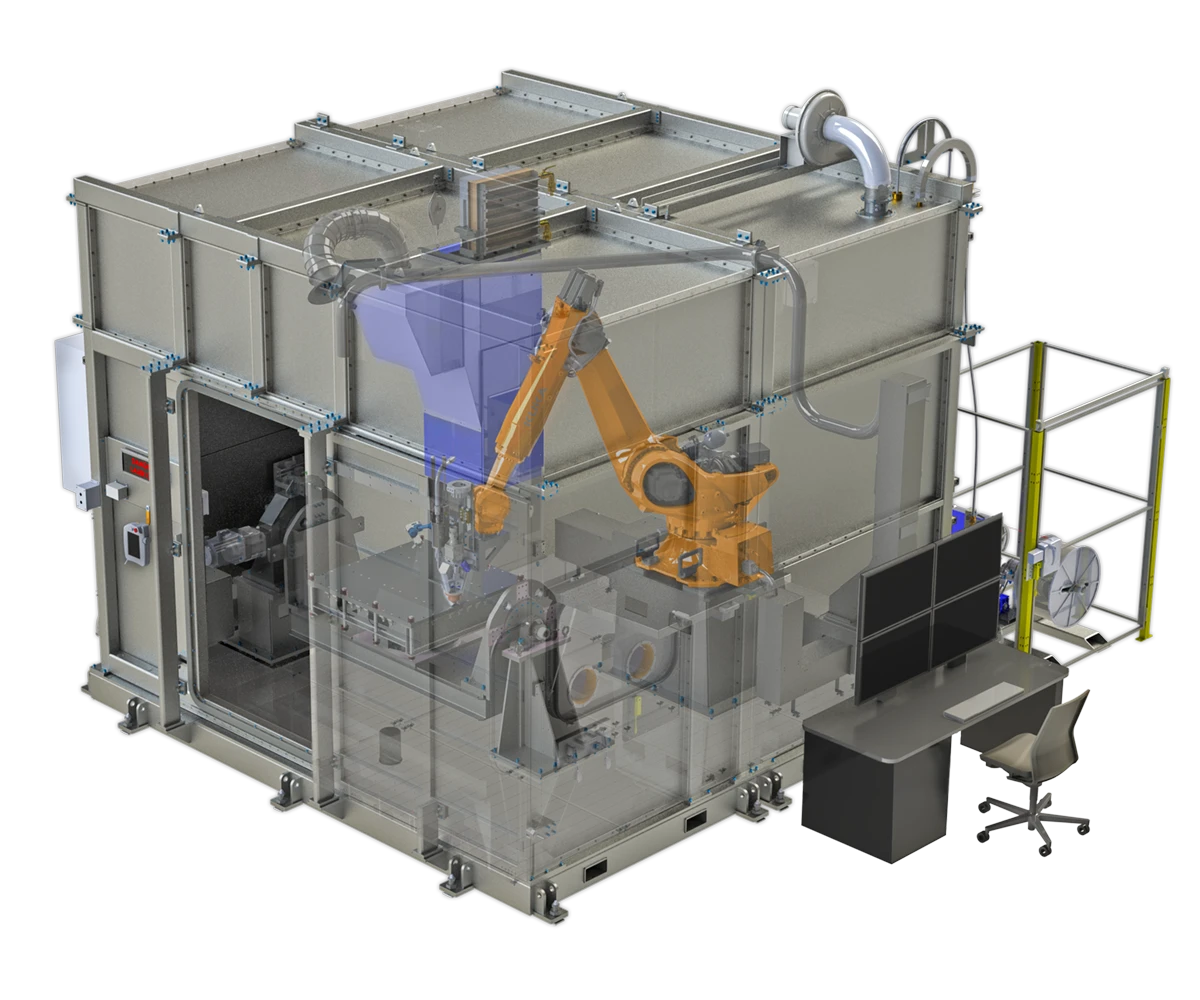
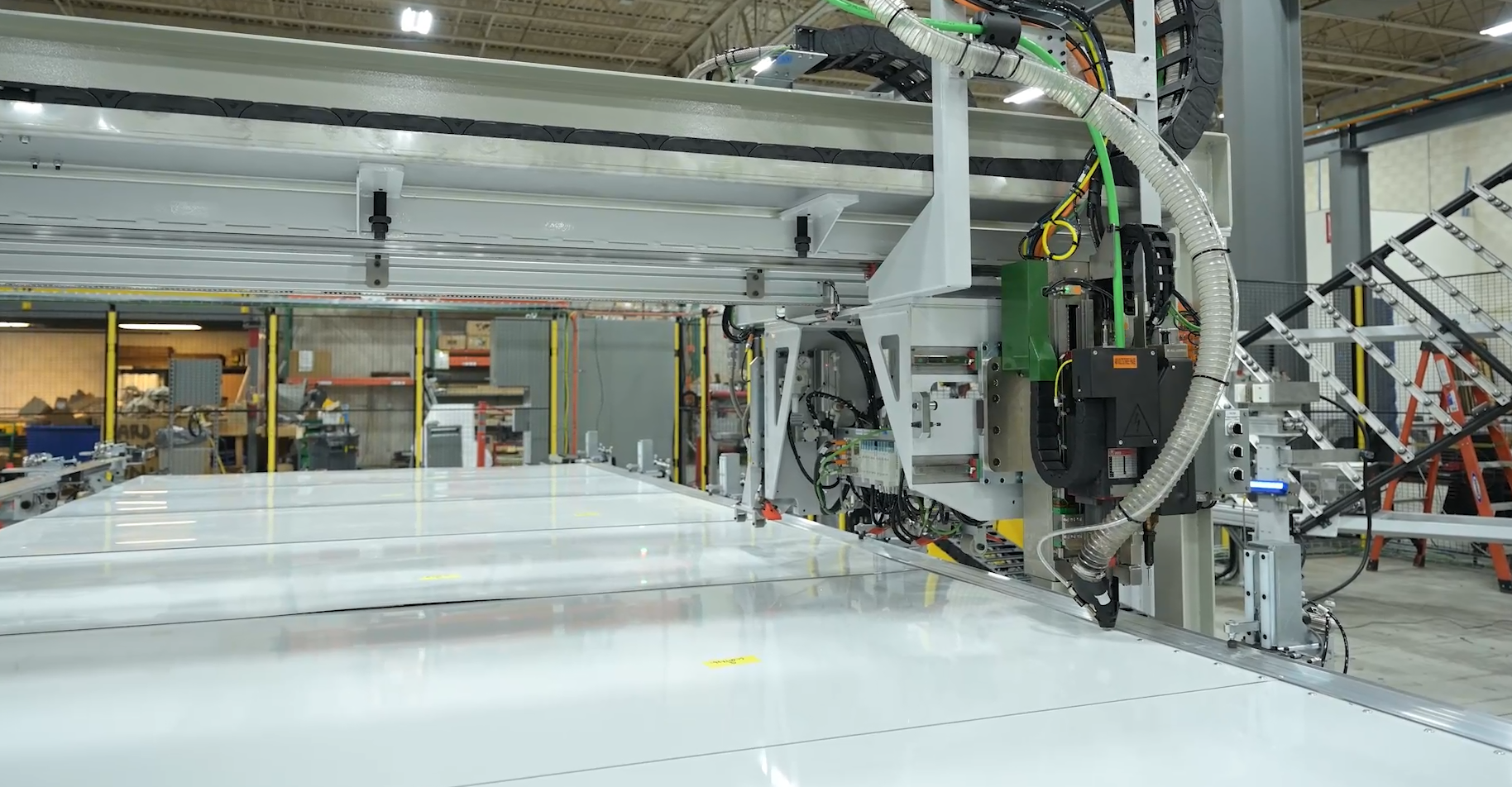
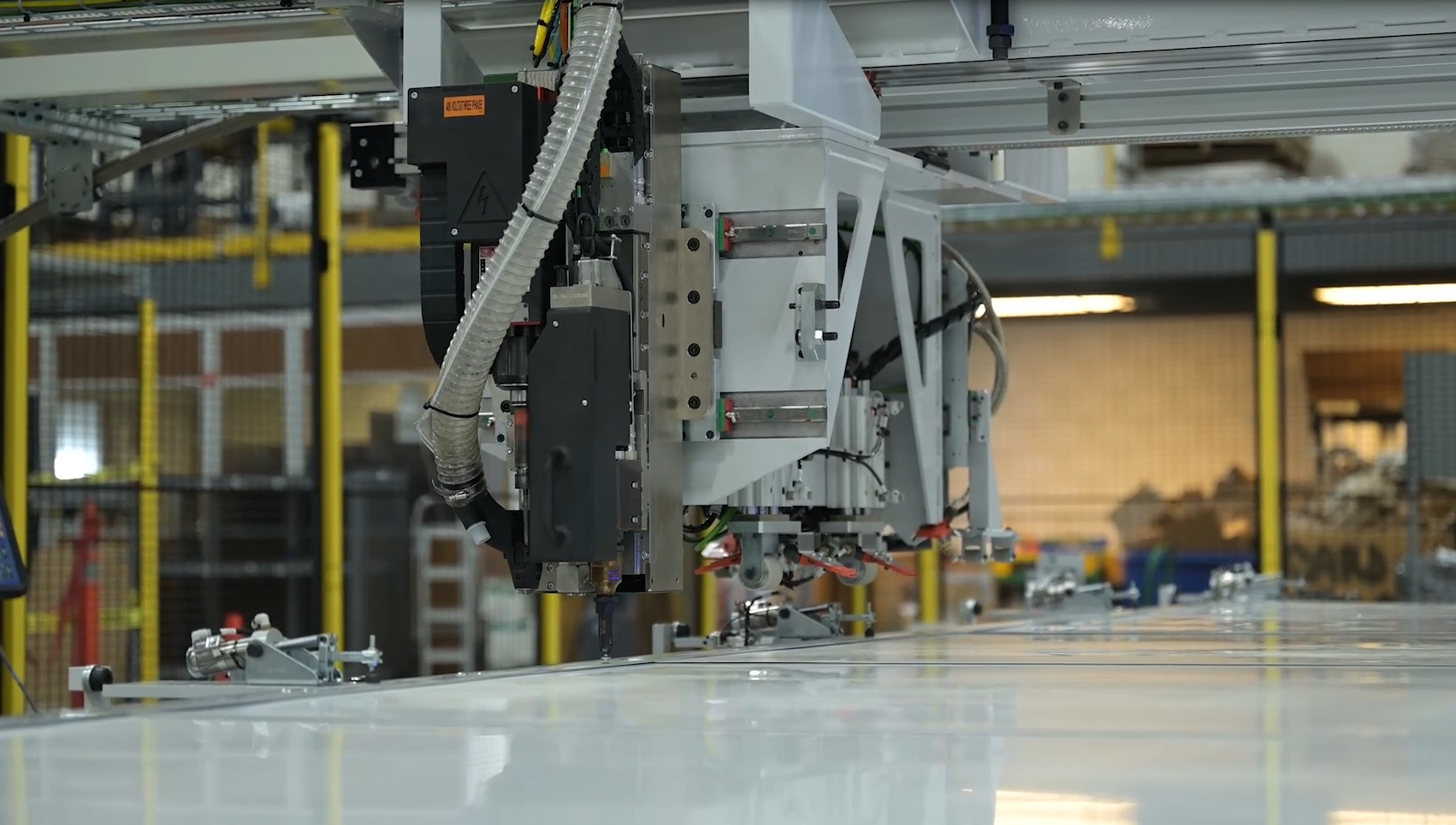
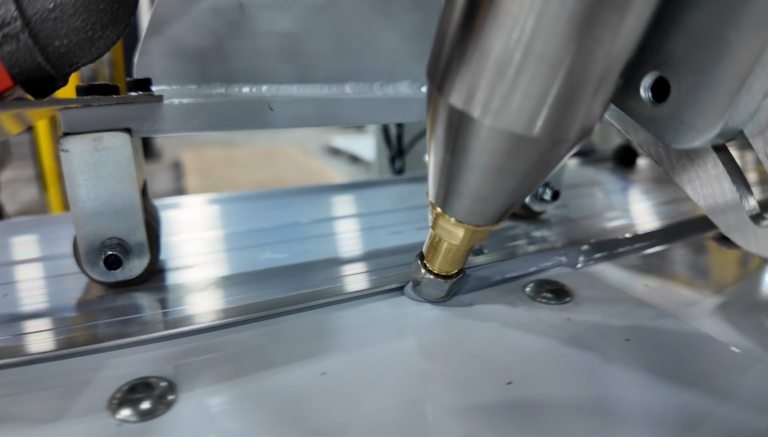
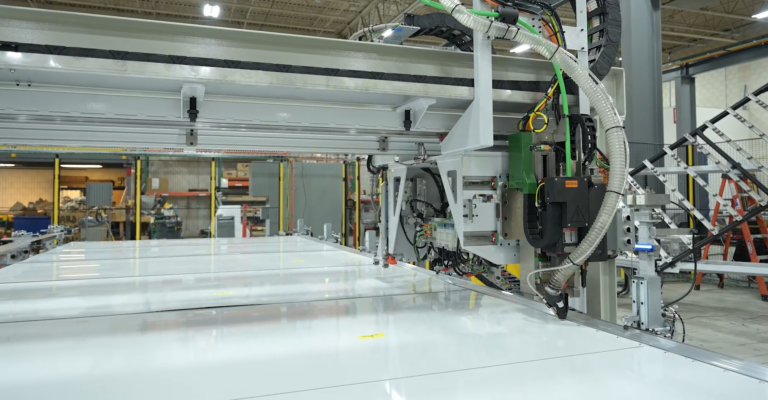
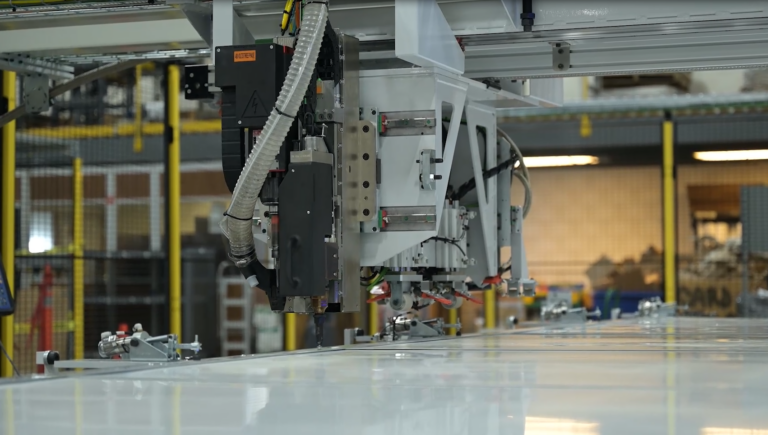
A multi-axis gantry system performs drilling, rivet insertion, pressure rolling and sealant application as part of a coordinated assembly process. Plasma treatment prior to bonding helps improve adhesion while automated rivet placement and caulking deliver consistent, repeatable quality throughout each wall assembly.
Complete System Integration
MWES provided complete project management, mechanical and electrical engineering, controls programming, robot integration, factory acceptance testing, installation, startup, operator training and on-site support as part of the turnkey automation project.
The Results
Higher Quality, Improved Consistency, and Greater Production Capacity
The new automation system transformed a previously manual, labor-intensive process into a highly controlled manufacturing operation.
Key outcomes include:
- Multiple manual assembly steps consolidated into one integrated automation cell
- Automated plasma treatment to improve adhesive performance and long-term durability
- Consistent drilling, riveting, bonding, and sealing throughout every assembly
- Improved production efficiency through coordinated automation
- Greater manufacturing flexibility for multiple truck body configurations
Following implementation, the customer publicly reported improvements in product quality, consistency, production efficiency, and lead times while creating a safer manufacturing environment. The automation investment also allowed employees to transition into higher-value technical and automation-focused roles through workforce development and robotics training.