

The Challenge
Automating Liner Insertion into Engine Blocks at 400 °F
Manual heating and liner insertion posed safety hazards, consistency issues, and production bottlenecks. The customer needed to automate a complex multi-step process, including:
- Heating engine blocks to 400 °F for liner installation
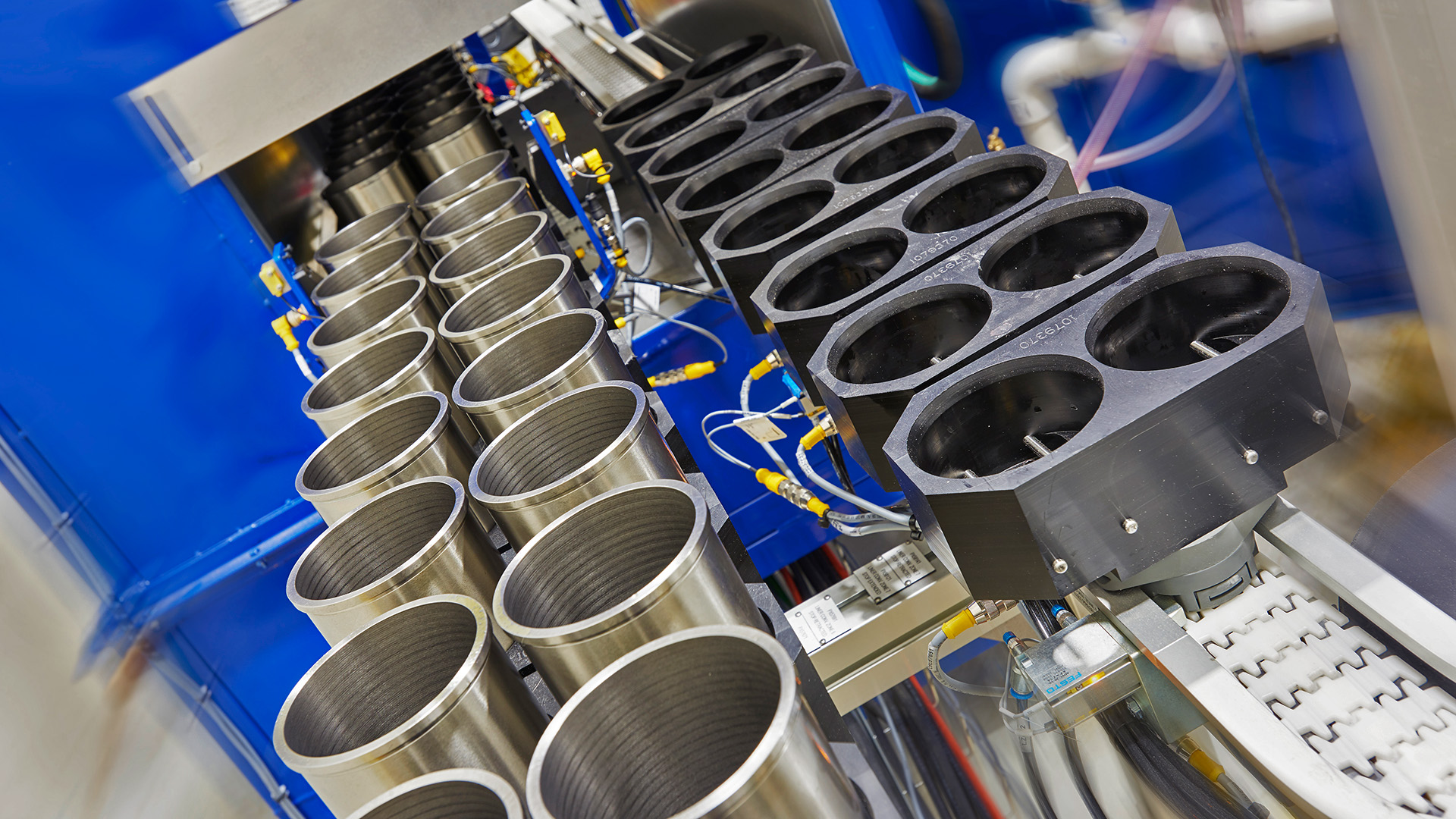
- Inserting up to 8 liners per block reliably
- Gaging each assembly for dimensional accuracy
- Managing cooling, inspection, and defect rejection in sequence
MWES was selected for its expertise in integrating robotics, oven tending, and assembly in high-heat manufacturing environments.
The Solution
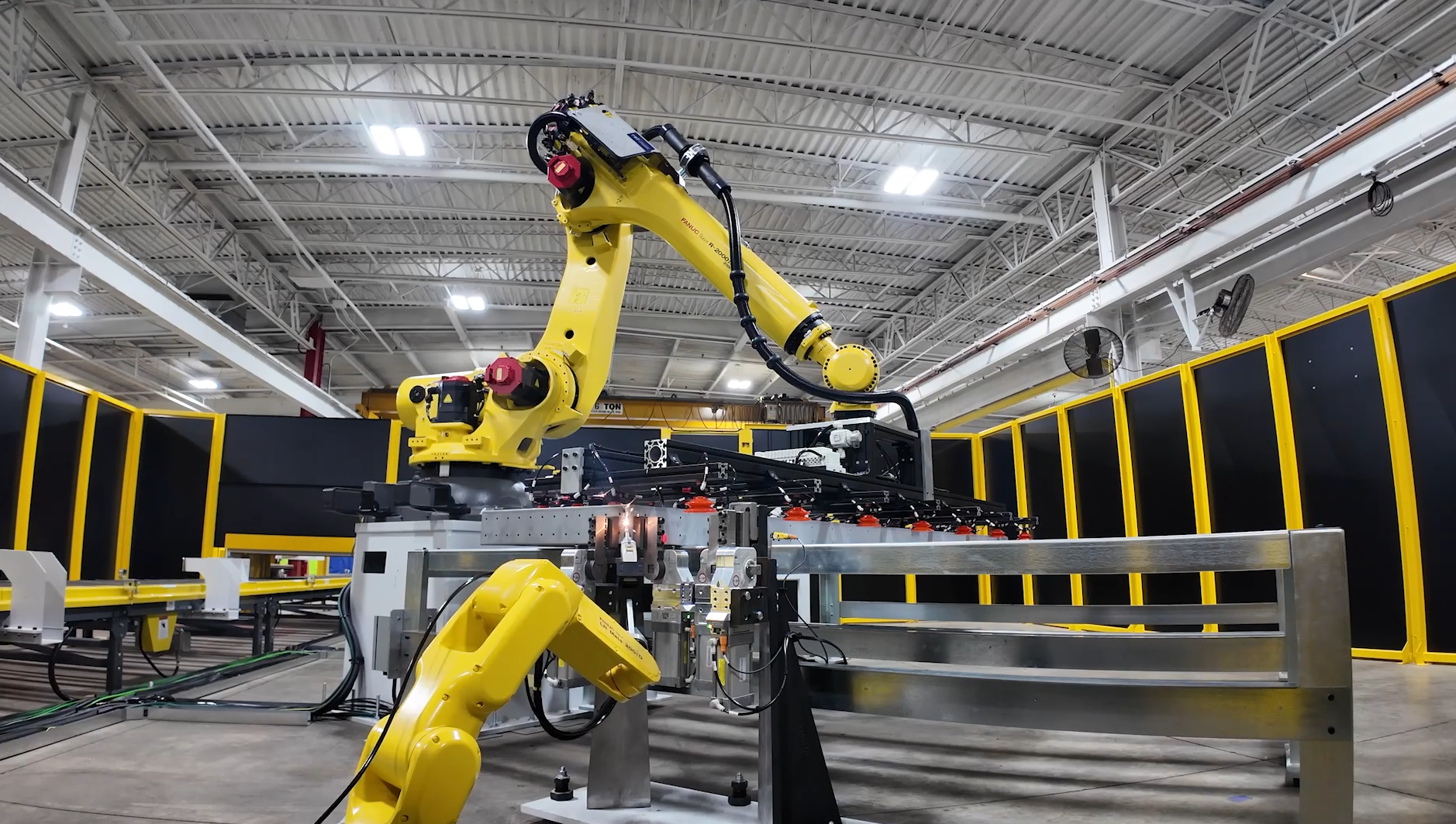
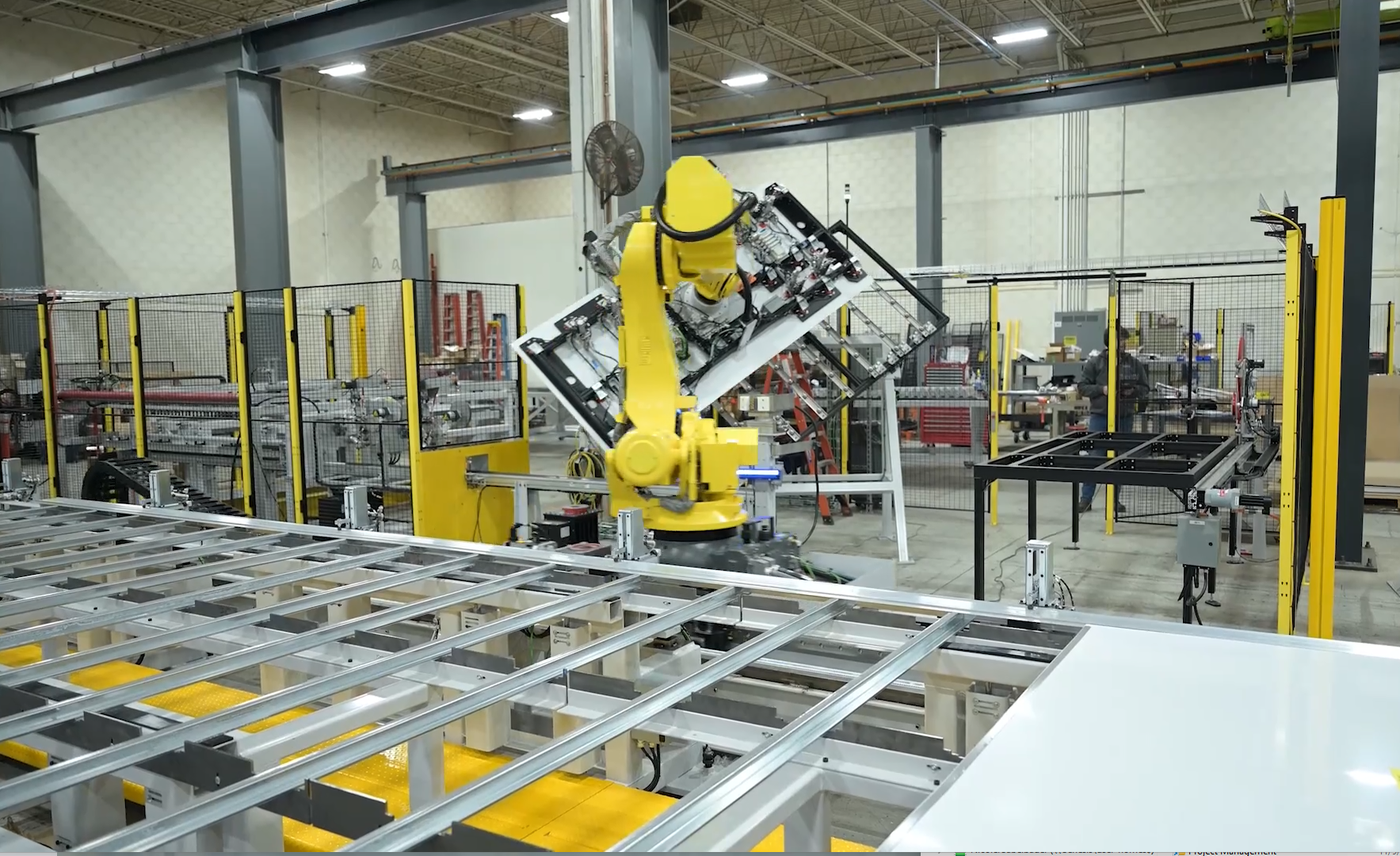
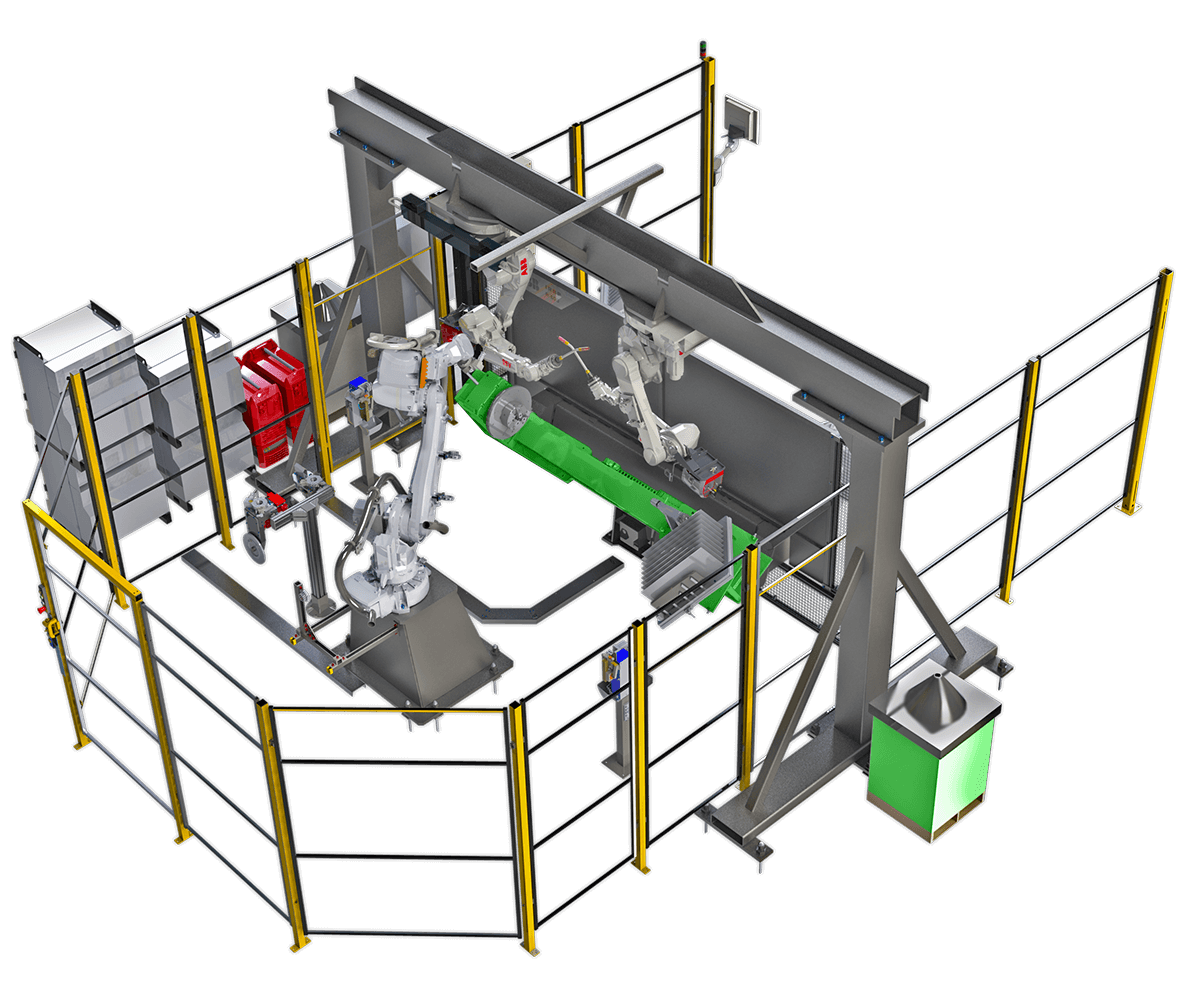
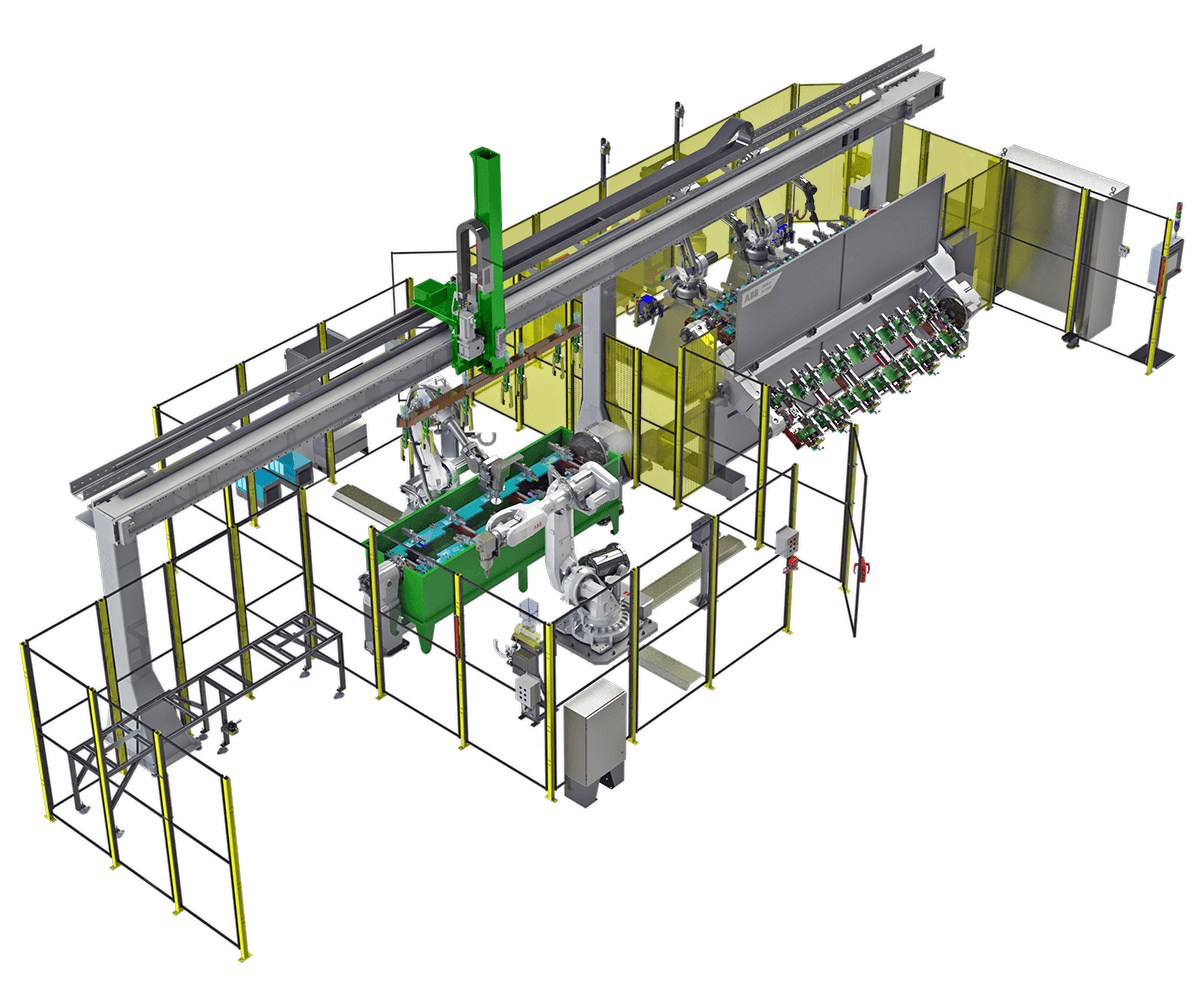
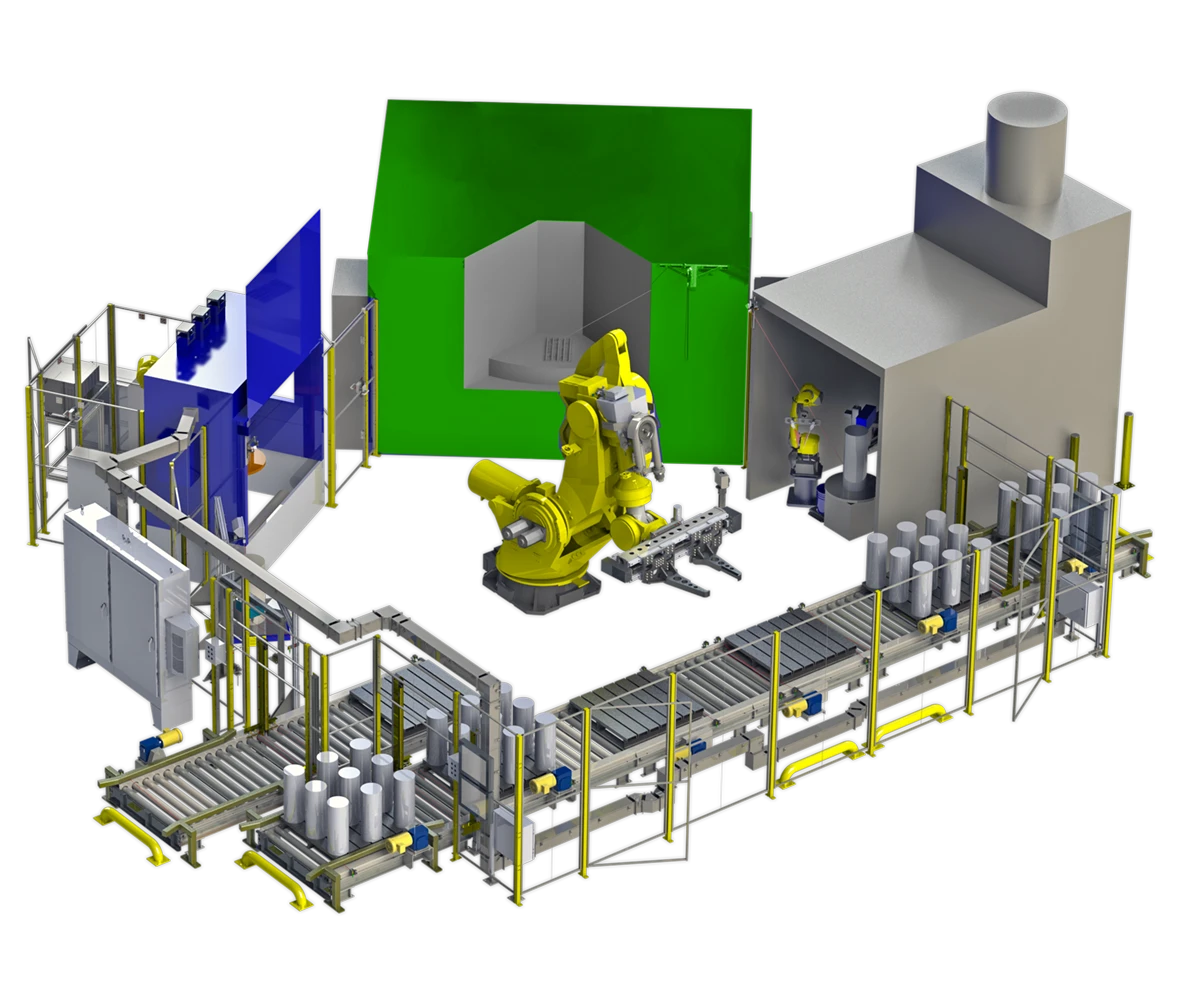
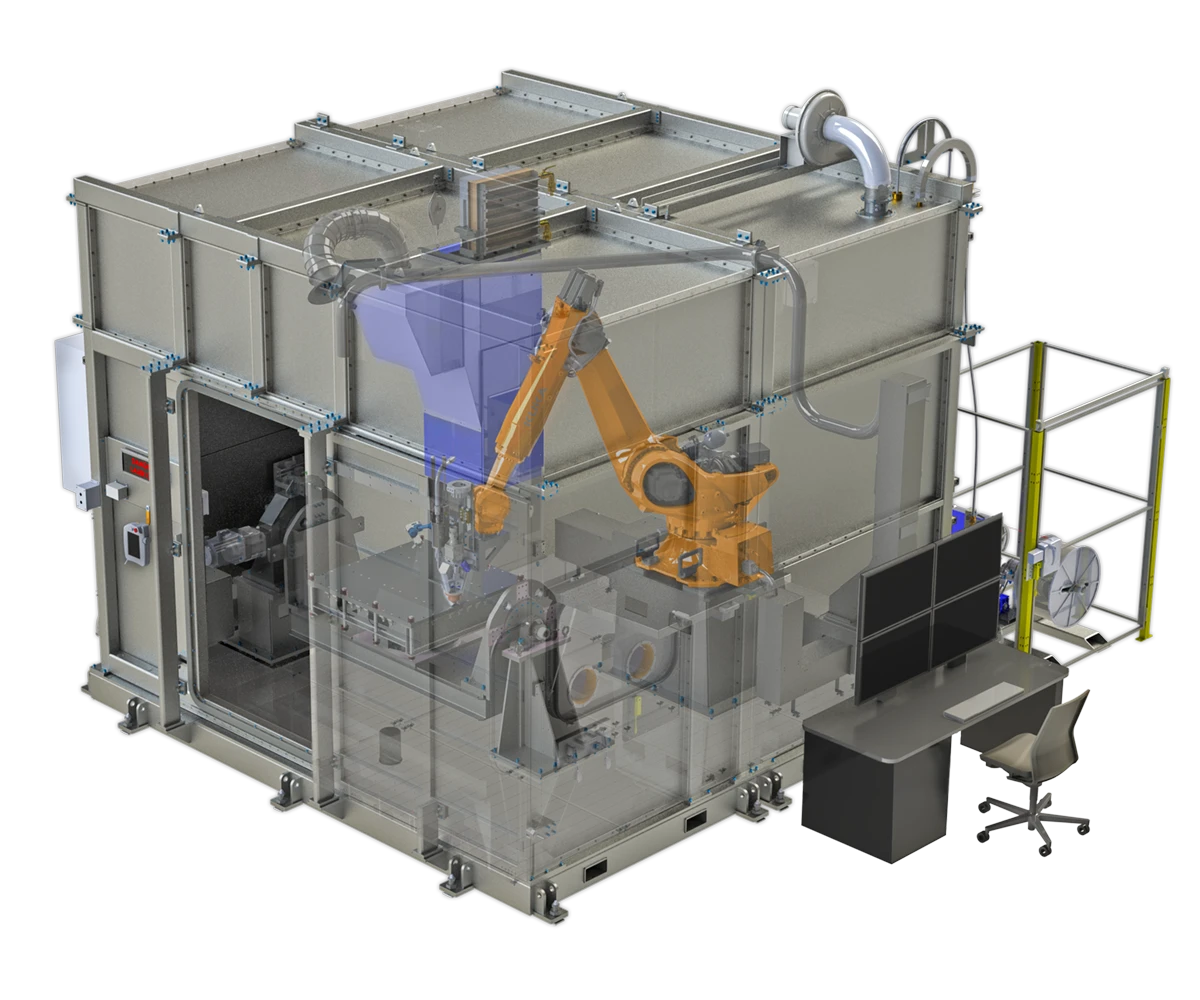
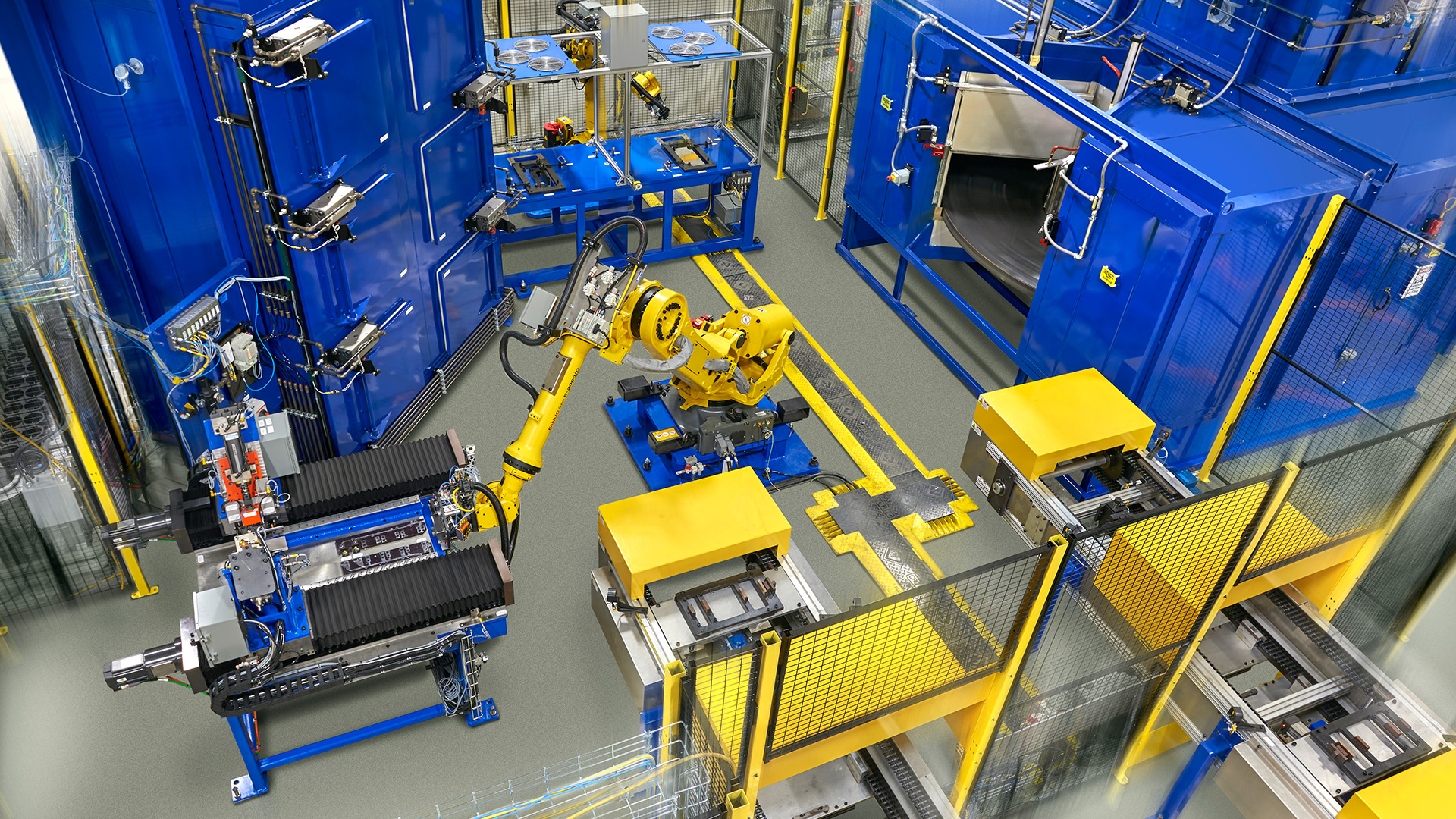
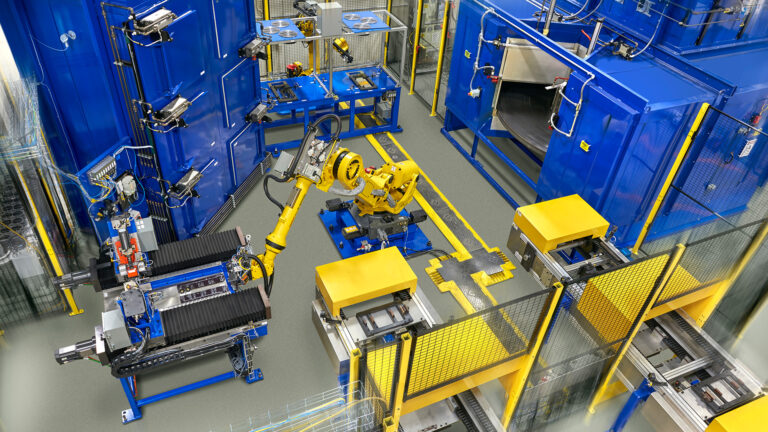
Dual‑Robot Oven Cell with Liner Handling, Cooling, Gaging & Rejection
MWES engineered a turnkey system featuring:
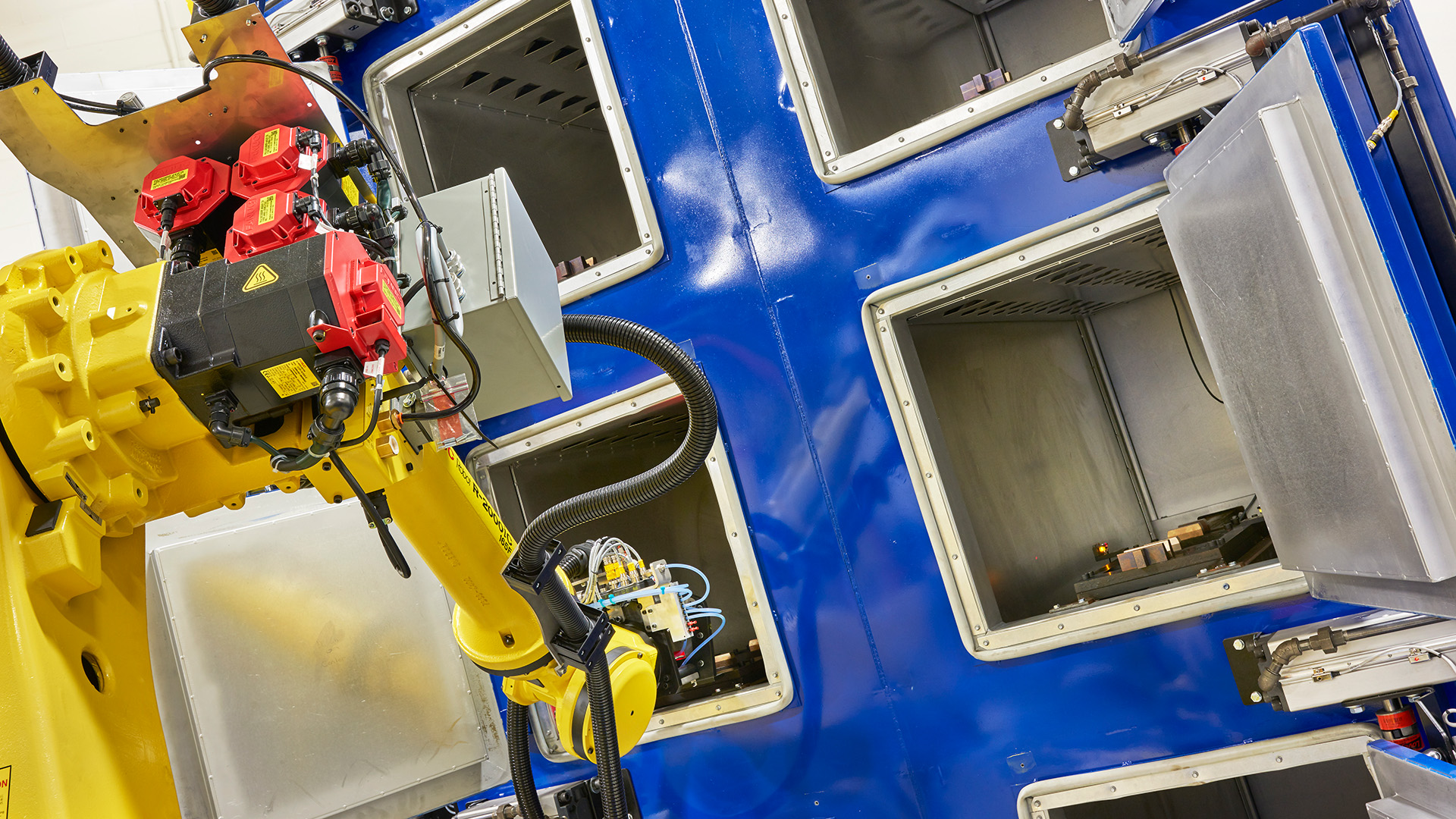
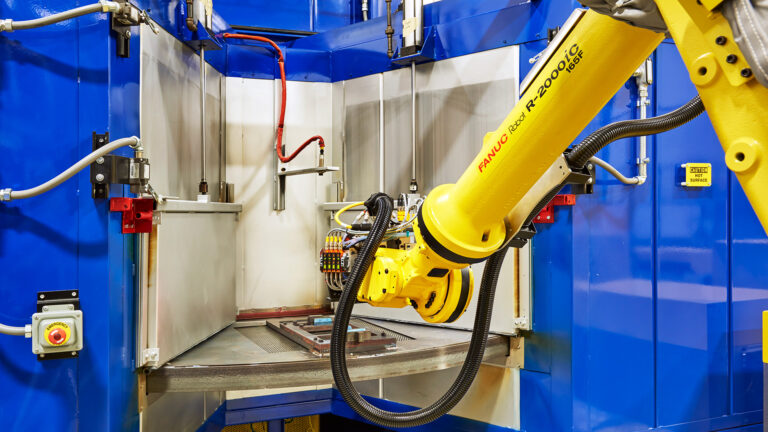
- Rotating four-position oven to heat up to four engine blocks simultaneously
- Two robots: one to tend oven and block transfer, another to insert cylinder liners based on part model
- Barcoded tracking to ensure correct liner count (6 or 8 per block)
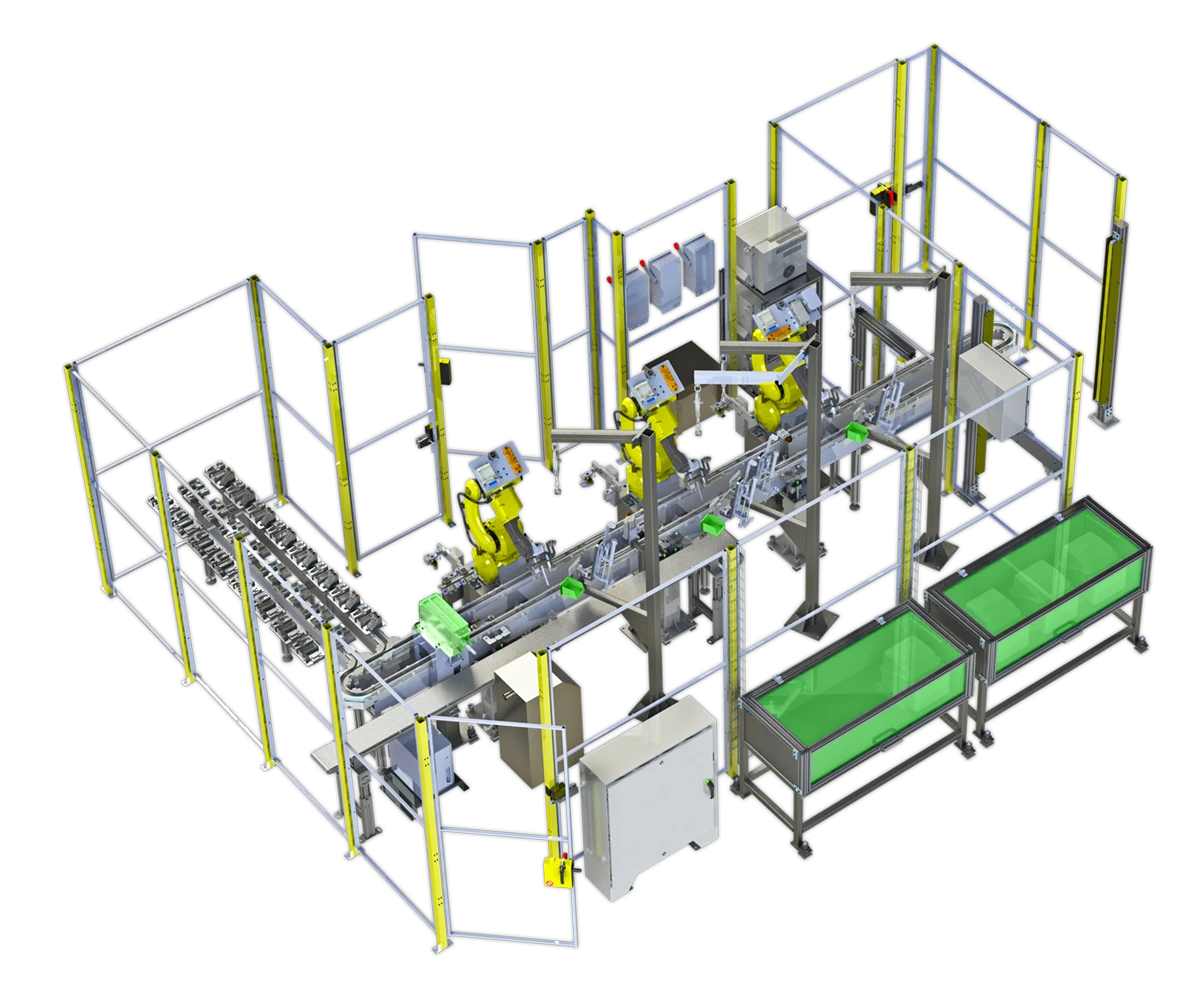
- Cooling conveyor followed by gage station to verify liner seating
- Automated sorting: good blocks proceed to outfeed, defective ones routed to reject station
This integrated cell automates heating, insertion, inspection, and sorting in one work cell—eliminating manual hand-offs and reducing exposure to hazardous environments.
The Results
Sub‑4-Minute Assembly Cycle with Improved Safety & Reduced Labor
The system delivers measurable operational improvements:
- Maintains a consistent cycle time of 4 minutes or less per block
- Eliminates manual handling of hot, heavy engine blocks and liners
- Ensures precise liner seating and dimensional accuracy via gaging
- Allows continuous unattended operation with minimal operator input
By integrating a full heat‑treat and assembly workflow into a unified robotic process, MWES helped the customer improve safety, throughput consistency, and reduce labor dependency—all while raising part quality and throughput.