The Challenge
Robotic Handling of Large, 300-lb Steel Blanks with Precision Alignment
Edge rolling large, heavy steel plates into cones is labor-intensive and ergonomically hazardous. The customer needed to:
- Automate the handling of blanks weighing up to 300 lbs and measuring up to 80″ × 68″
- Precisely square and detect the edge of each blank before forming
- Seamlessly interface robot with roll-forming machine for infeed and outfeed
- Eliminate reliance on manual lifting while increasing throughput
MWES was engaged to design a robot-based machine tending cell capable of handling large part weights and aligning them reliably into a roll former.
The Solution
Vacuum-Assisted Robot System with Squaring Table and Edge-Detect Logic
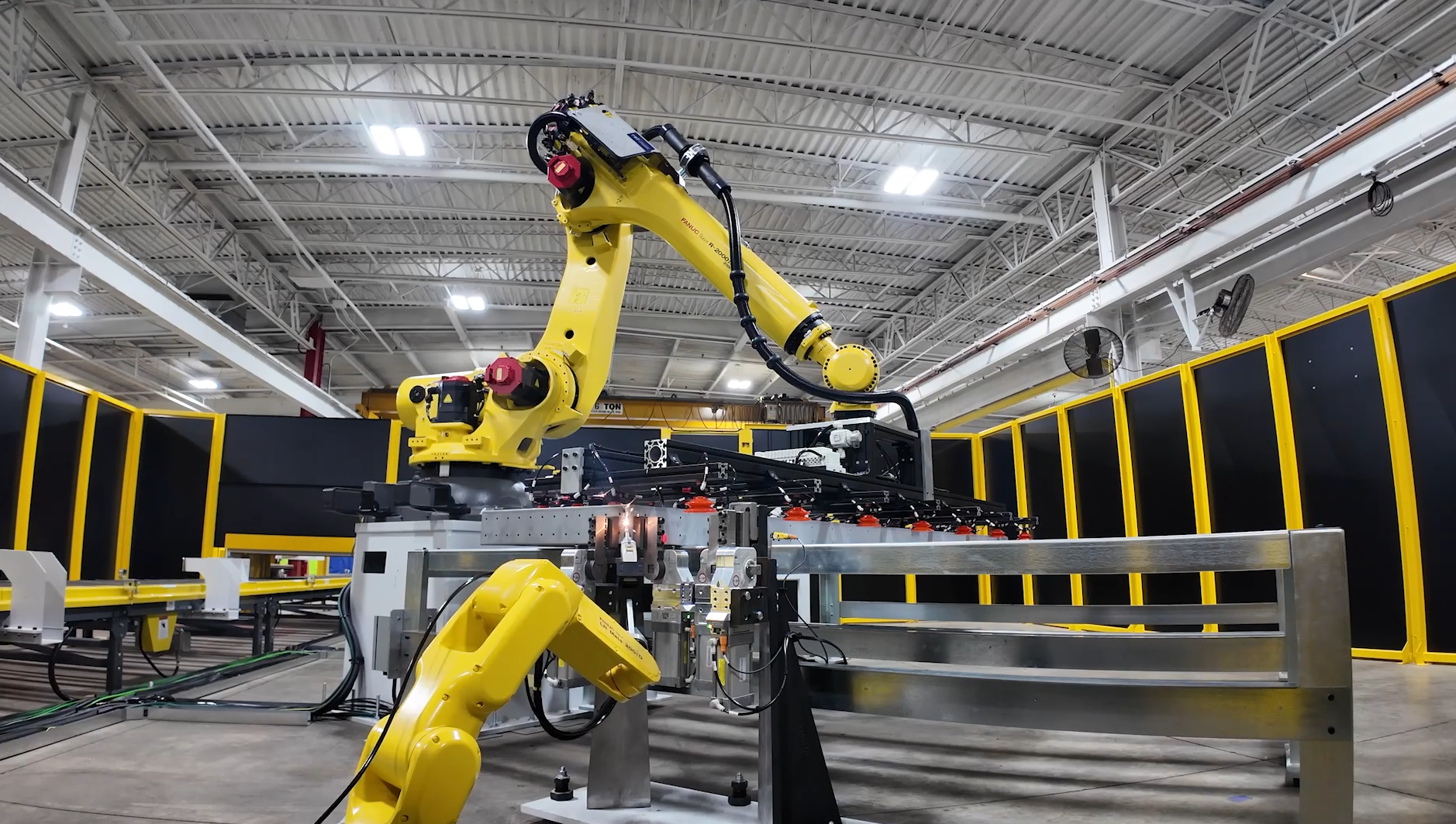
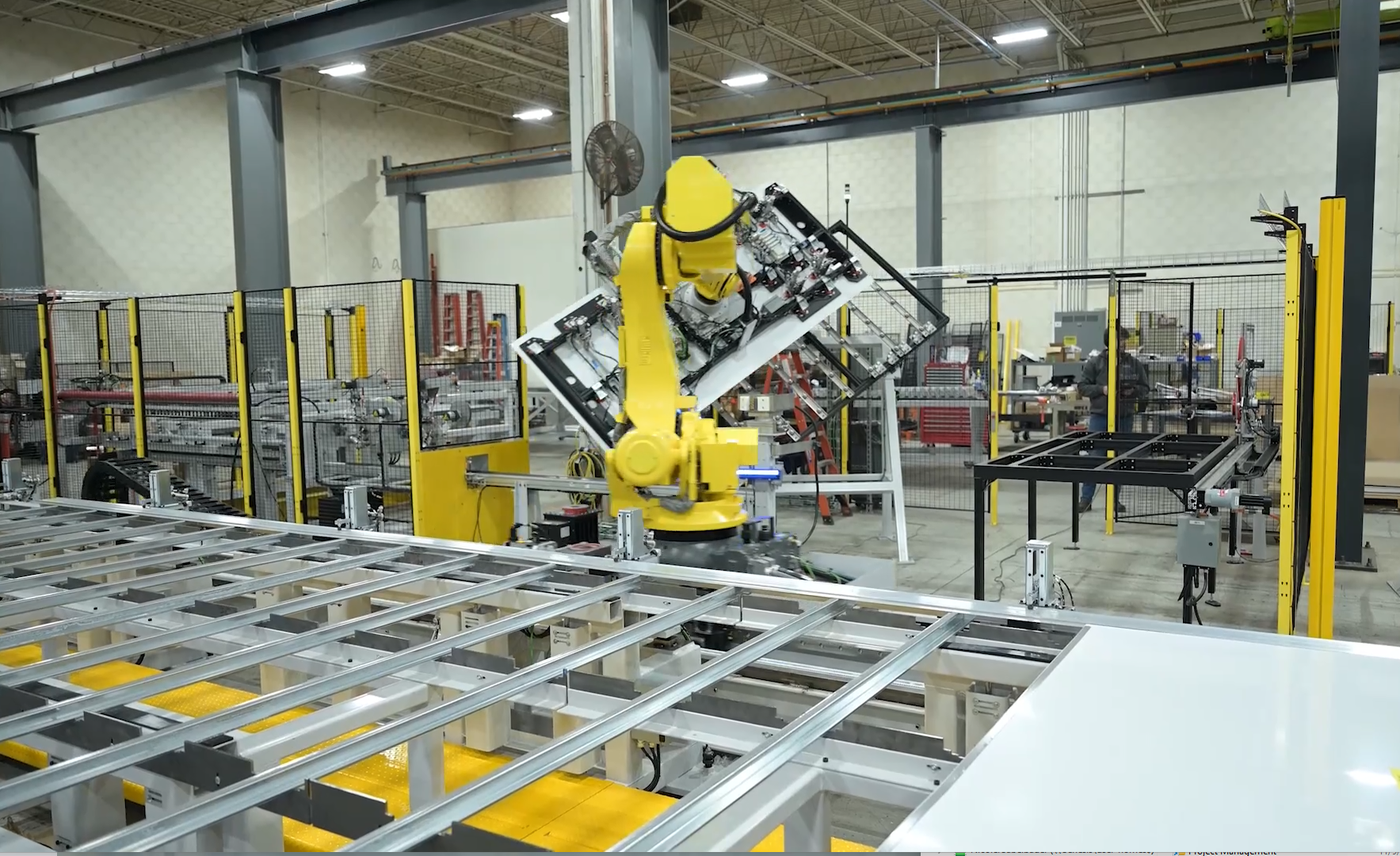
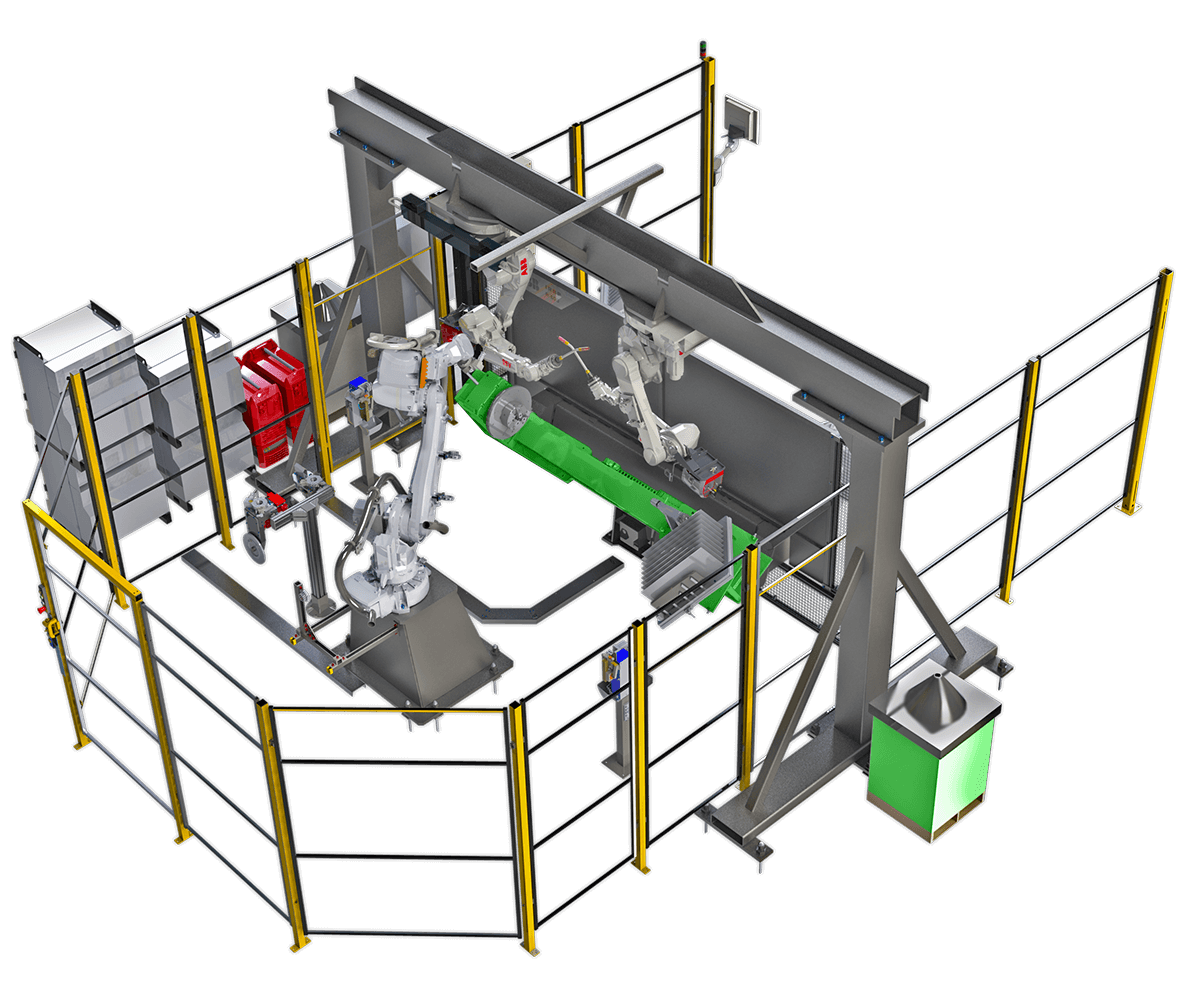
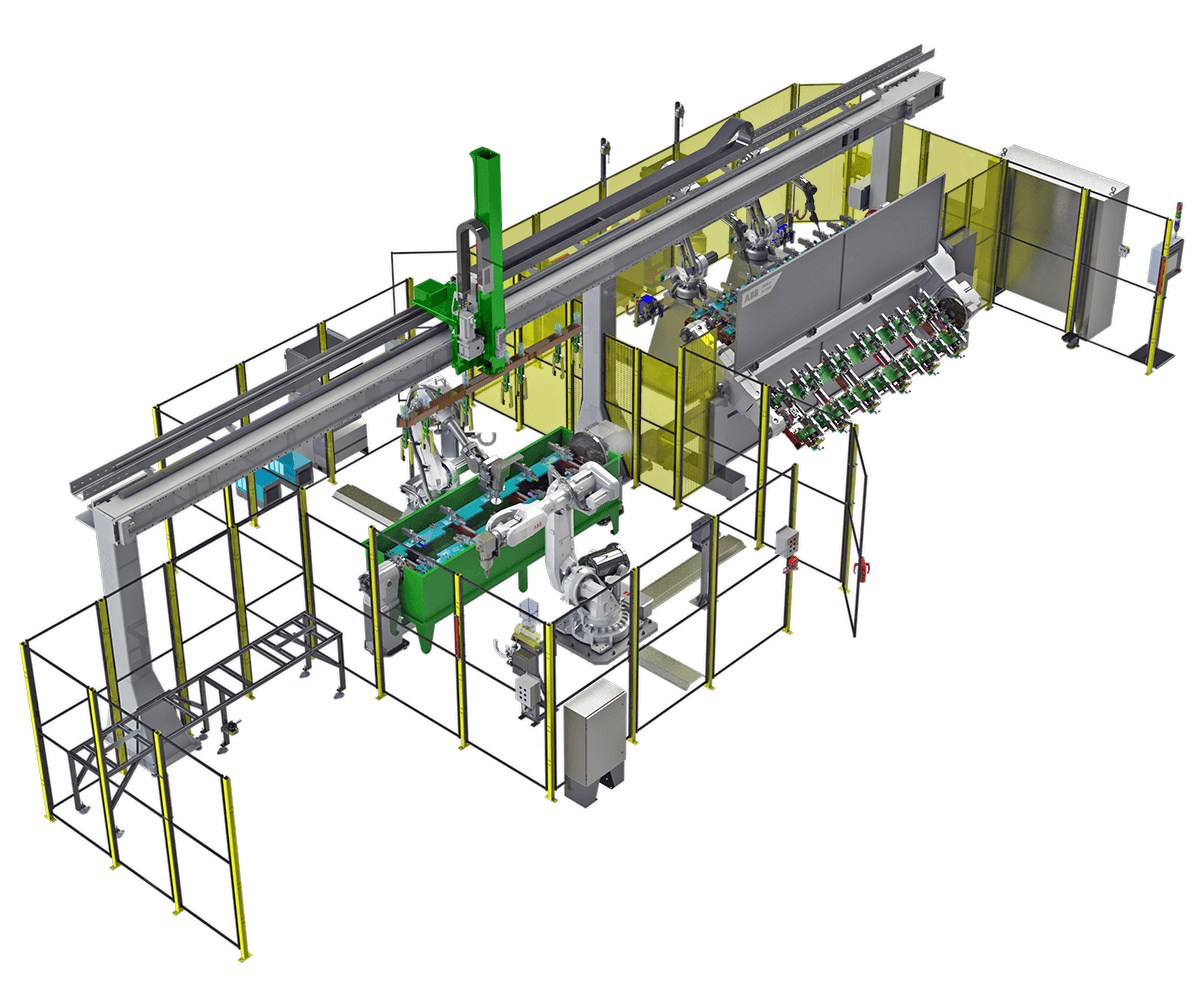
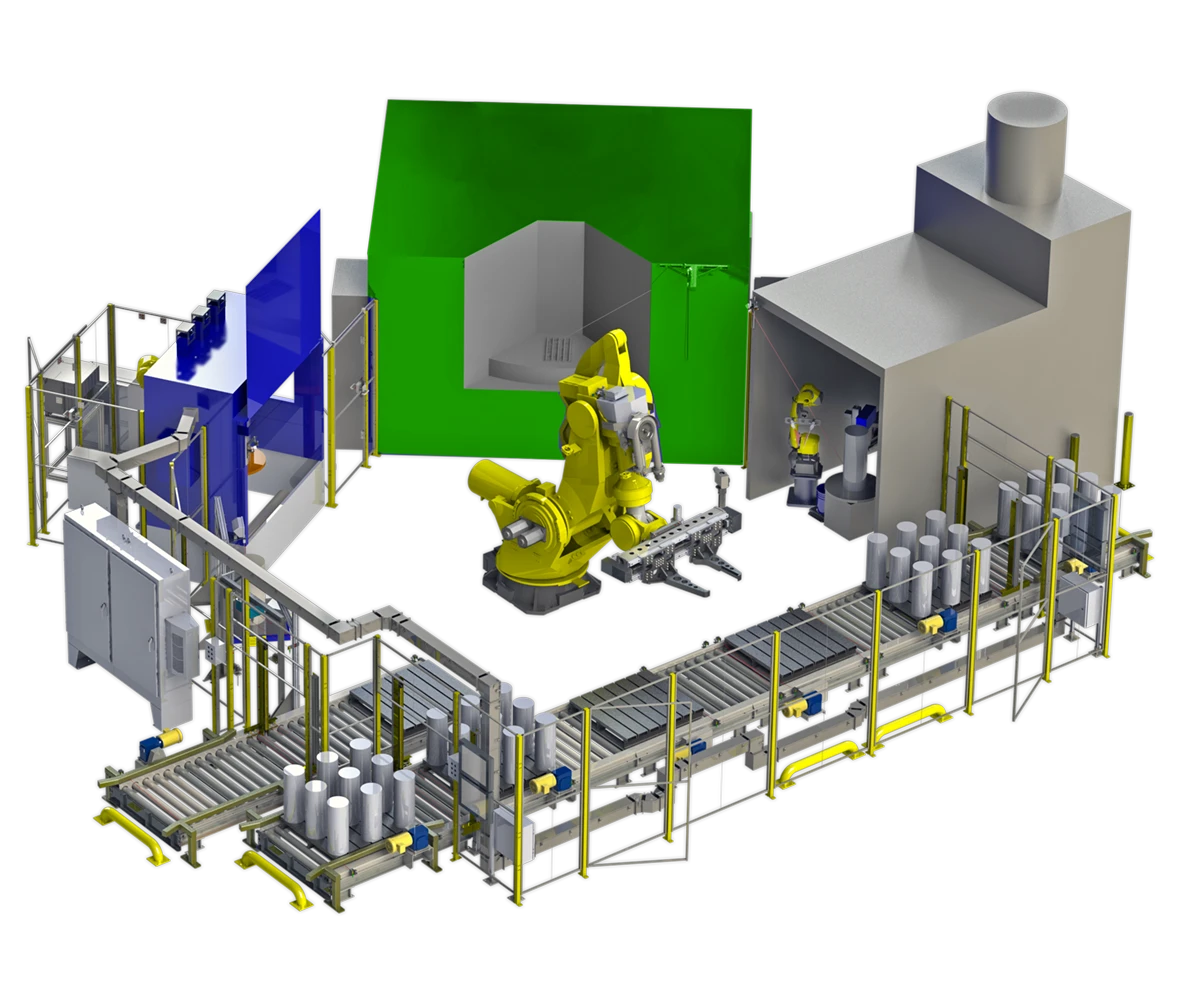
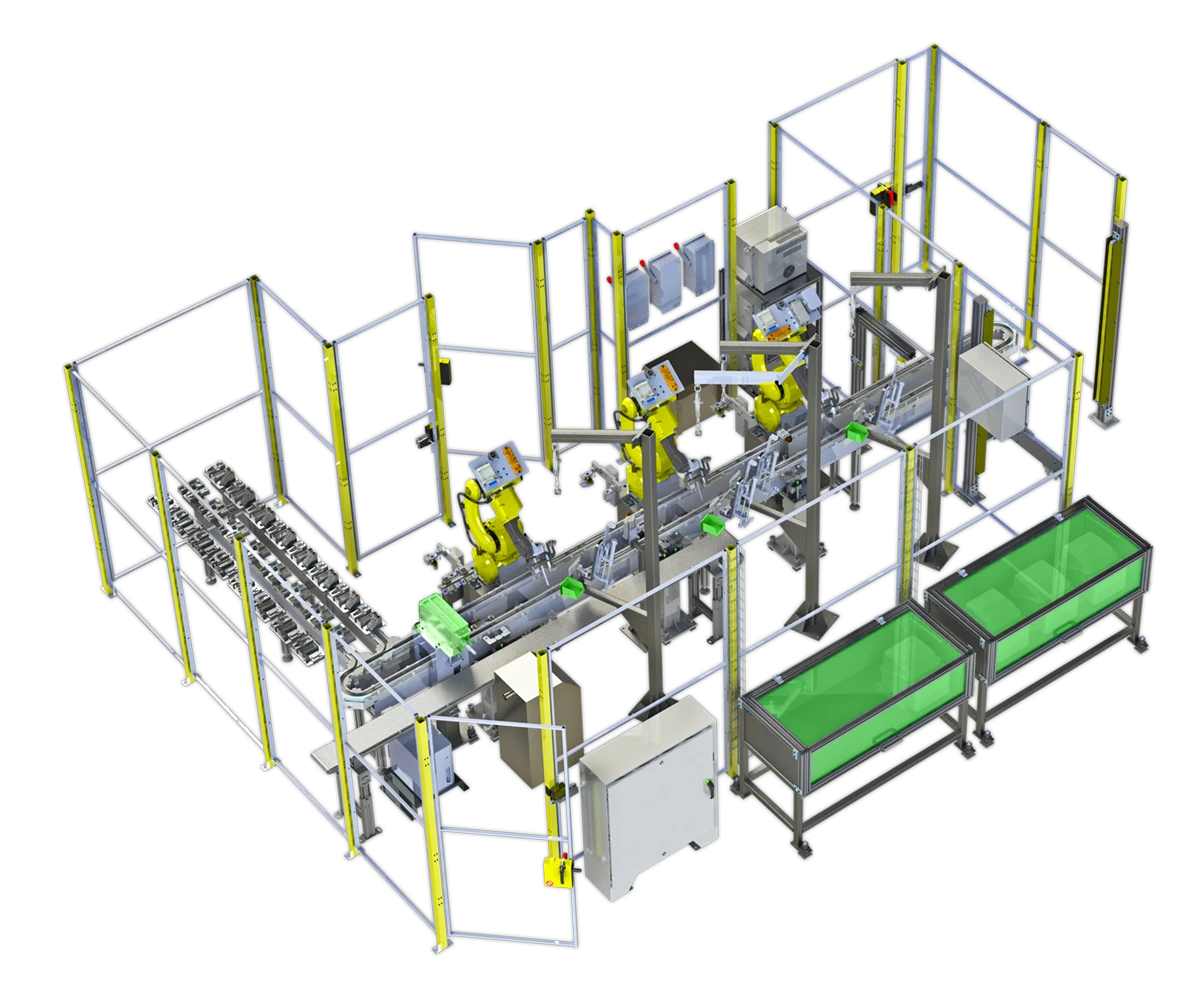
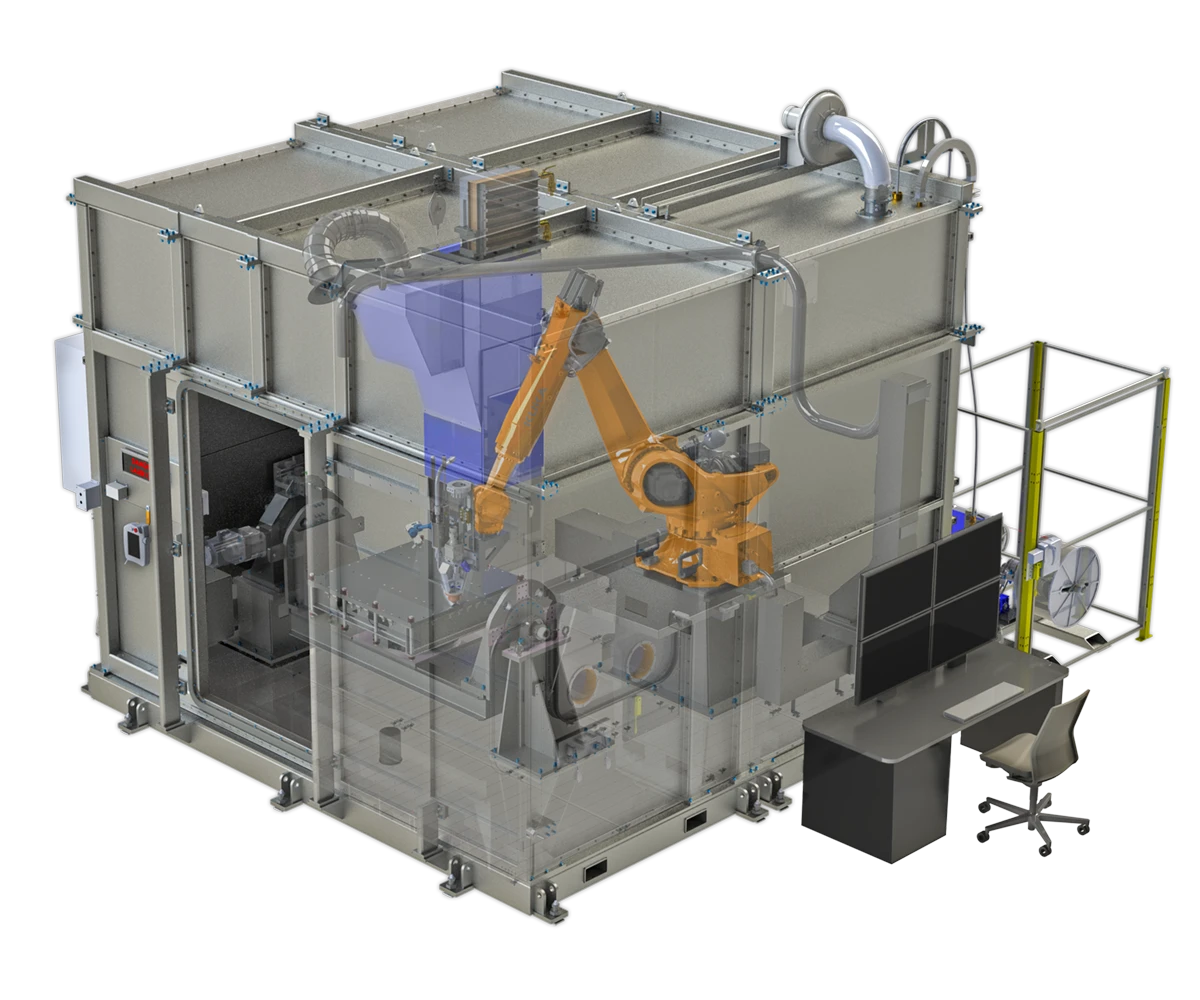
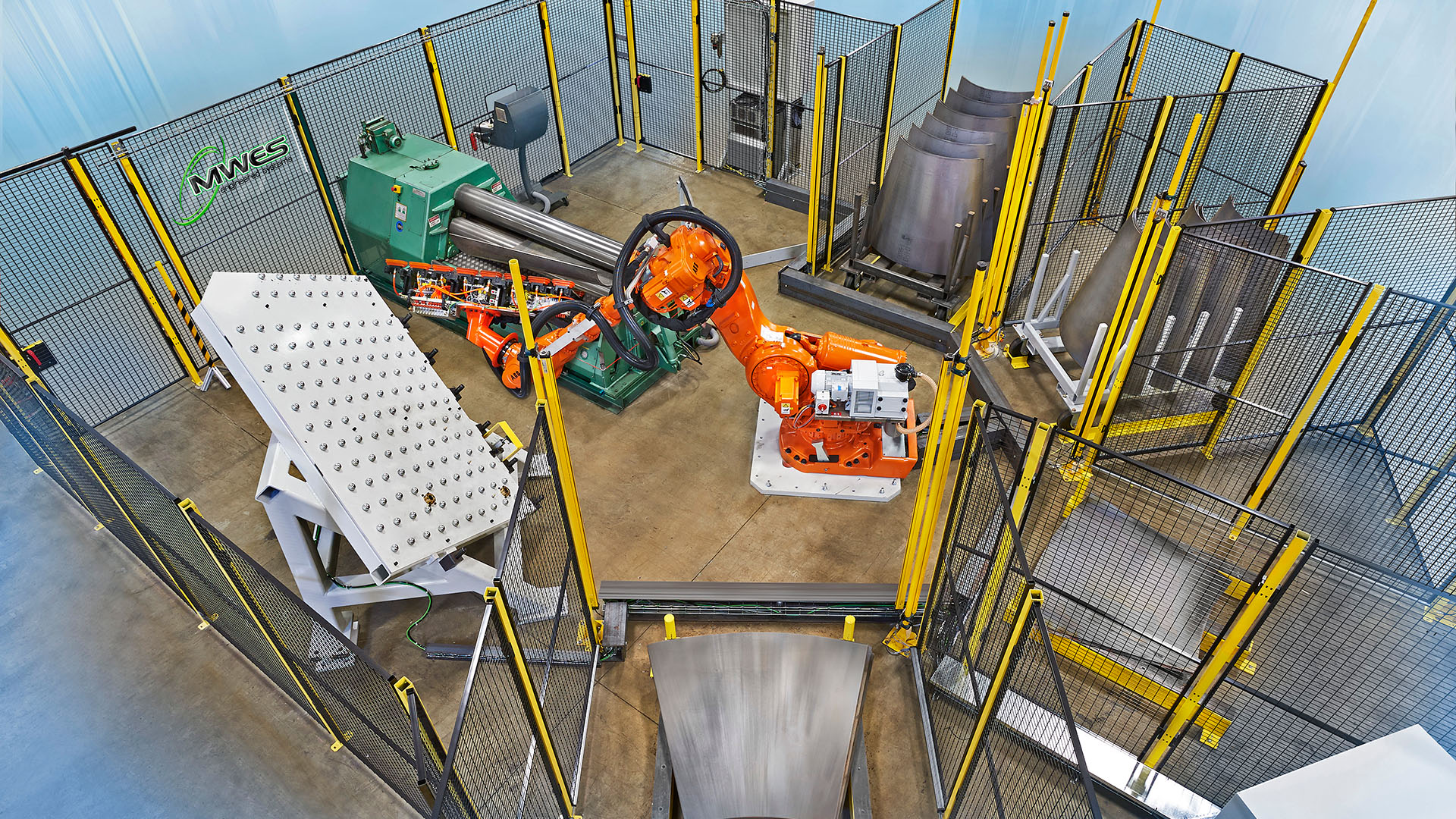
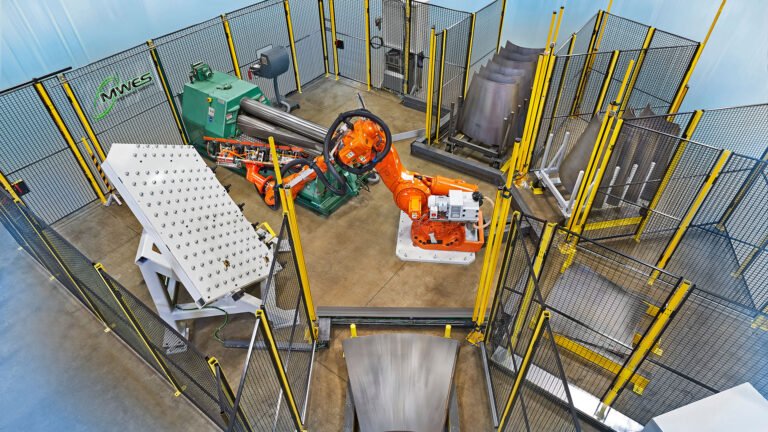
MWES delivered a turnkey robotic roll forming cell that includes:
- Operator pallet loading of blanks via forklift
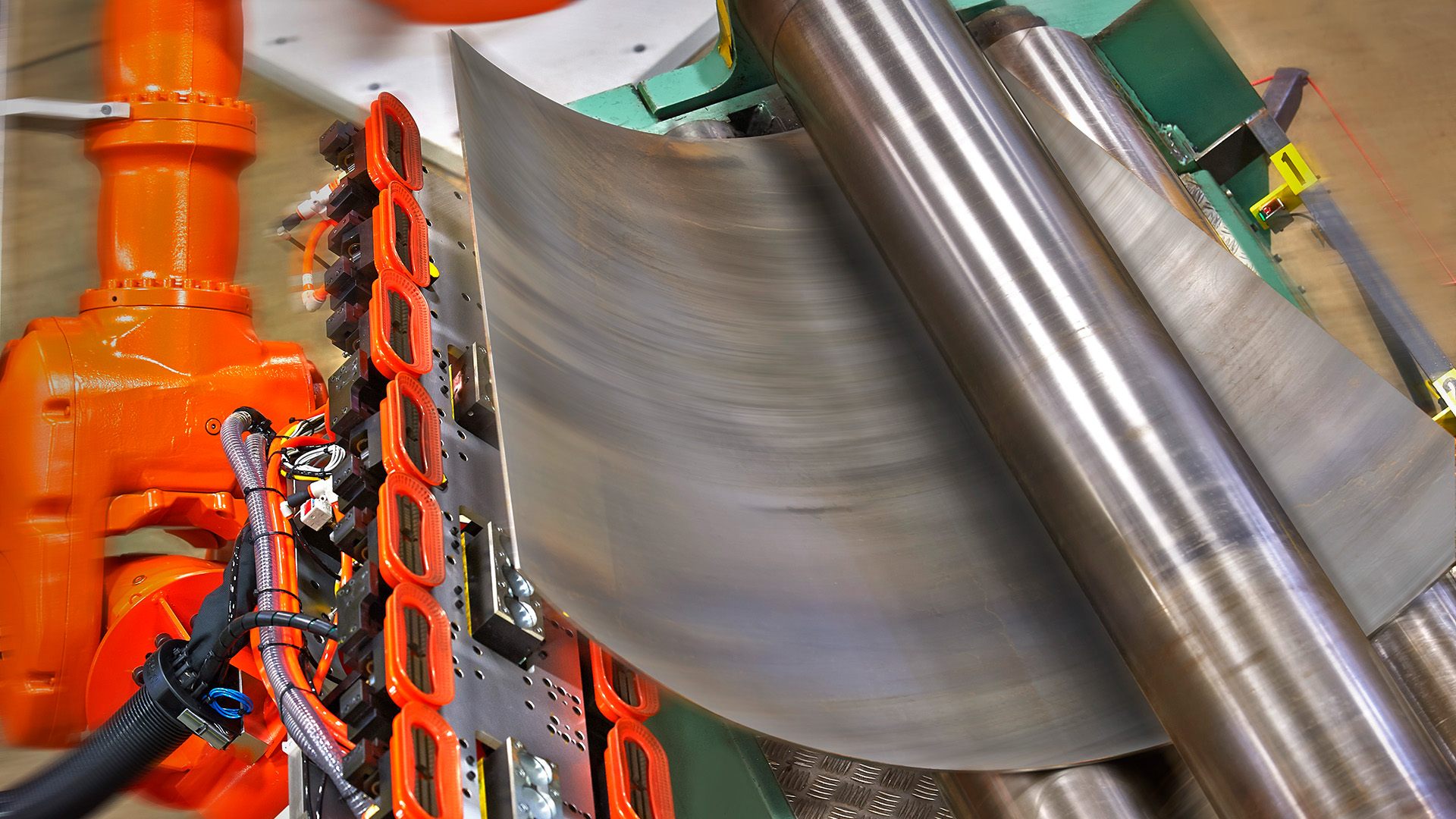
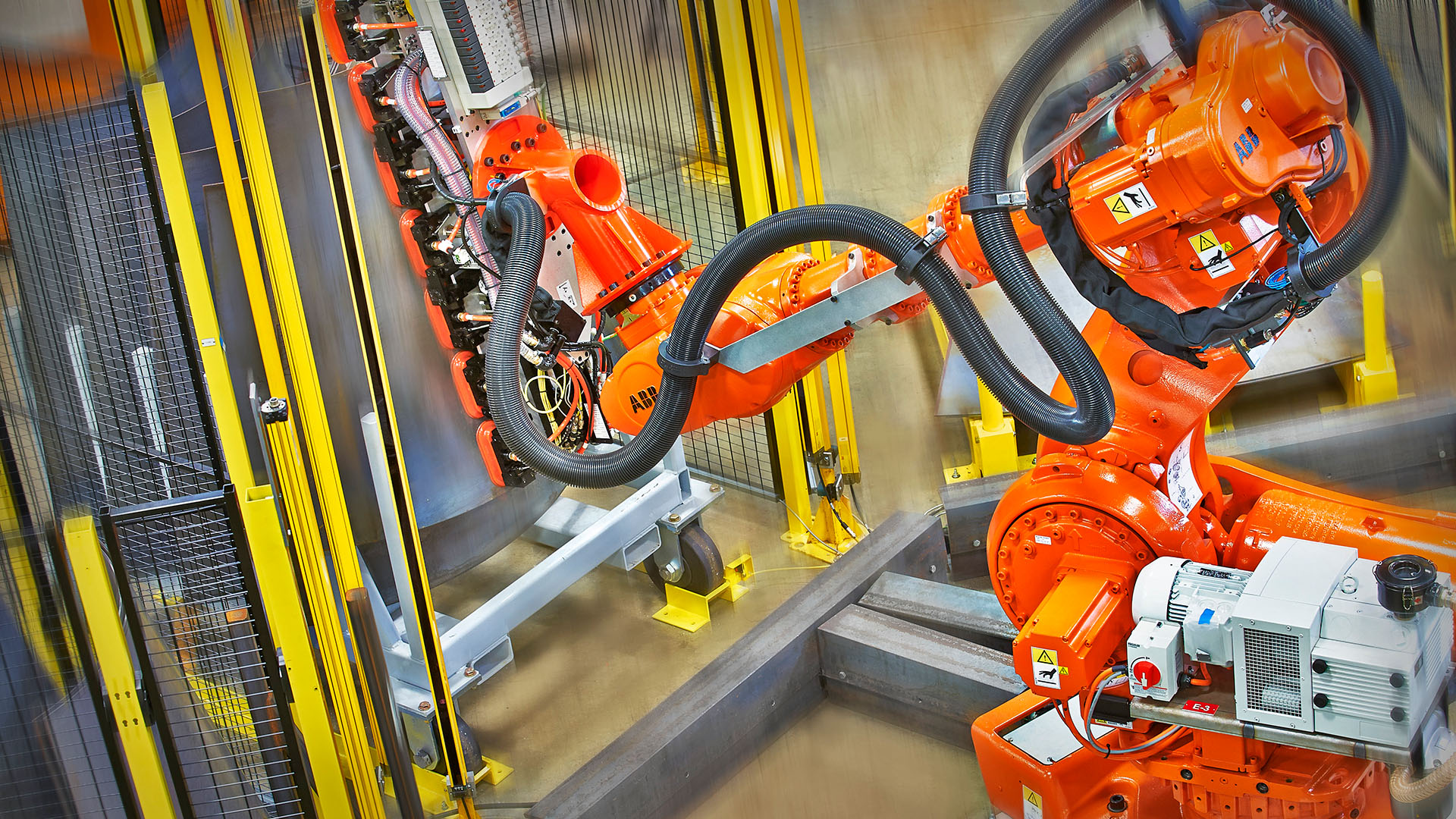
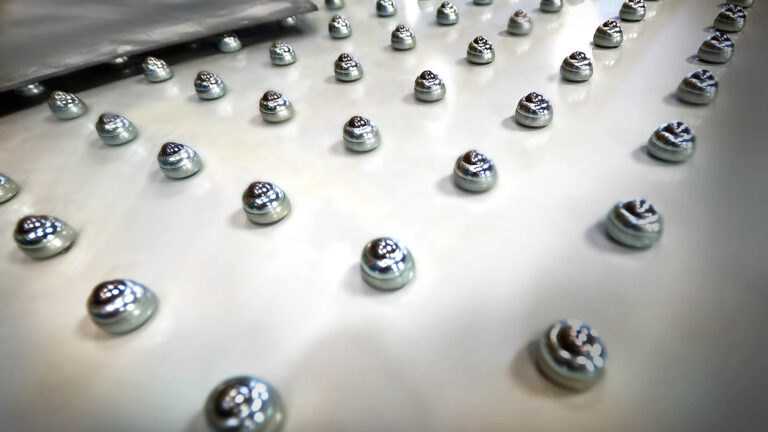
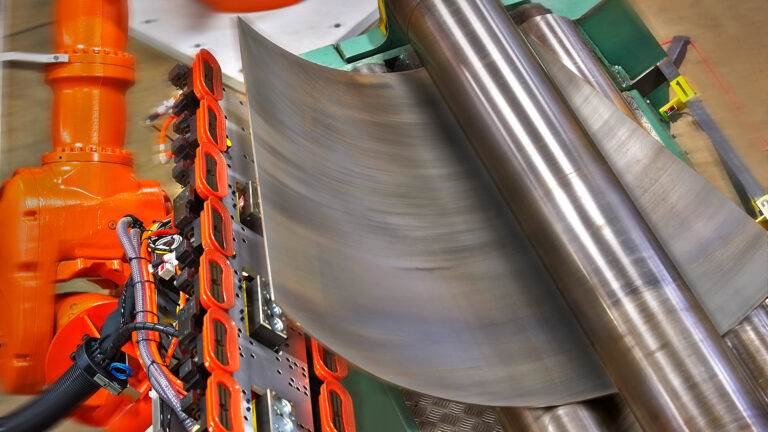
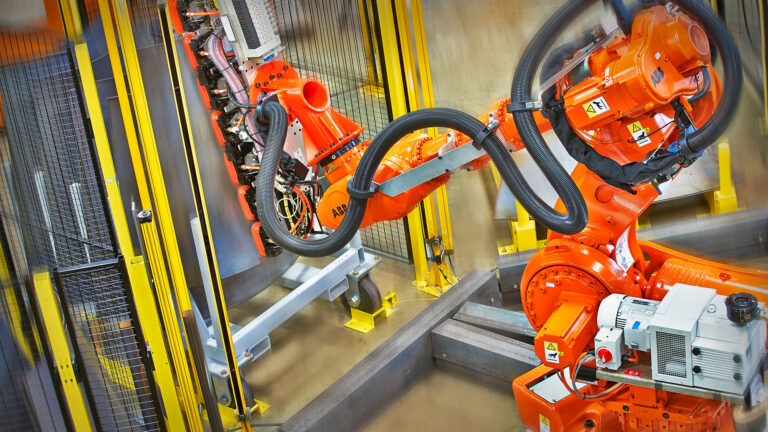
- Vacuum EOAT to grip heavy cone blanks and place on a squaring table
- Edge detection sensors for part orientation and alignment
- Automated insertion of blanks into the roll former and removal of finished cones to rack
- Operator access only for loading input pallets and unloading output racks
This integrated system automates the infeed, forming, and stacking of heavy cone parts in a continuous cycle—reducing manual handling and improving precision.
Summary: The cell reliably handles large steel blanks through robotic alignment and roll forming, transforming a strenuous manual process into a seamless automated operation.
The Results
Cycle Time Improvements, Labor Reduction & Safer Handling
The MWES automation cell delivered significant benefits:
- Enabled unattended robot feed of blanks into the roll former, eliminating manual loading
- Improved cycle speed and throughput for large steel cone production
- Removed operator exposure to heavy lifting and misalignment risk
- Maintained consistent part orientation and quality via integrated edge detection
By replacing manual assistance with robotic handle and alignment, MWES streamlined the roll-forming process, improving safety and throughput while minimizing operator labor.