

The Challenge
Welding Large Loader Components Safely and Efficiently
Building weldments for skid steer loaders involves large, heavy components that are difficult to position and weld manually. The customer’s requirements included:
- Processing large sub-assemblies (chassis and load arms) using the same cell
- Mixing materials (mild and stainless steel) requiring torch/tool changeovers
- Coordinating multi-robot welding sequences across fixed and mobile fixtures
- Handling small batch sizes—even batch-of-one setups requiring flexible programming
- Providing safe, ergonomic handling of heavy payloads
They engaged MWES to address these challenges with a robust, high-mix robotic welding solution.
The Solution
Track‑Mounted Handling Robot & Automated Tool Changeover for Flexible Welding
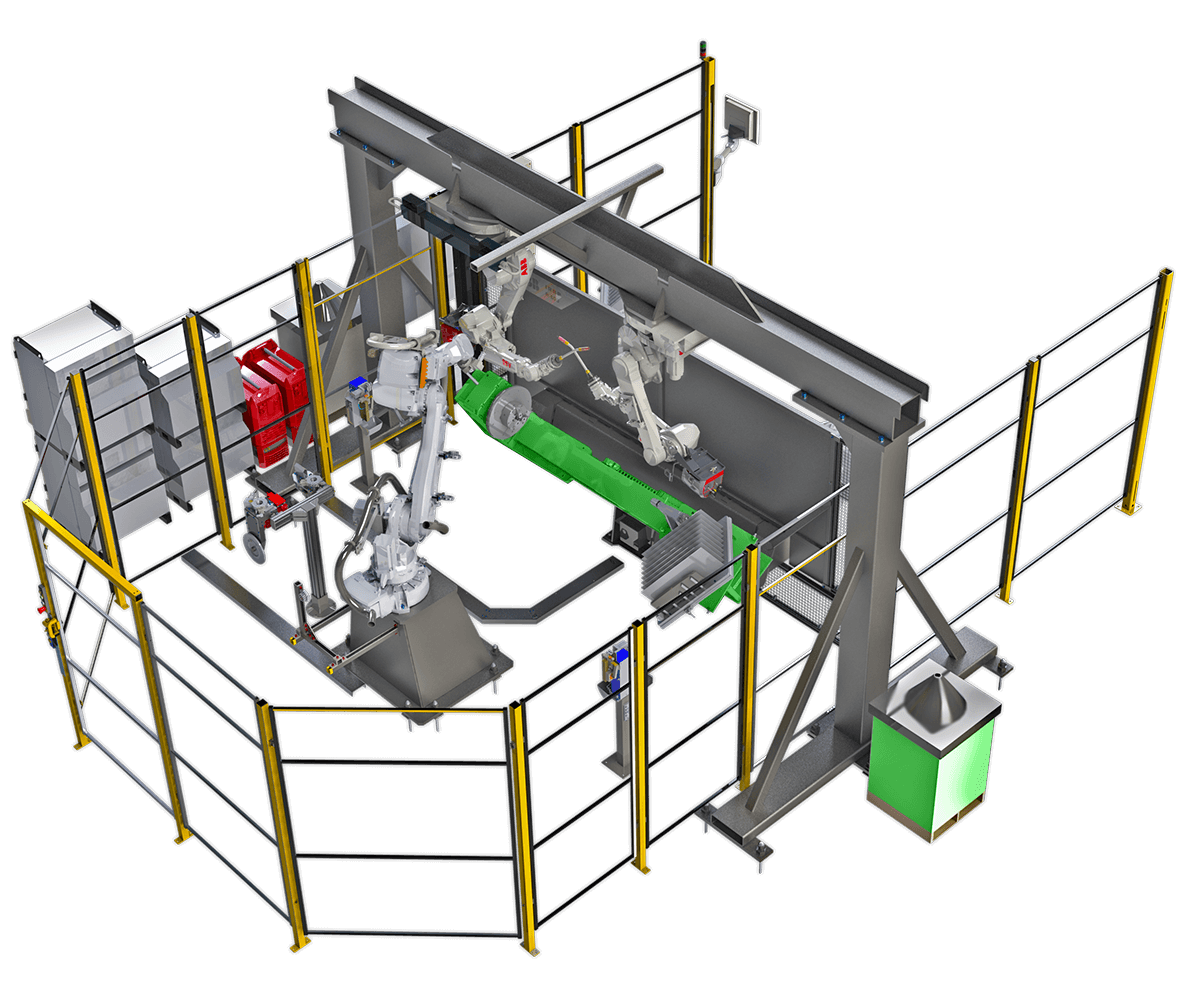
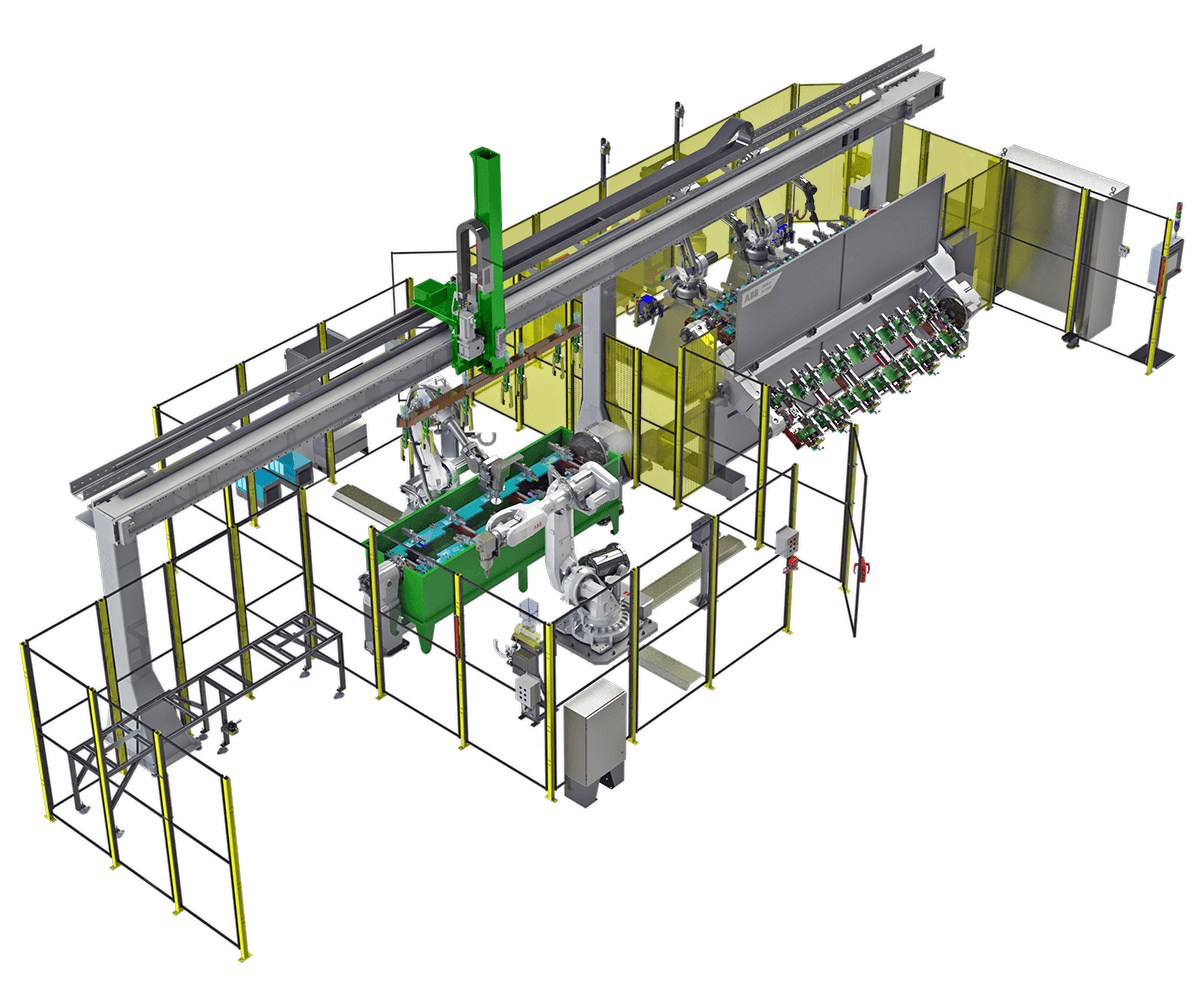
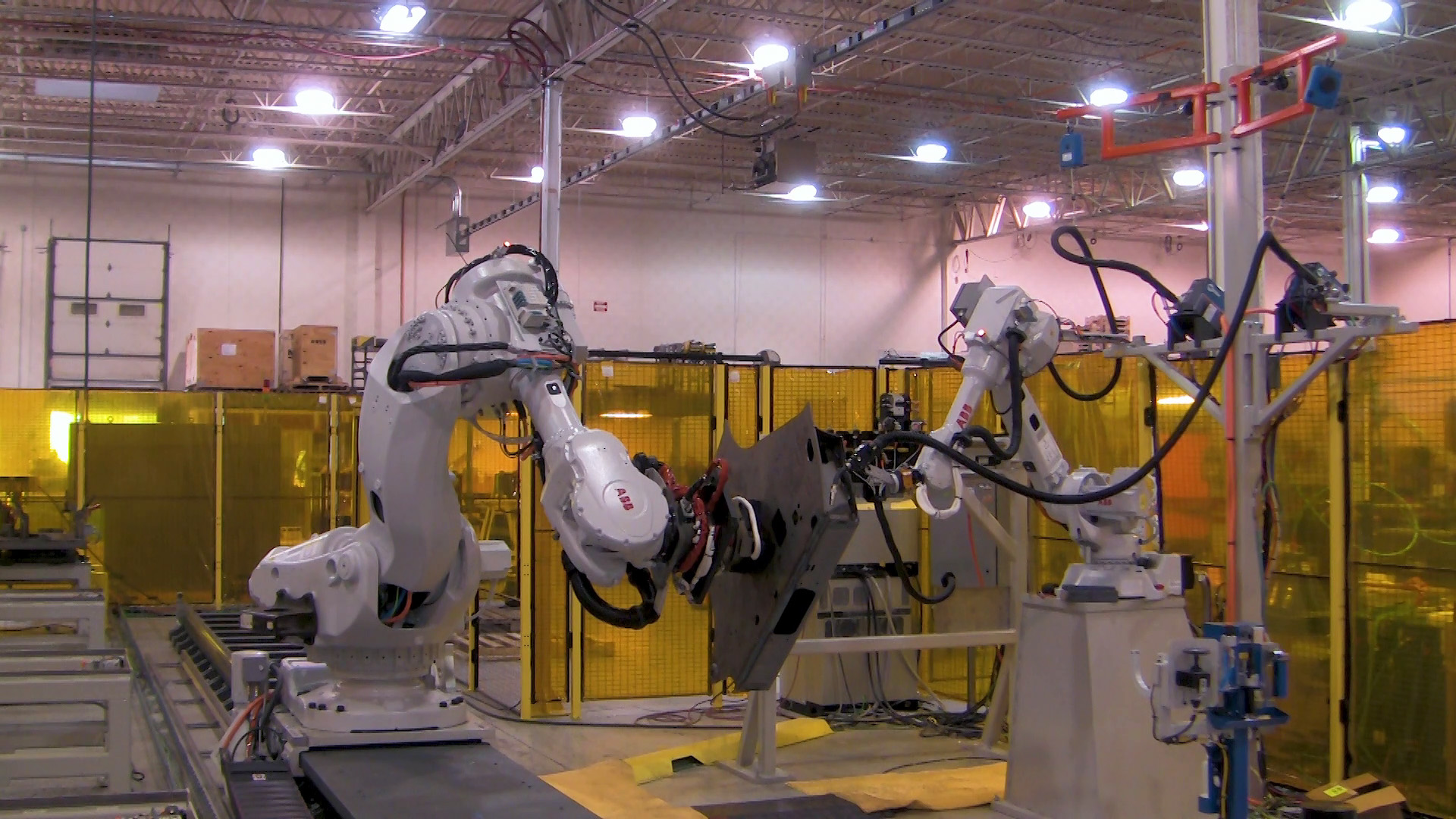
MWES designed a custom flexible, dual-cell system to handle high-volume large-part welding:
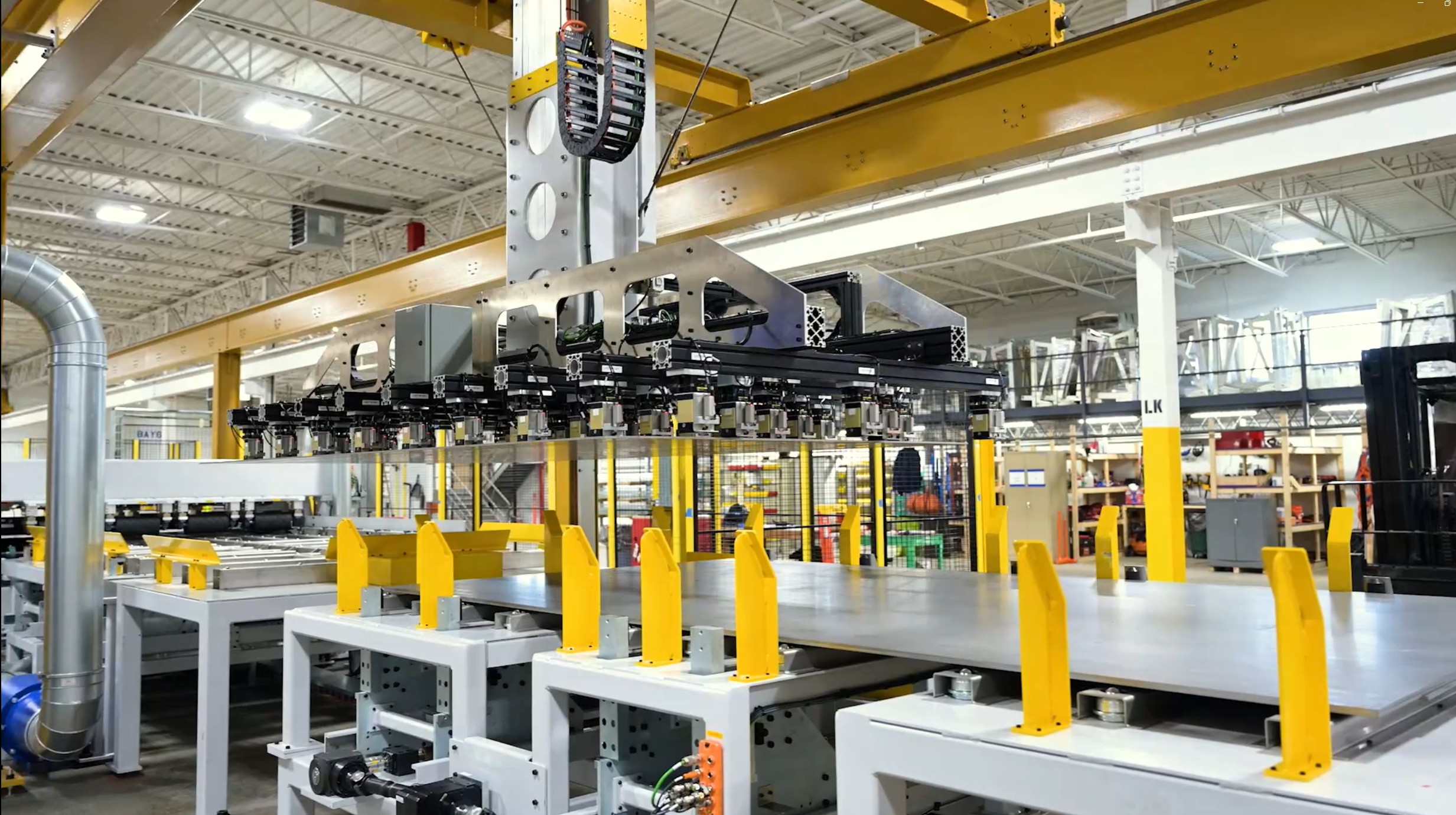
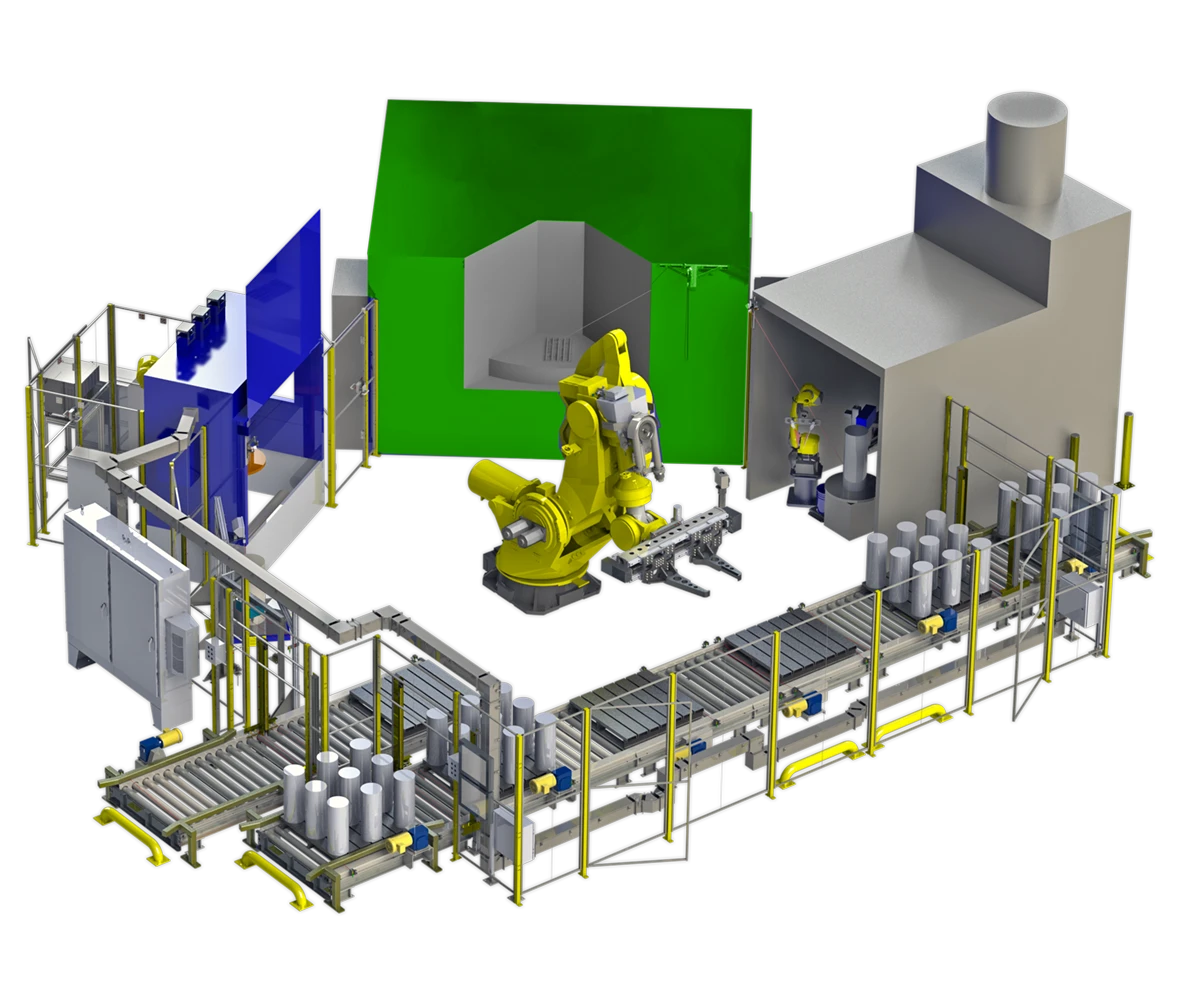
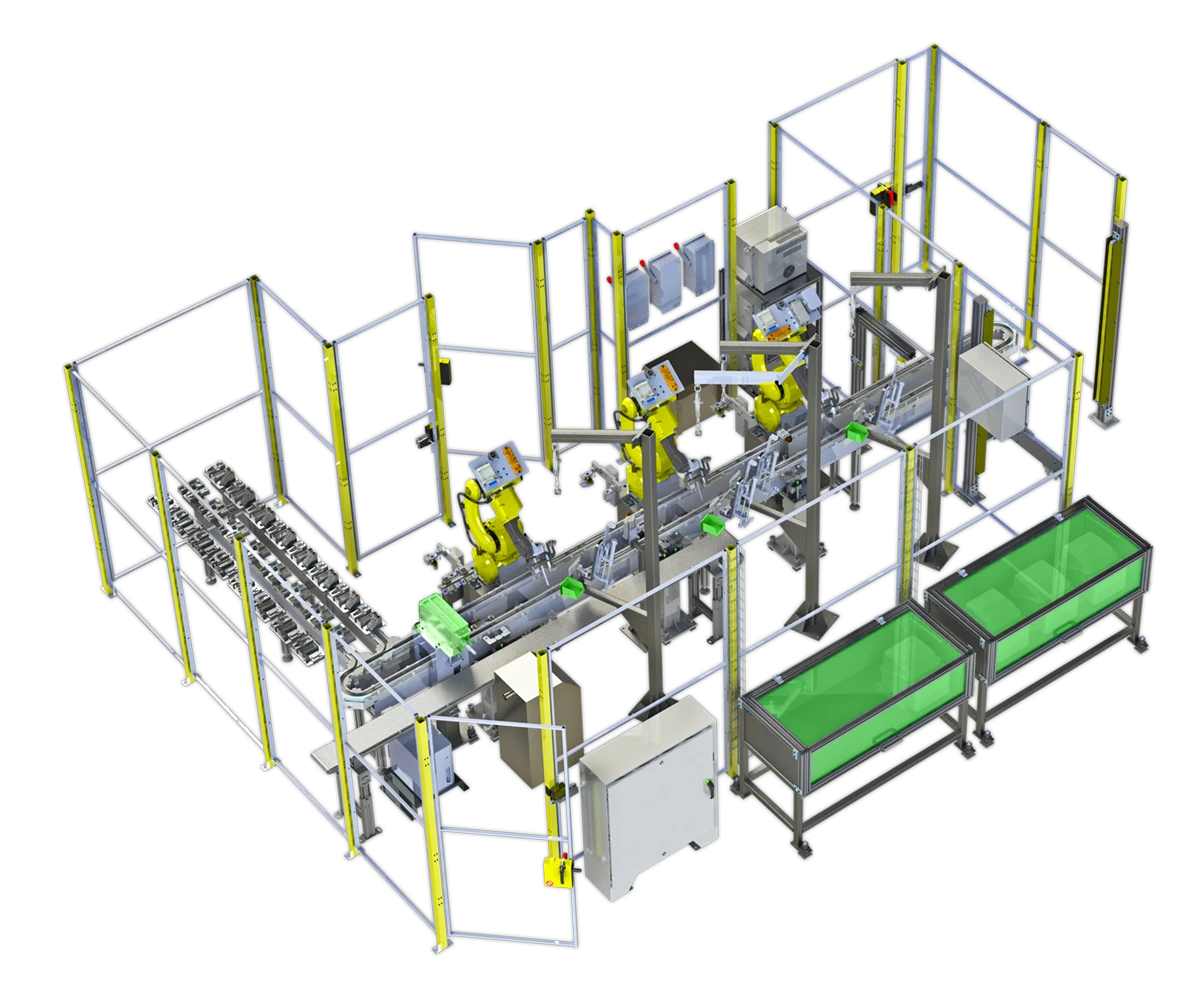
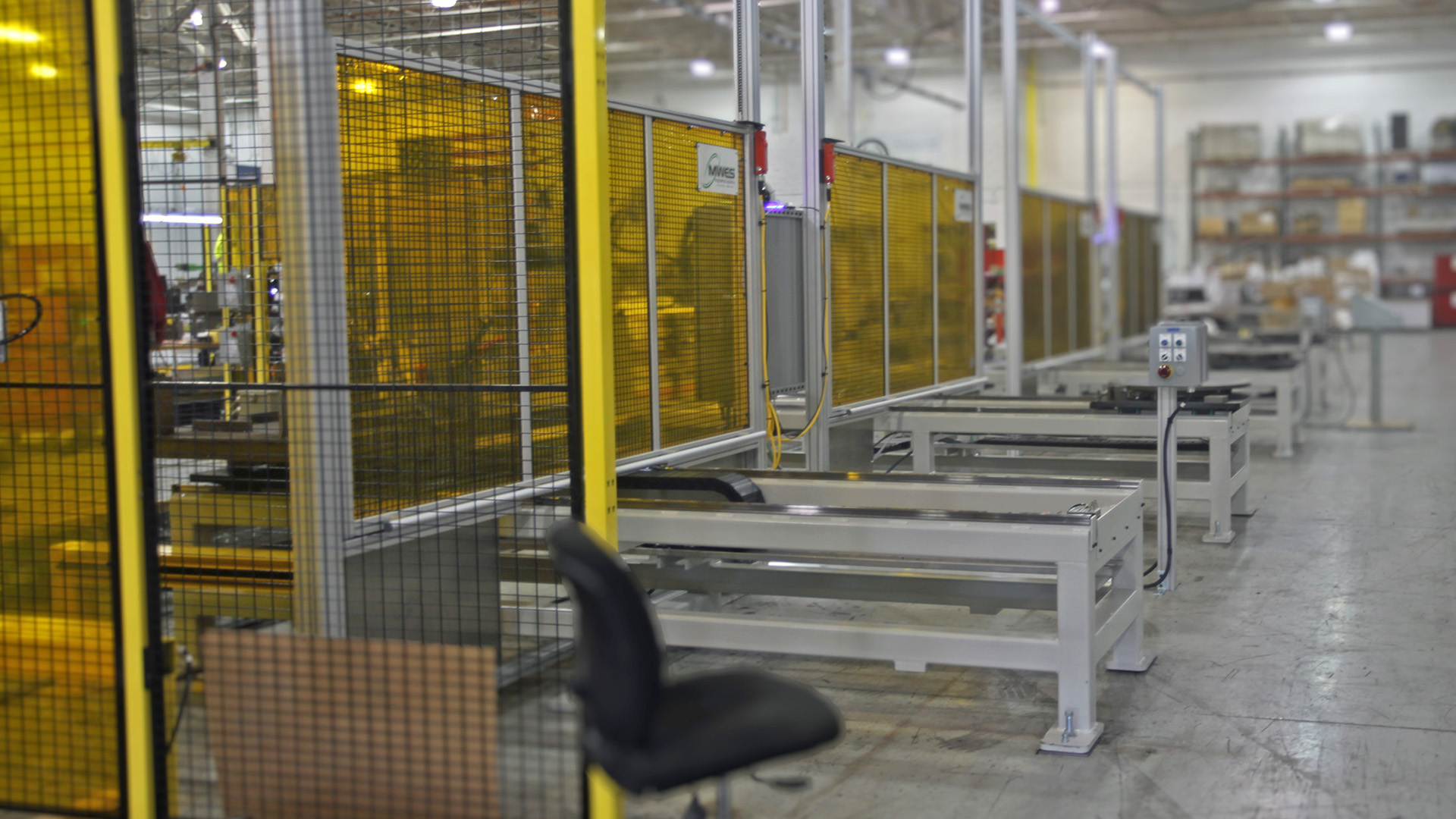
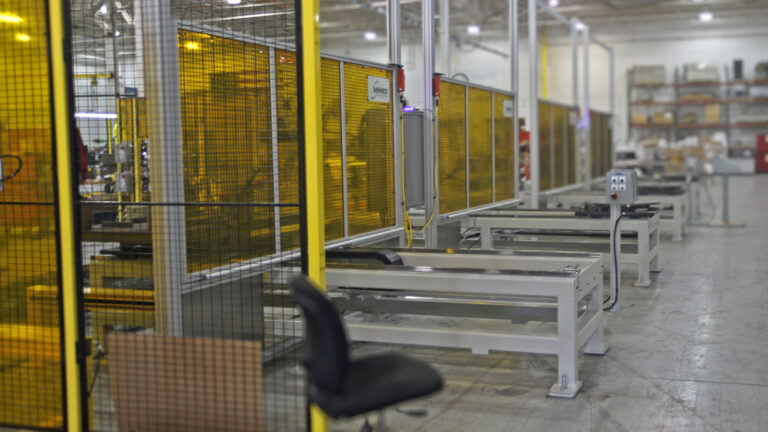
- A servo‑driven floor or robot travel track (RTT) carrying a handling robot that retrieves pre‑tacked weldments from up to six operator stations
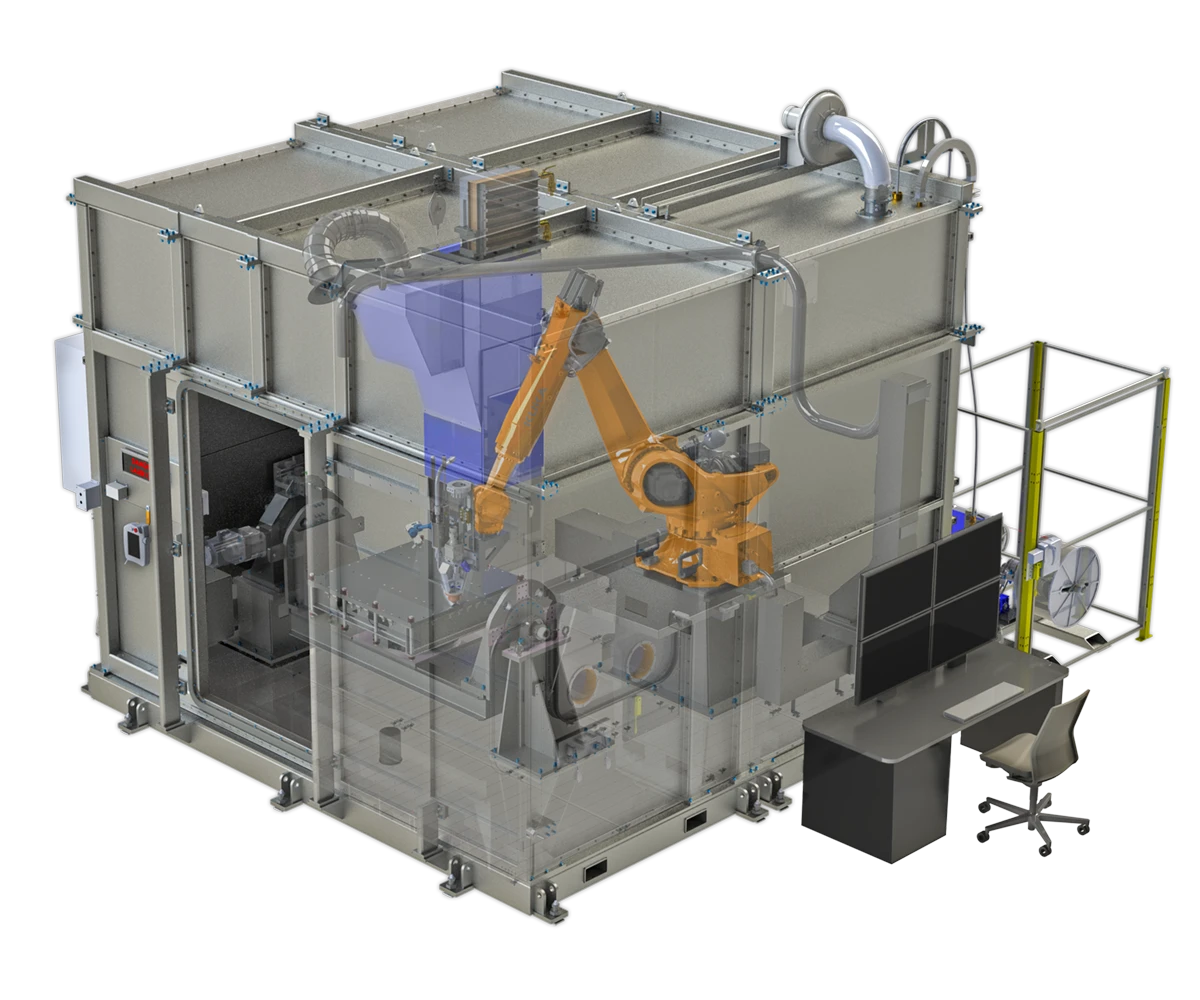
- Loader arm welding cell equipped with positioner and integrated robotic robot
- Attachment cell using robot-mounted mobile wagon to transport weldments between staging, welding, and unloading stations
- Coordinated robot programs manage weld sequences while wagons deliver and load parts seamlessly
- Built-in weld handling allows two workstations to operate in tandem: one loading/unloading, one welding
This turnkey solution enables flexible processing of diverse weldment styles, with automatic tool change and part sequencing clearly optimized for mixed-material, small-batch production.
The custom system seamlessly combines part pickup, material-specific torch/tool changes, and autonomous welding—making batch-of-one production efficient and scalable.
The Results
Increased Weld Throughput, Improved Safety & Labor Flexibility
Implementation of this systems-based welding cell yielded significant improvements:
- Capable of handling single-part batches reliably (batch‑of‑one) with flexible program selection
- Elimination of changeover downtime through automatic tooling and torch handling
- Reduced labor dependence—operators perform only tacking and loading; the system automates the rest
- Improved overall throughput and first-pass weld quality by integrating automated routines and sequencing
By automating both material movement and welding steps, MWES enabled safer, faster, and more consistent welding of large skid steer assemblies—without added labor.