The Challenge
Scaling Truss Production Without Additional Welders
The customer faced growing production demands but struggled with labor shortages and difficult manual welding ergonomics. Their goals included:
- Automating welds on trusses ranging from 4 to 16 feet in length
- Reducing operator fatigue caused by tight access and clamping requirements
- Increasing throughput without hiring additional skilled welders
- Ensuring weld accuracy and repeatability
MWES was tasked with designing a robotic system that could accommodate varying truss sizes, reduce labor dependency, and fit within their existing production flow.
The Solution
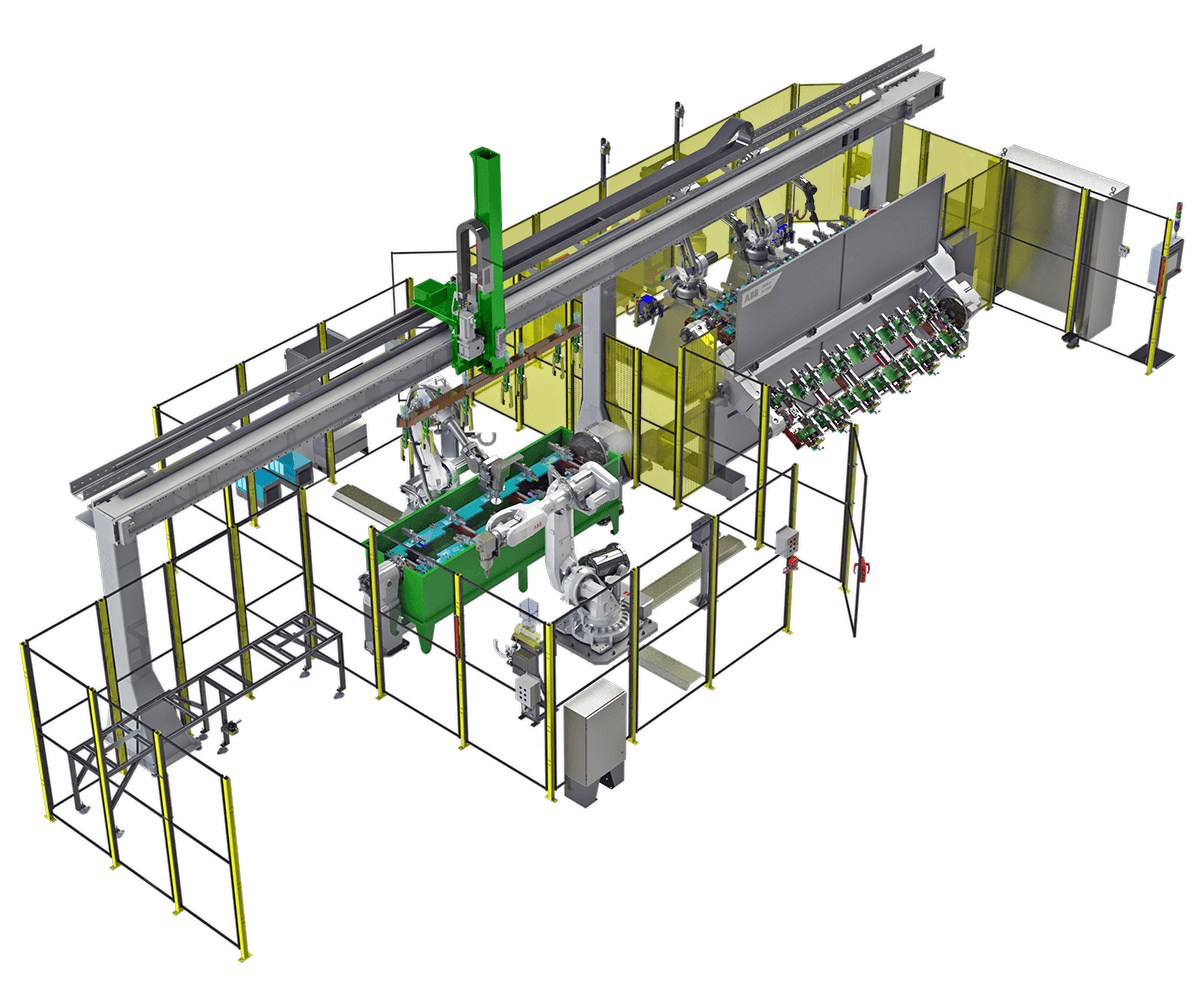
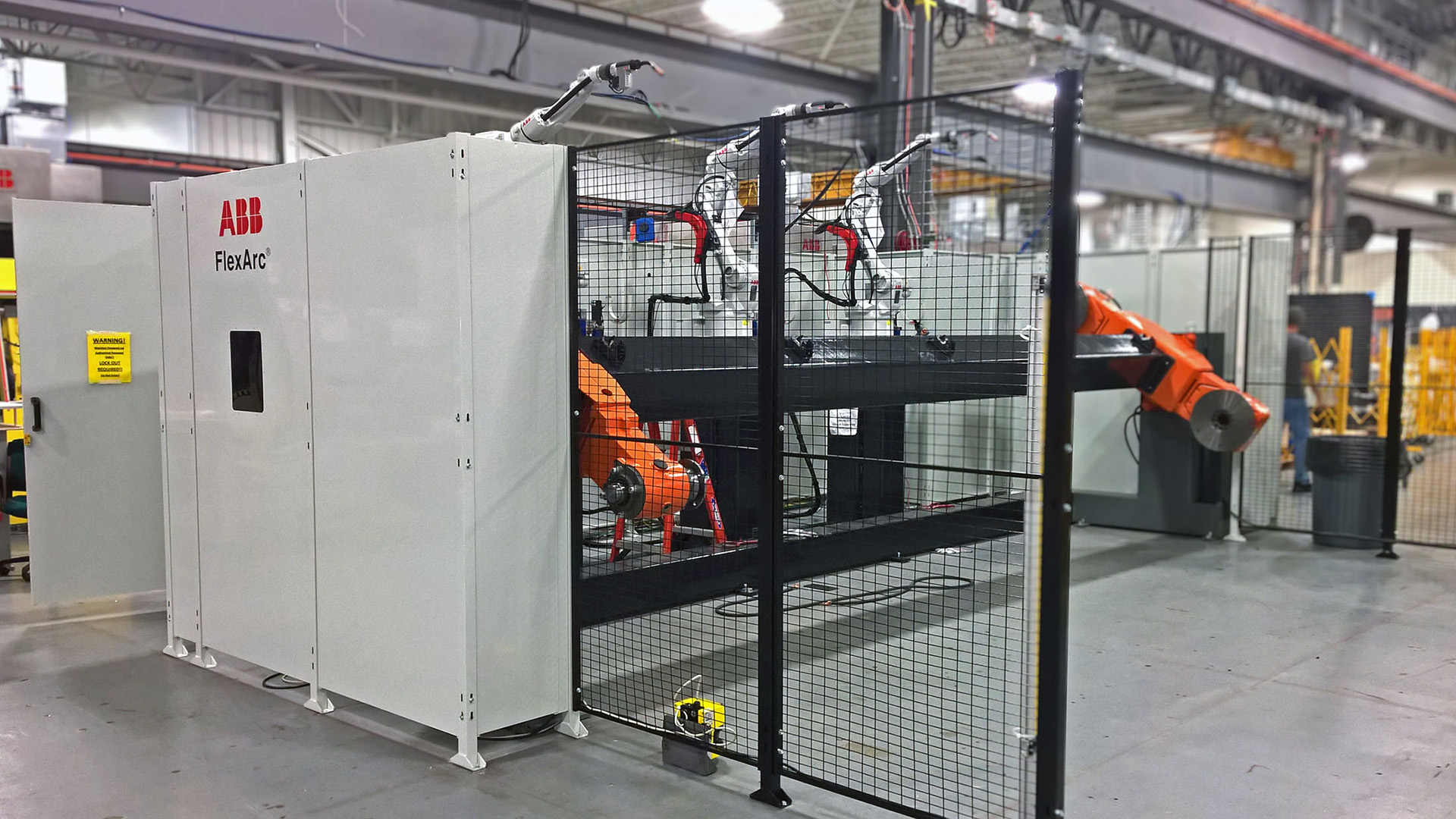
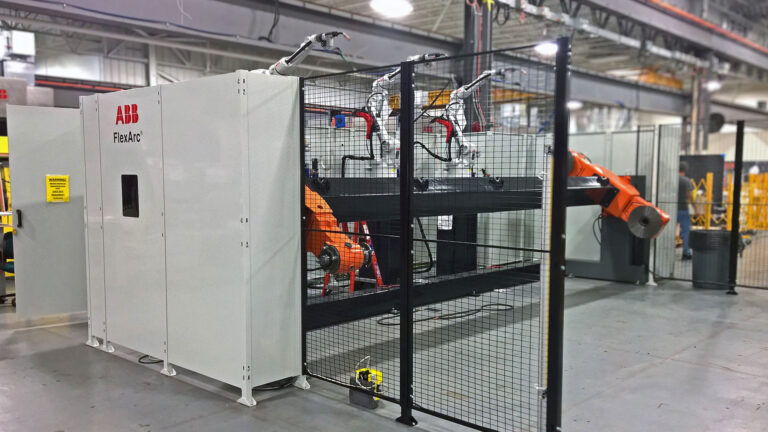
Multi-Robot Welding Cell with Ferris Wheel Positioning and Barcode-Driven Operation
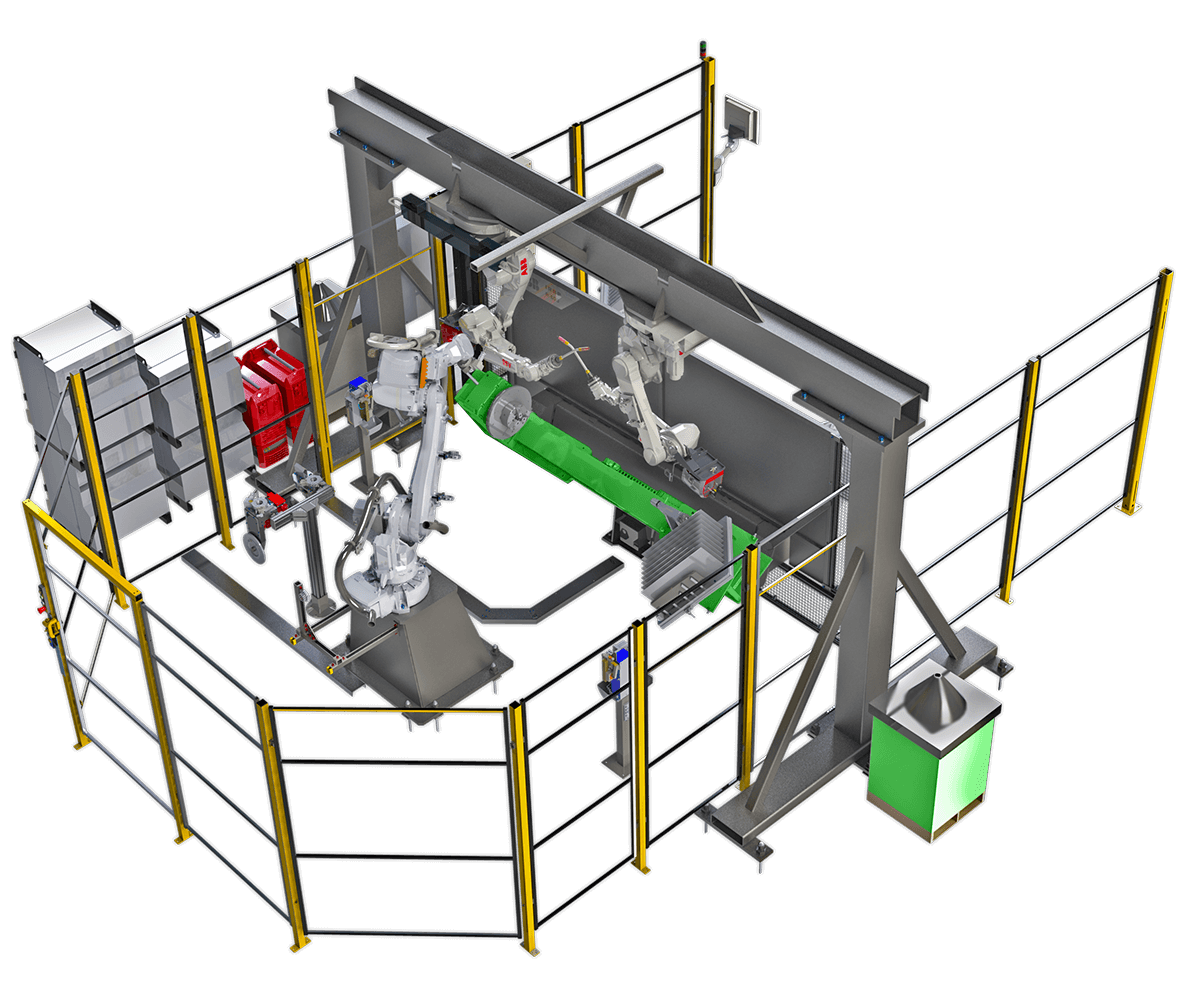
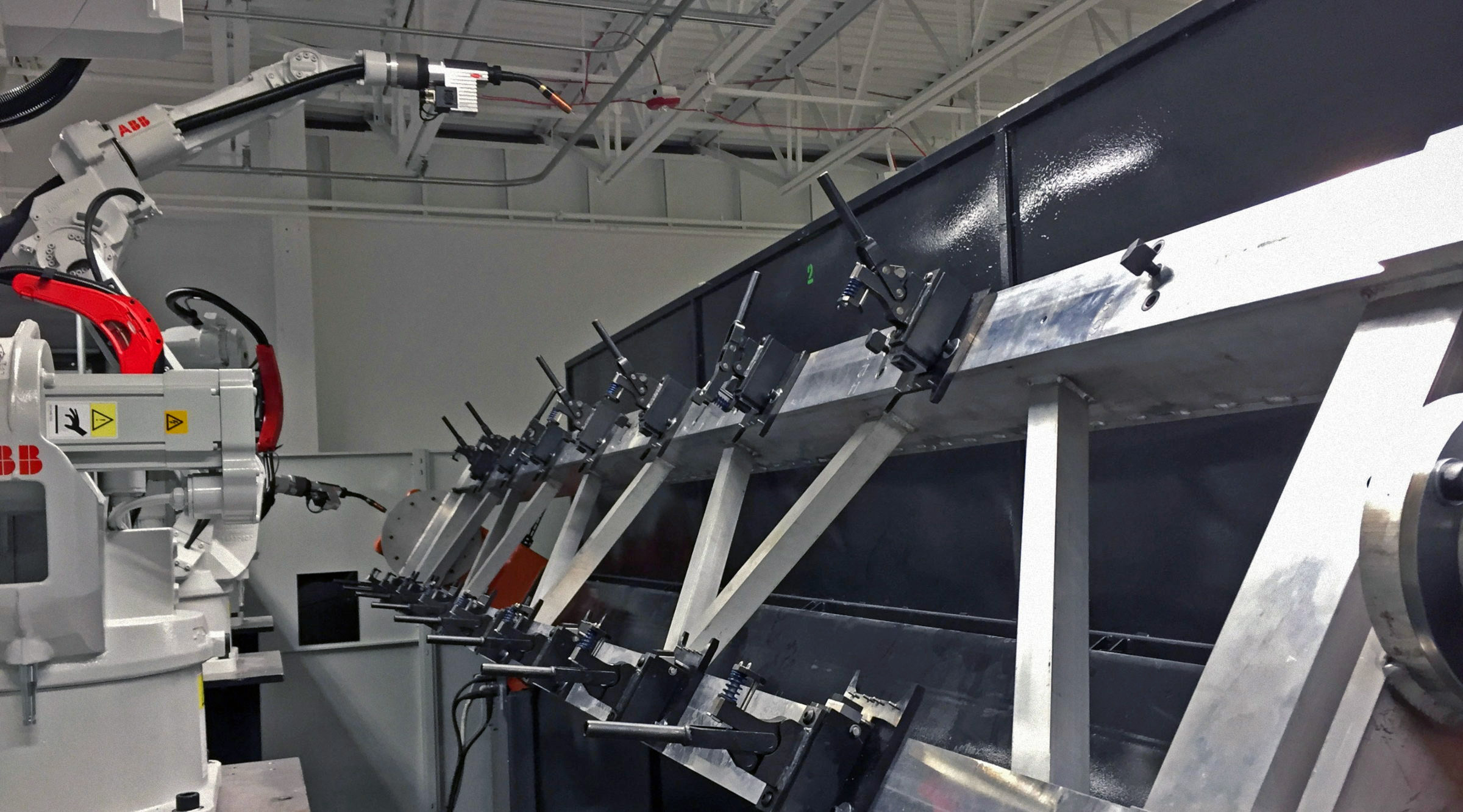
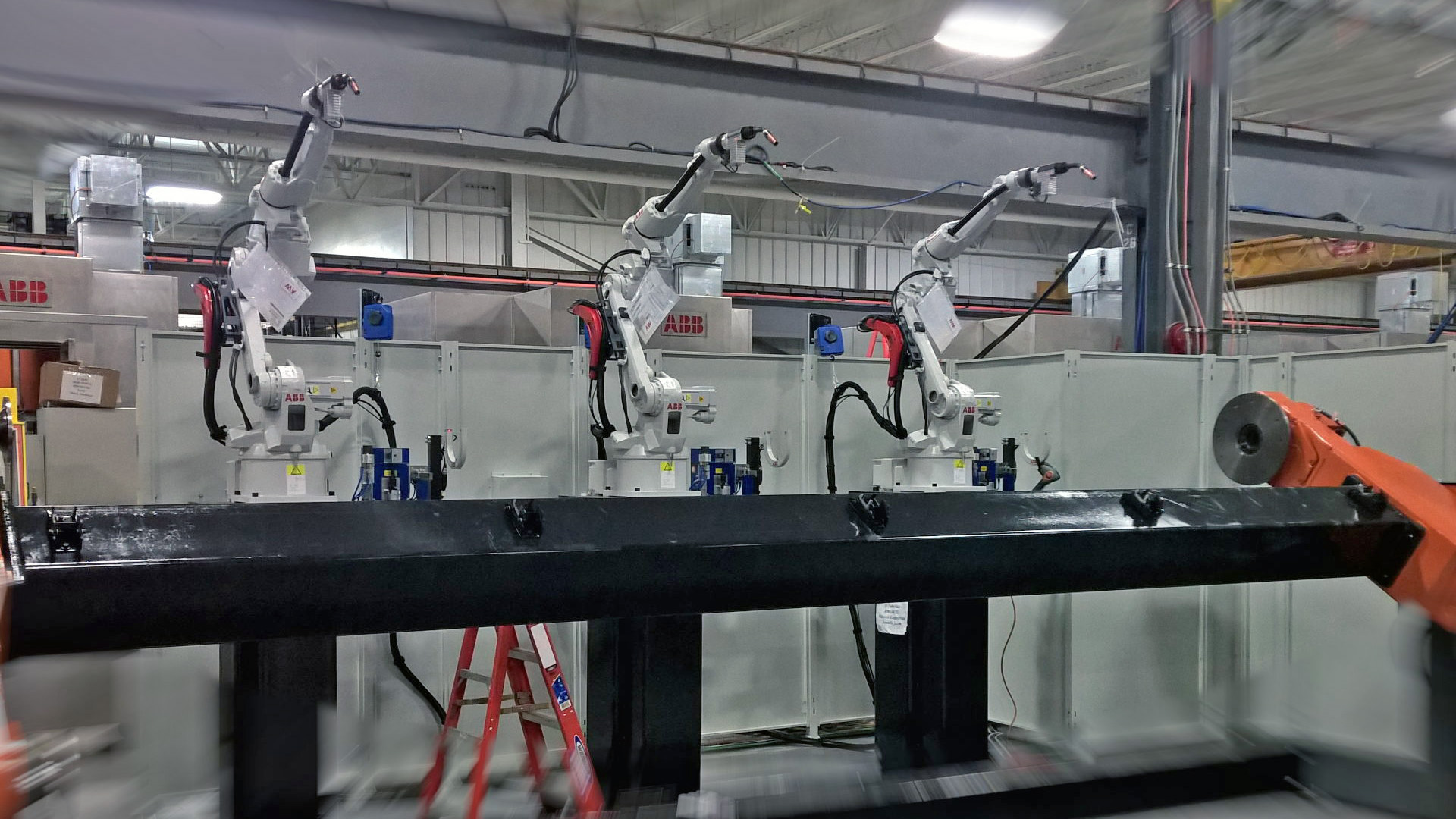
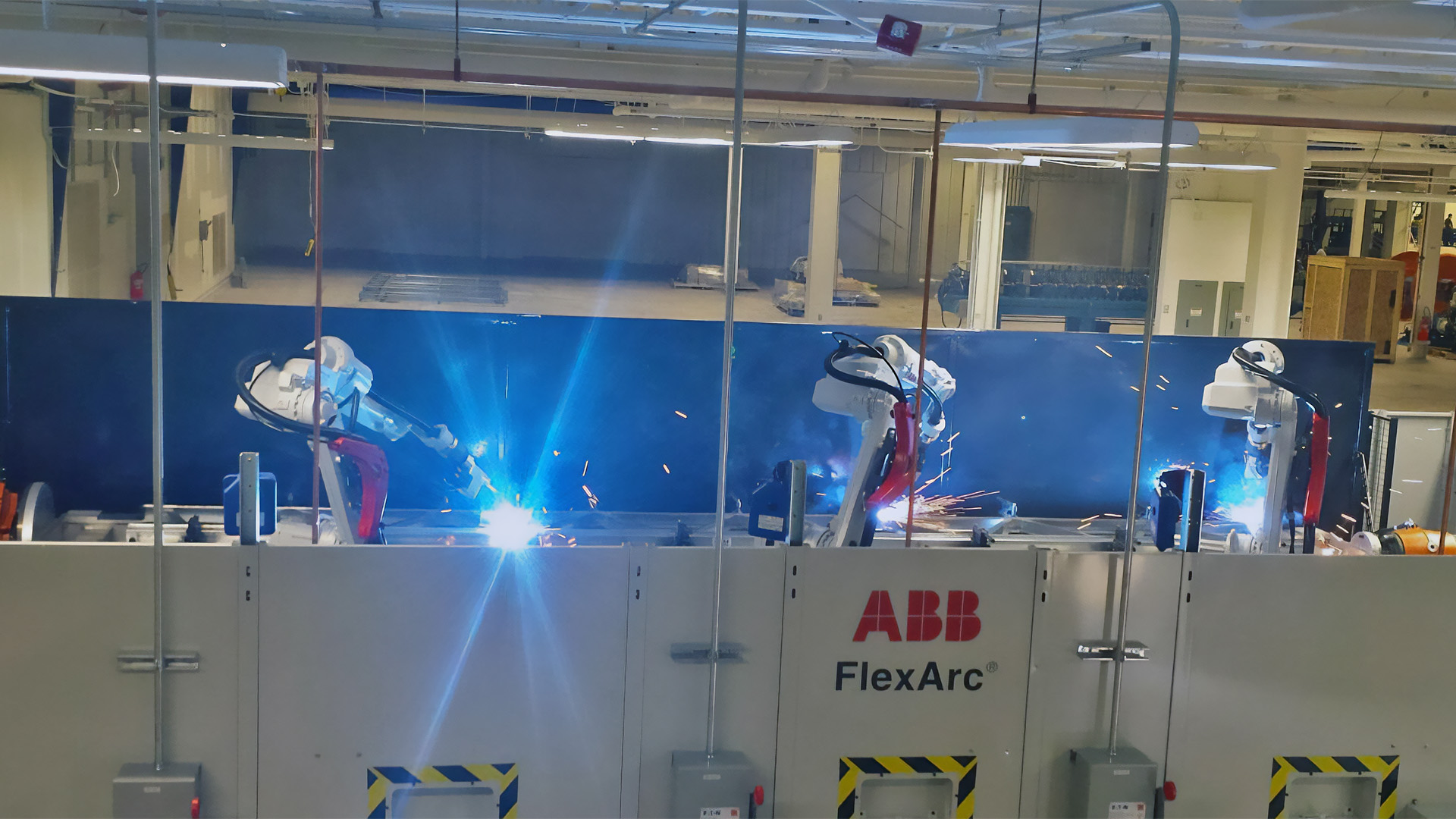
MWES engineered a fully automated welding system featuring:
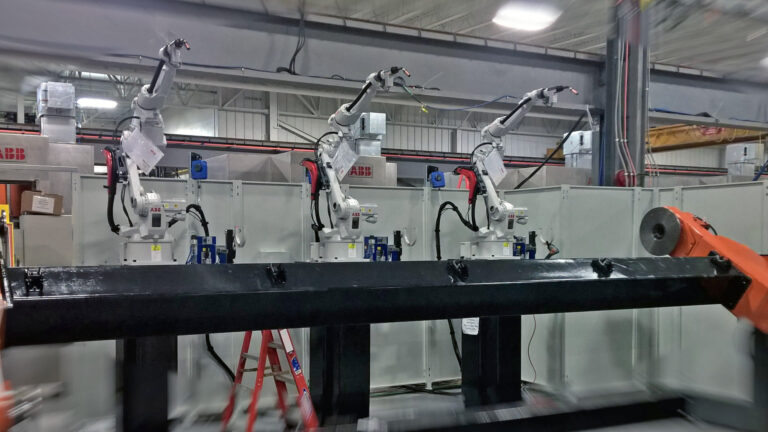
- Three ABB welding robots working simultaneously
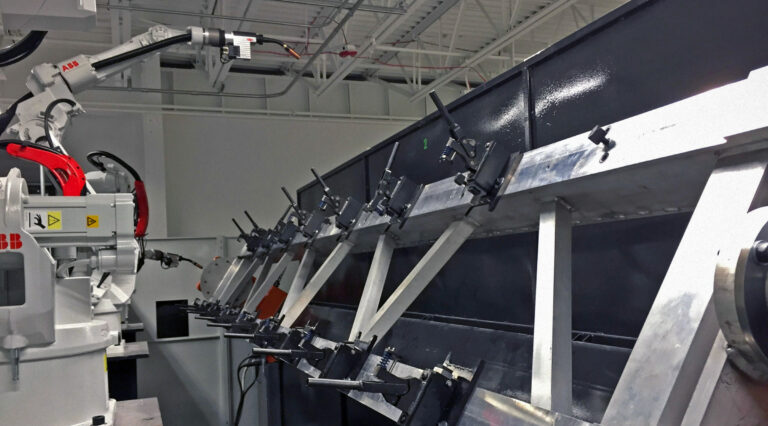
- Ferris wheel-style positioner with servo-controlled head/tailstocks at each station
- Shared weld equipment to reduce overall system investment
- Two operator stations for parallel loading, clamping, and barcode scanning
- Automated workflow to minimize idle time between cycles
Operators scan the truss barcode and prepare the fixture at either station. The positioner indexes to the weld zone, enabling the robots to execute the programmed welds while the operator unloads and reloads on the opposite side. Built-in torch maintenance routines run between cycles to ensure weld quality.
The Results
High-Throughput Welding with Reduced Labor and Consistent Quality
The MWES system provided the customer with a reliable and scalable welding solution:
- Automated welding of structural trusses with 1/32-inch weld tolerance
- Reduced reliance on skilled labor with only one operator required per shift
- Continuous multi-shift operation with minimal downtime
- Improved ergonomics by eliminating operator exposure to weld zones
By combining multi-robot automation with intelligent fixturing and process control, MWES enabled the customer to scale operations while maintaining safety, speed, and weld quality.