
The Challenge
Integrating AGVs into a Long Pre-Existing Motor Assembly Line
Converting a manual heavy assembly line into a semi-automated one without extensive infrastructure changes posed unique challenges:
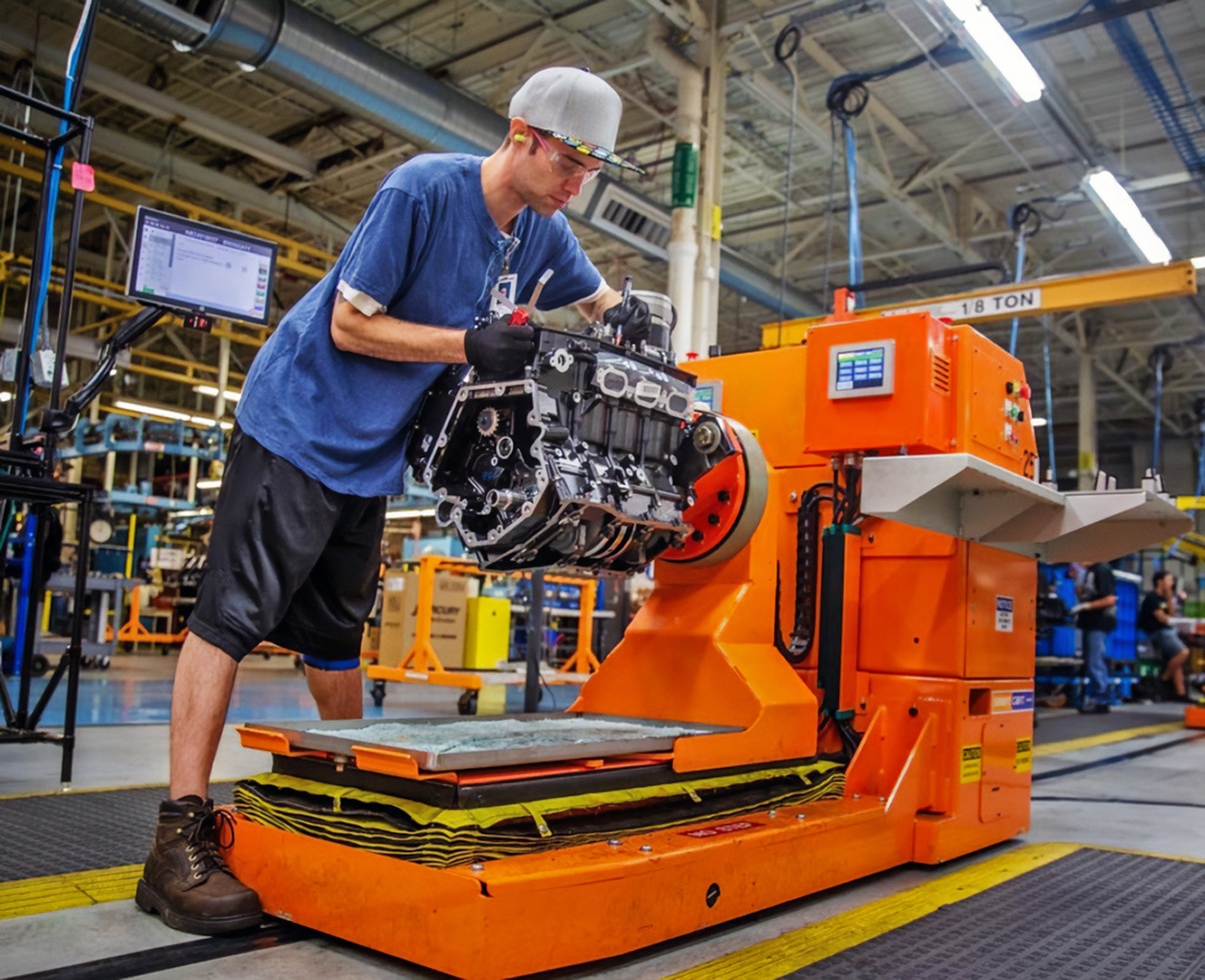
- Transporting and orienting large outboard motors or engine blocks through multiple operator stations
- Maintaining precise communication with station PLCs for safe hand-offs
- Supporting on-route full-throttle testing and defect isolation within each AGV route
- Minimizing disruption and retaining ergonomic, safe assembly for existing workers
MWES was selected to deploy a fleet of AGVs that could seamlessly navigate and support the entire motor assembly process.
The Solution
AGV Fleet with Lift-Assist Mounts, On-Road Testing & Central PLC Coordination
MWES provided:
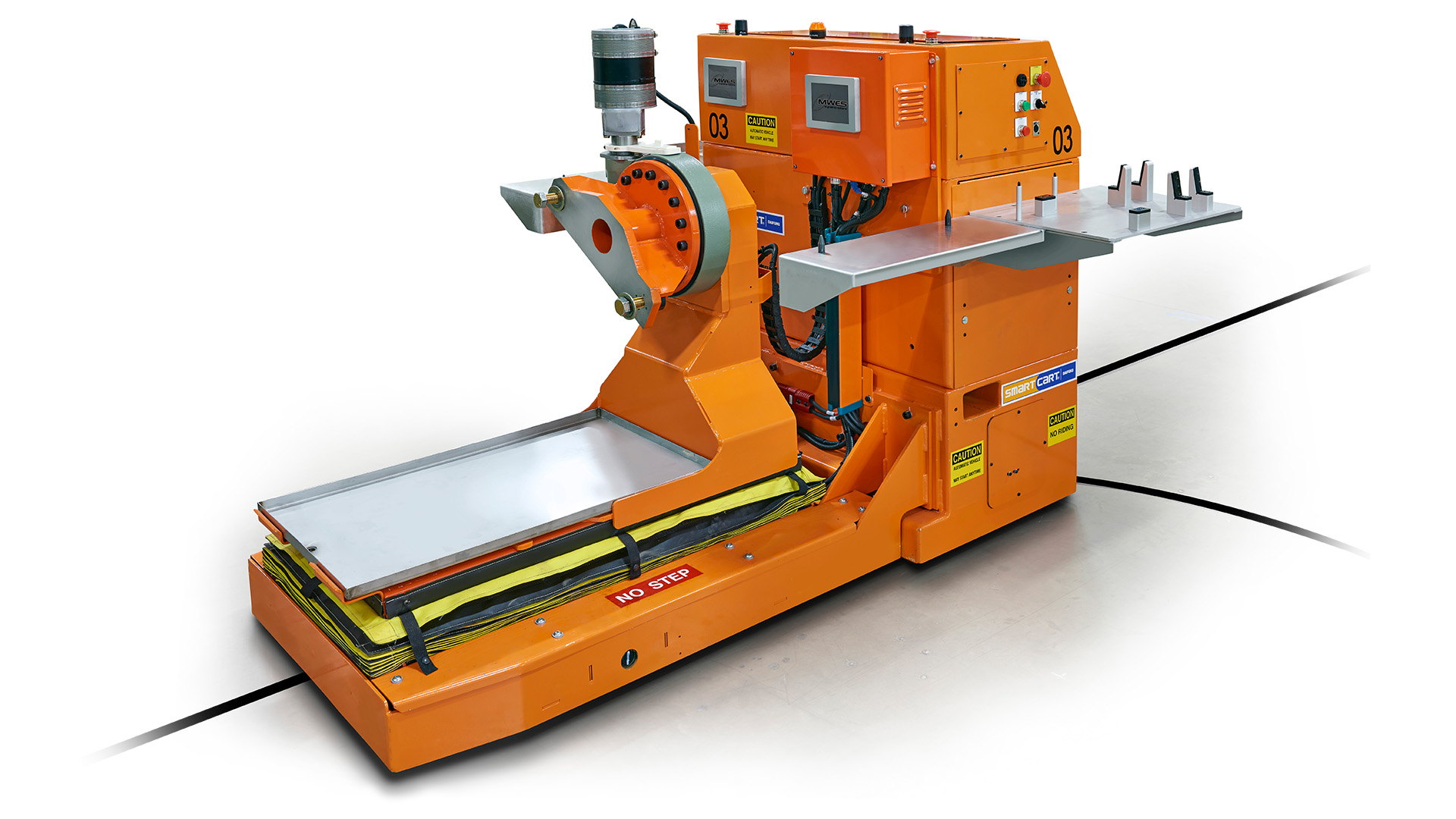
- 60 AGVs, each capable of lifting, carrying, and orienting outboard motors or long-block engines
- AGVs follow a predefined path through existing workstations and communicate with a central PLC for synchronized operation
- Battery charging stations located along each loop to maintain continuous flow
- Final “hot test” station—AGVs lower motors into test tanks for full-throttle validation
- On-route repair work zones where AGVs can divert faulty units for rework prior to completing assembly
This AGV-based system enabled hands-off transport through long distance assembly operations while integrating lift assist and safety across stations. In summary, the system preserves existing assembly layout while automating material handling and test processes.
The Results
12 Jobs per Hour with Minimal Human Intervention and Safer Handling
The AGV integration delivered measurable results:
- Achieved approximately 12 motor builds per hour, with each station cycle averaging 5 minutes
- Eliminated manual cart movement and reduced operator strain due to heavy lift handling
- Enabled automated hot testing within the AGV workflow with integrated failover routing
- Improved safety and throughput without disrupting existing assembly station workflows