The Challenge
Efficient Mixed‑SKU Pallet Fulfillment in Tight Cold‑Storage Footprint
Cold-storage logistics introduce complexity—and risk—into traditional pallet-picking workflows. The customer required a solution to:
- Convert single‑SKU inventory pallets into mixed‑SKU order pallets efficiently
- Operate within a constrained 65 × 32 ft footprint
- Handle partial pallet builds while awaiting additional SKUs
- Integrate with their existing warehouse management system (WMS)
Space limitations, cold exposure, and SKU variability made manual kitting untenable—prompting selection of an AS/RS-buffered robotic layer-picking solution.
The Solution
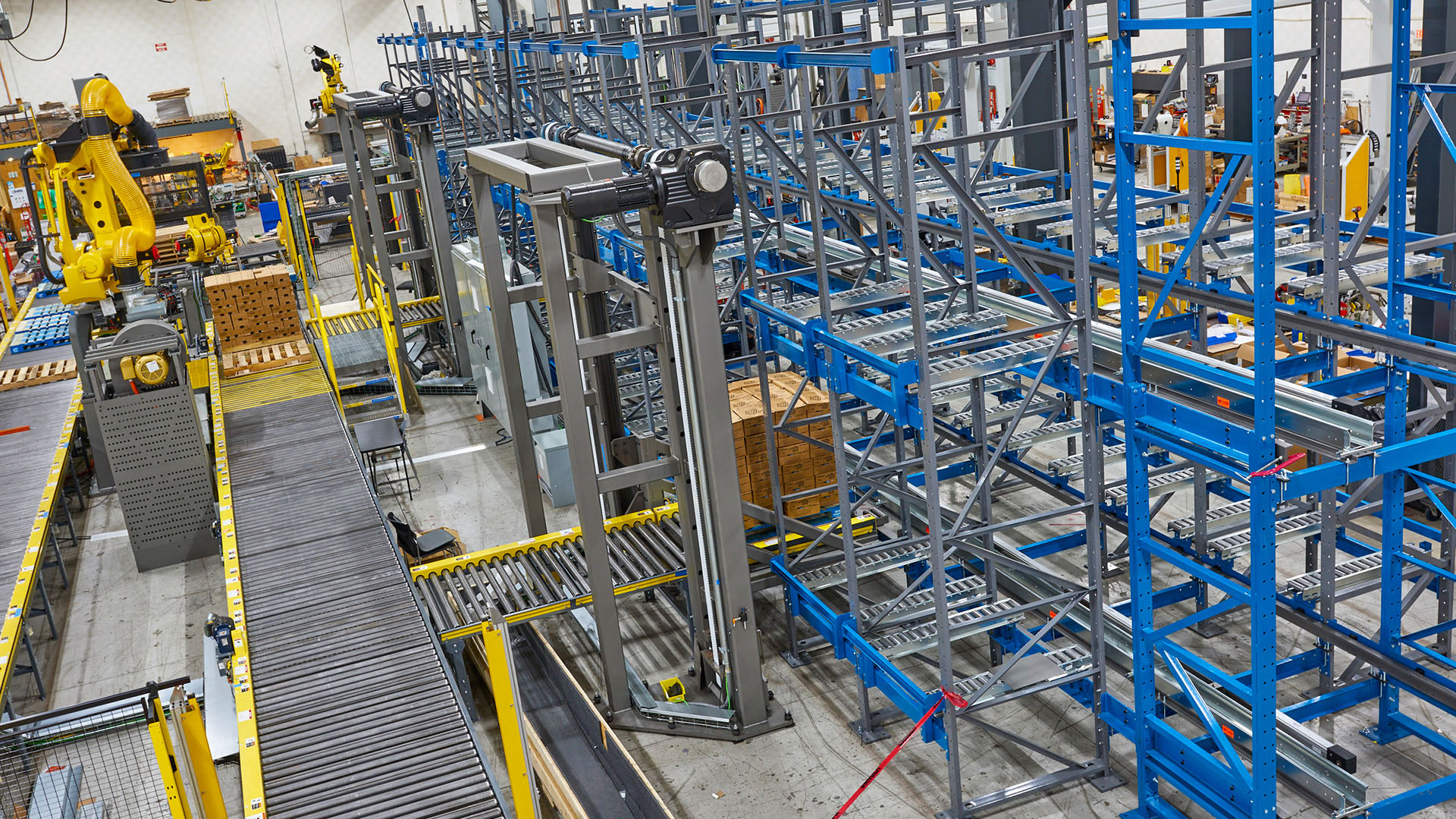
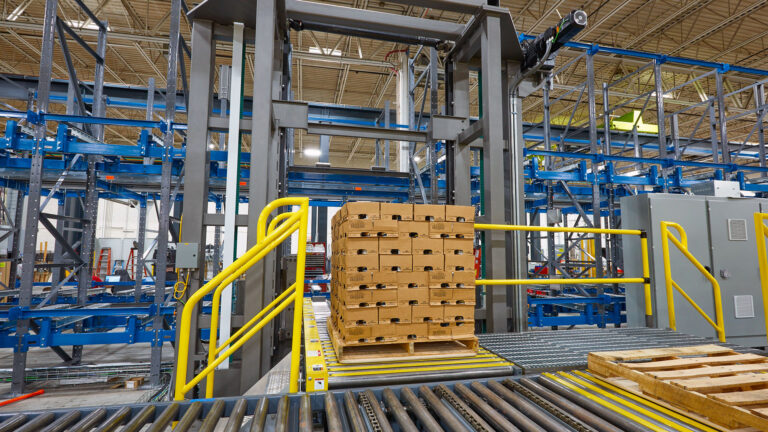
Layer-Picking Gantry Robot & AS/RS Buffer Integrated with WMS Control
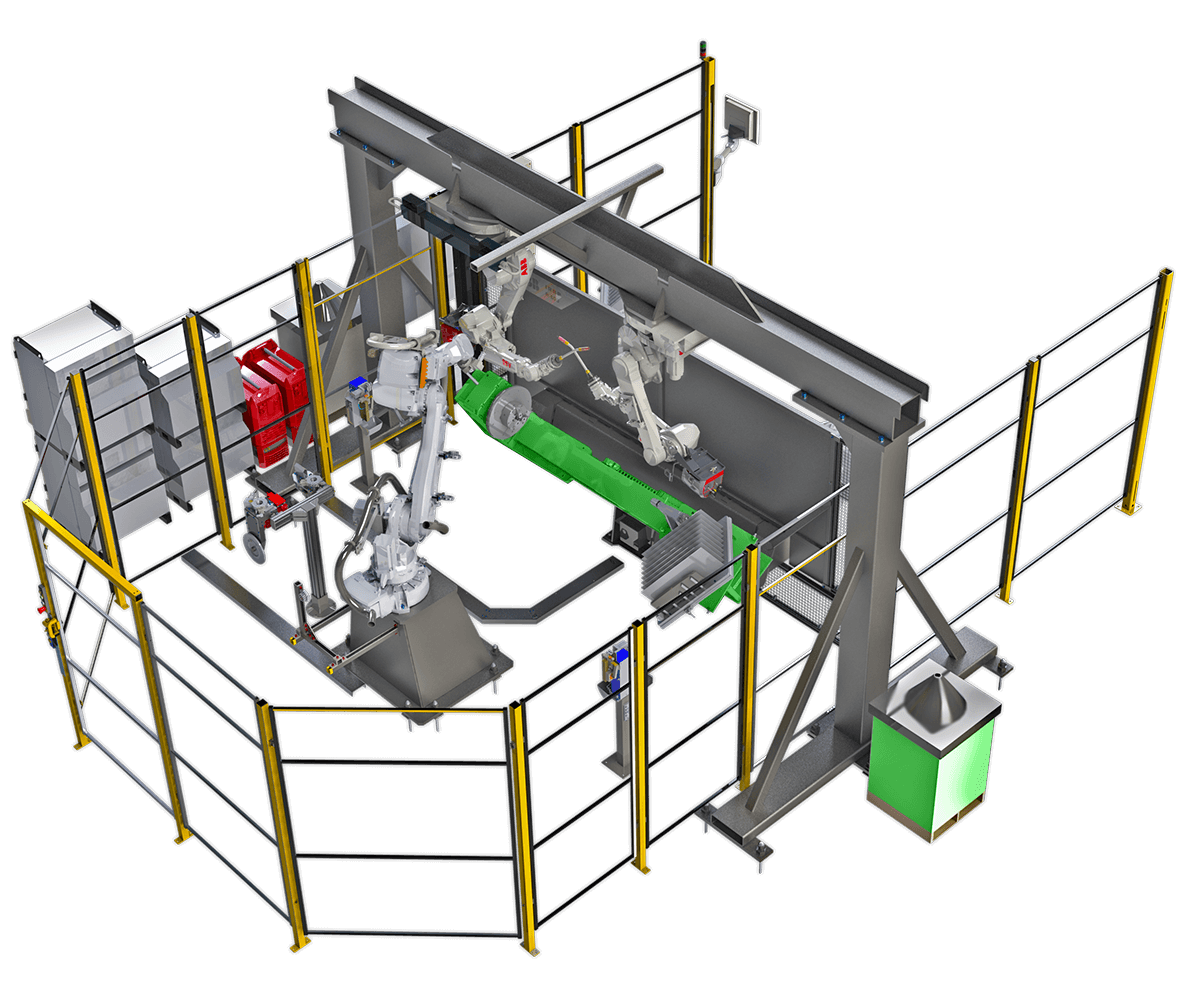
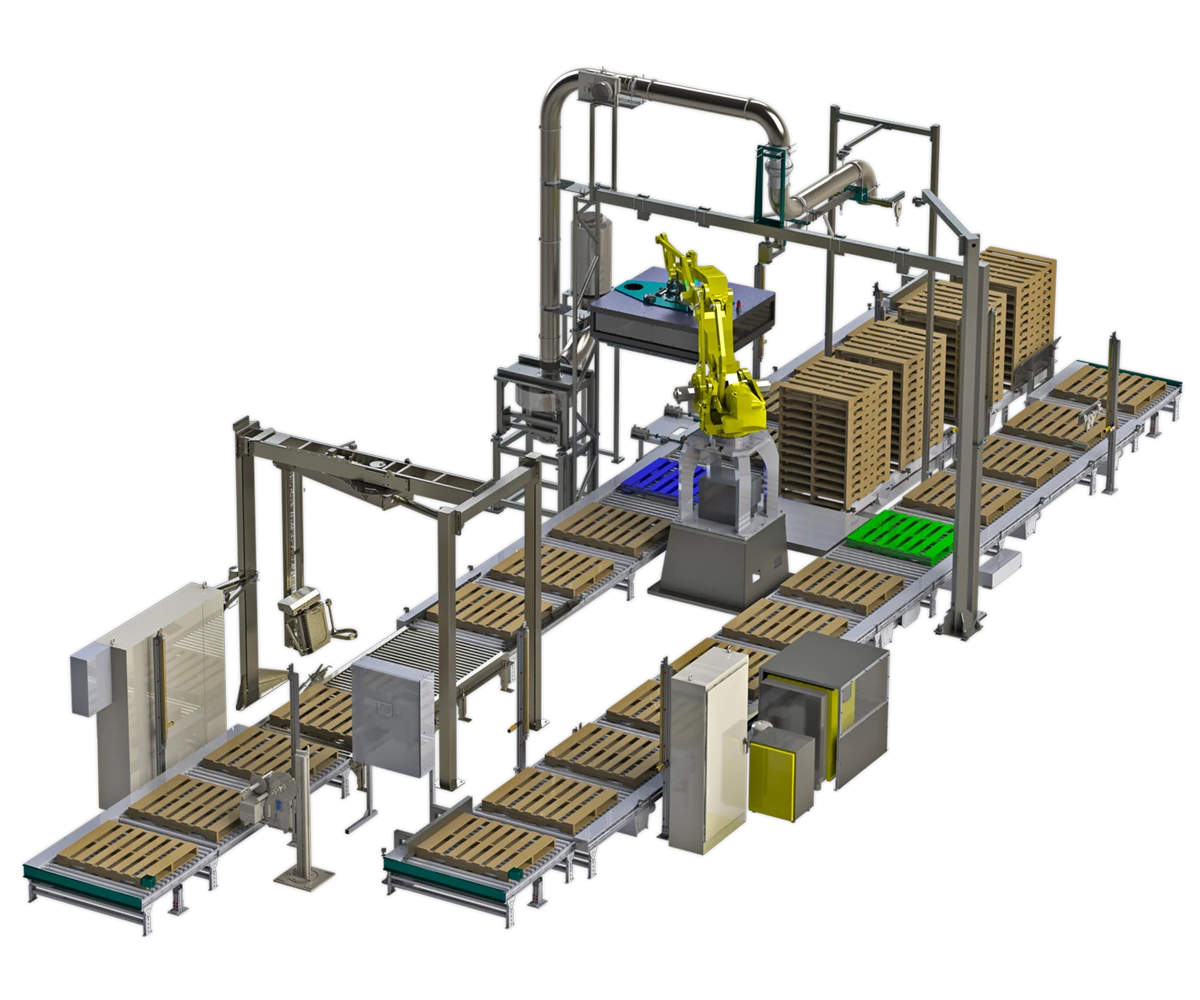
MWES designed and deployed a turnkey order-handling system featuring:
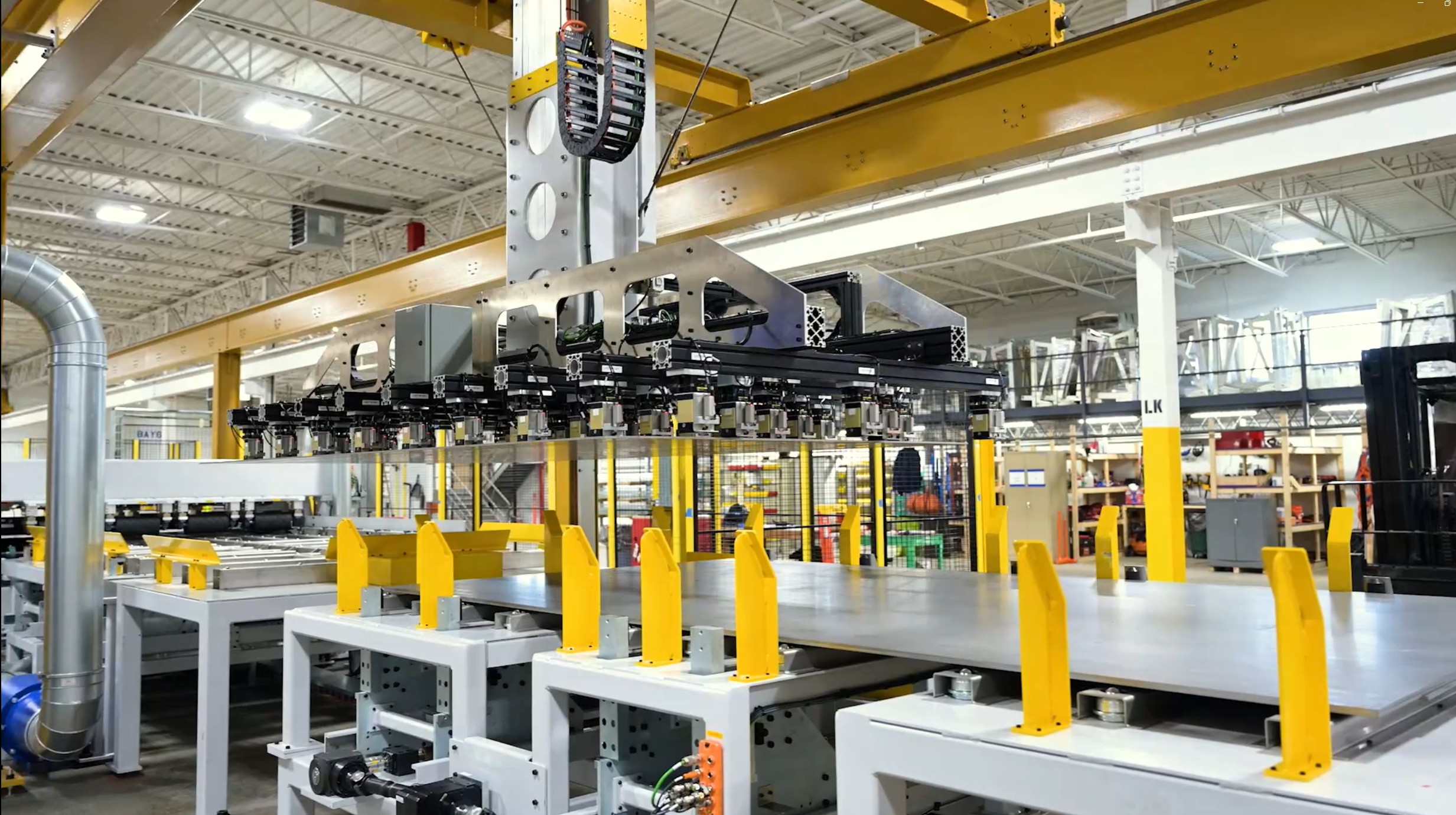
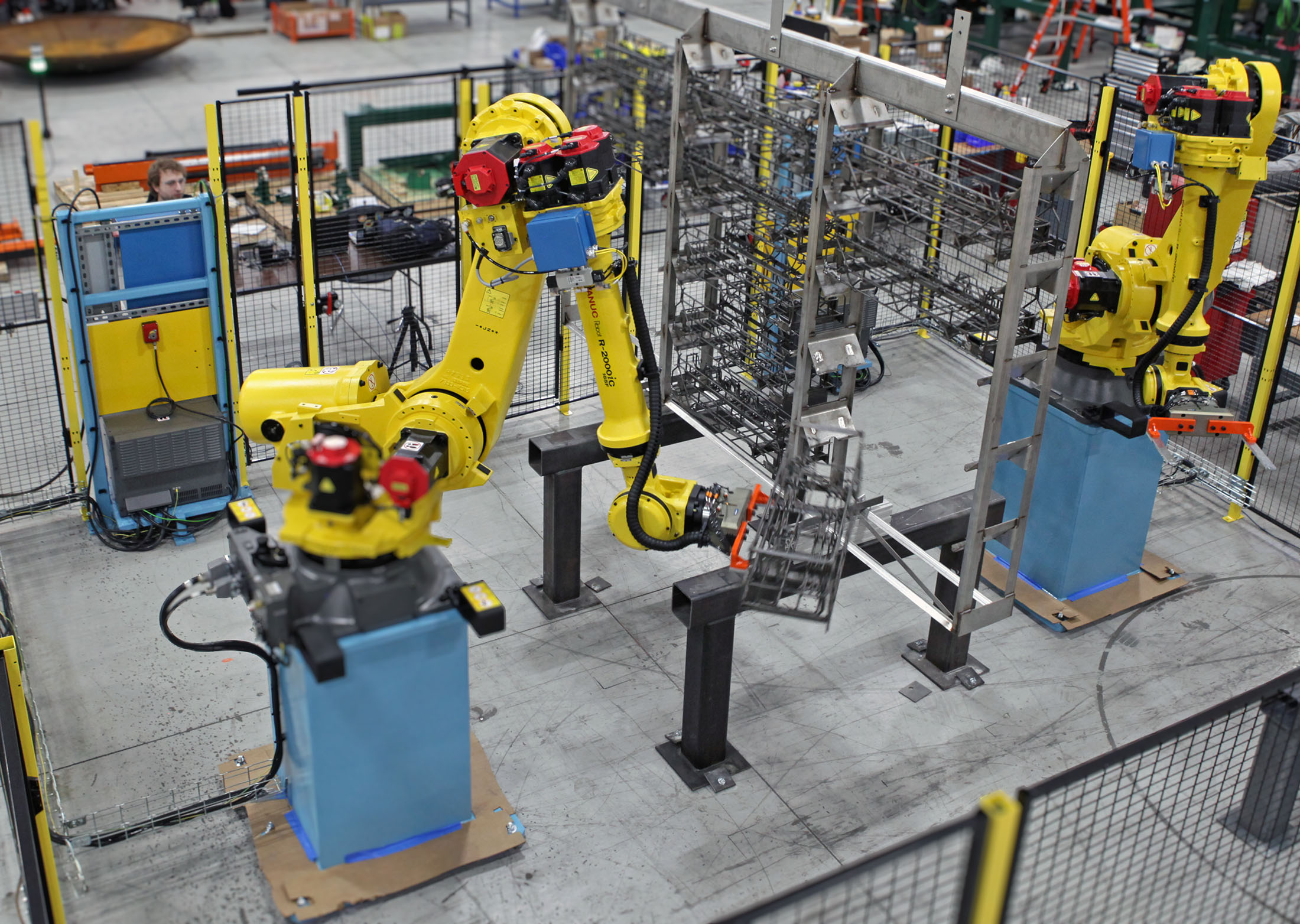
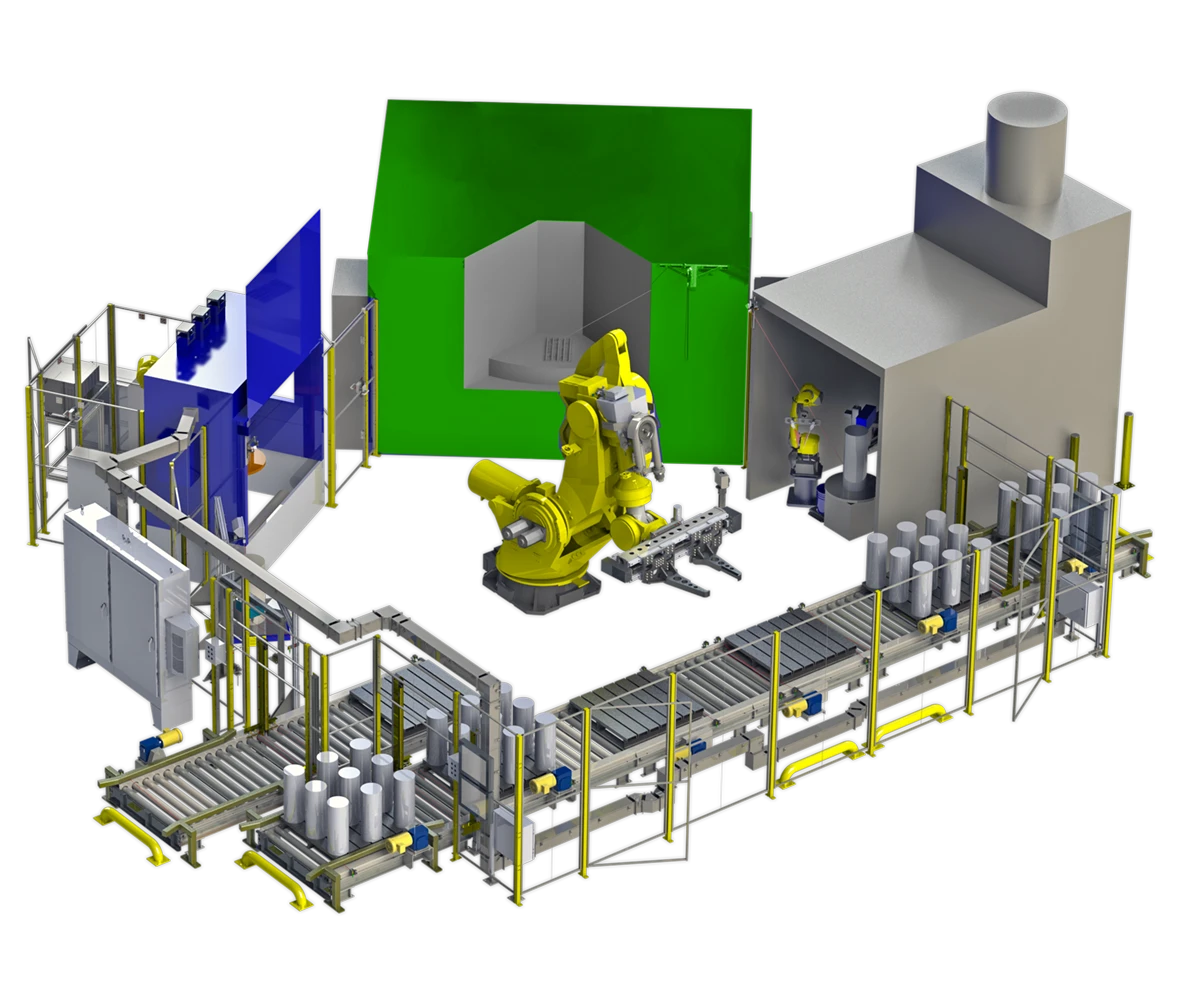
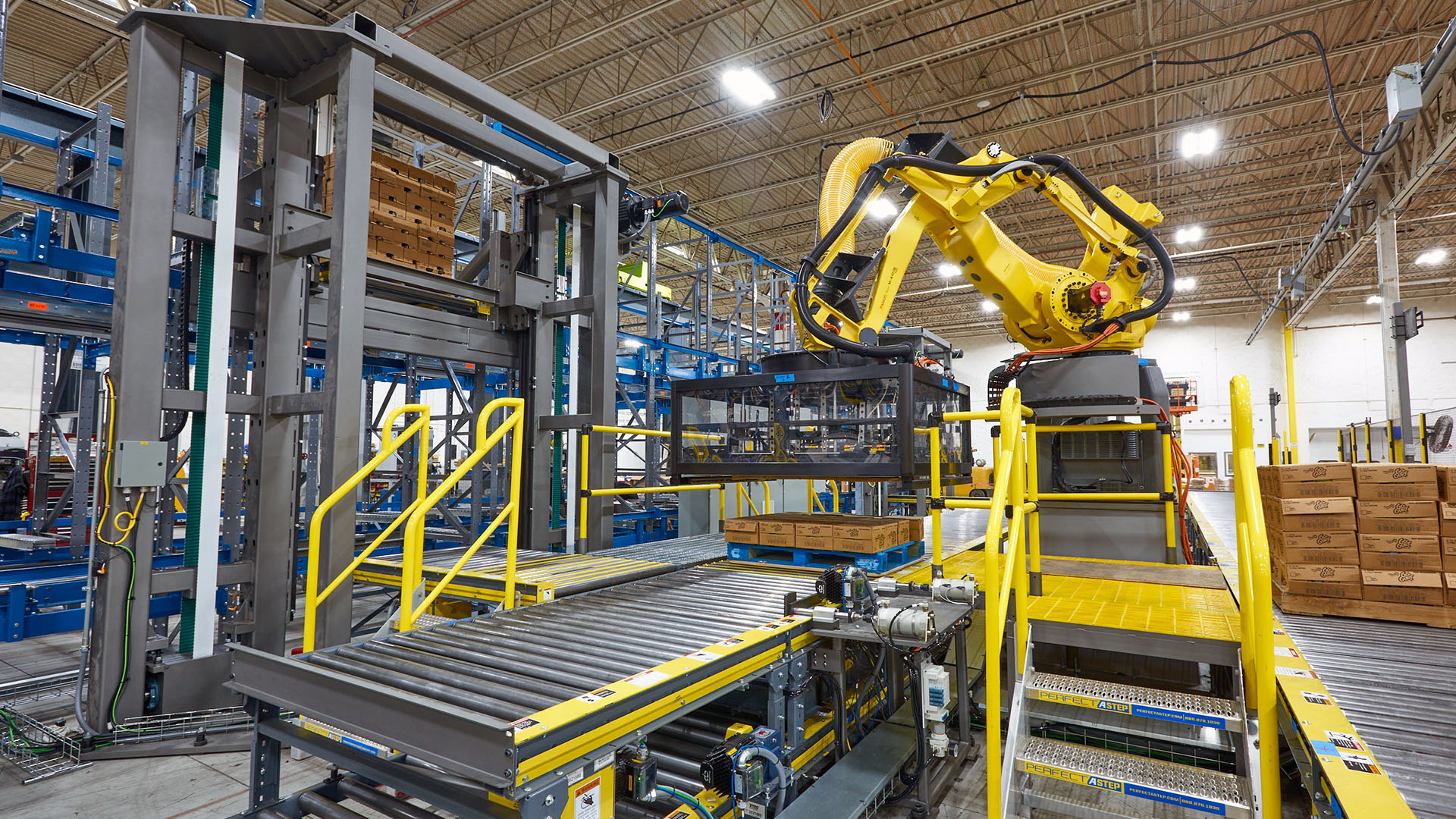
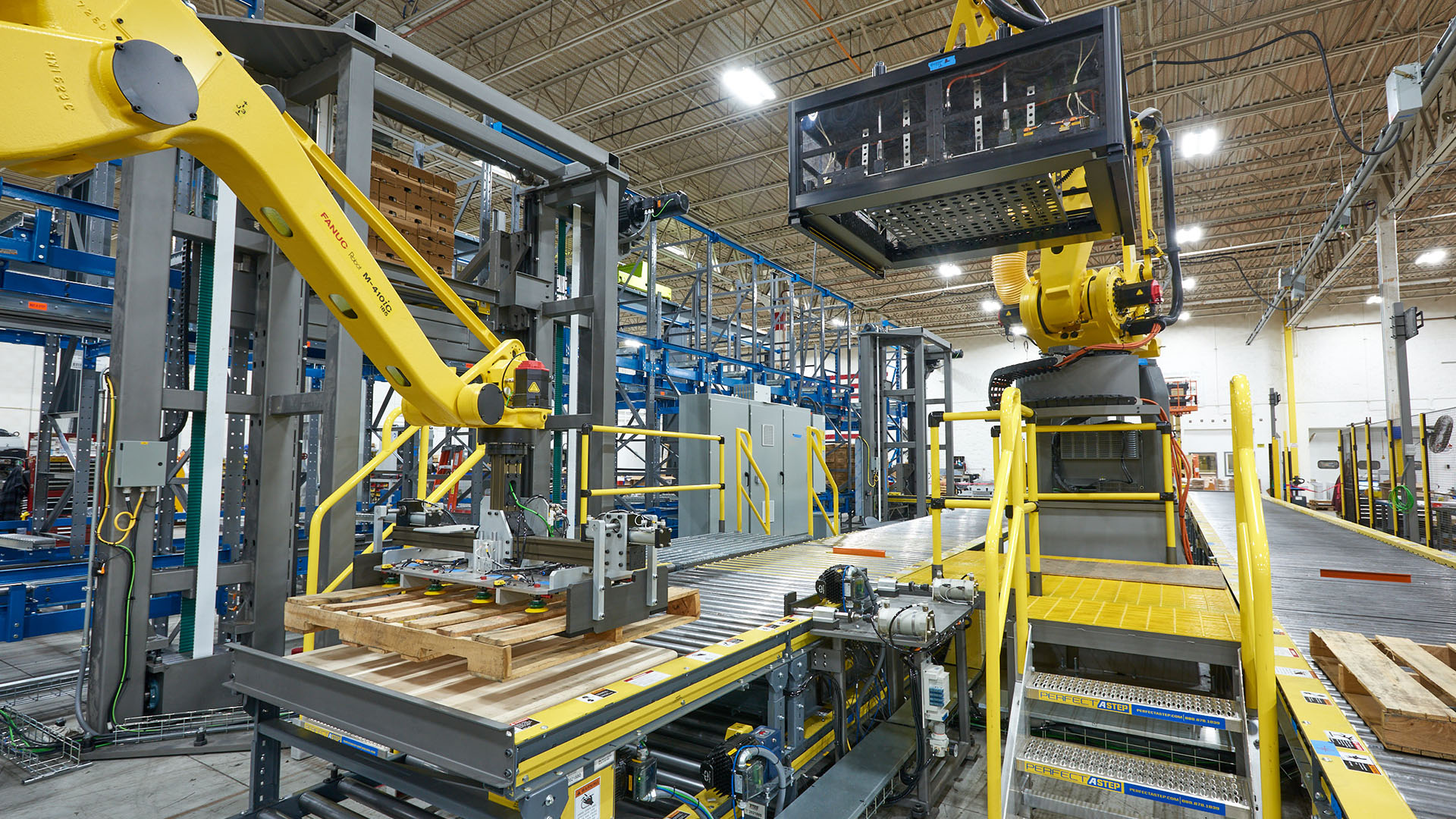
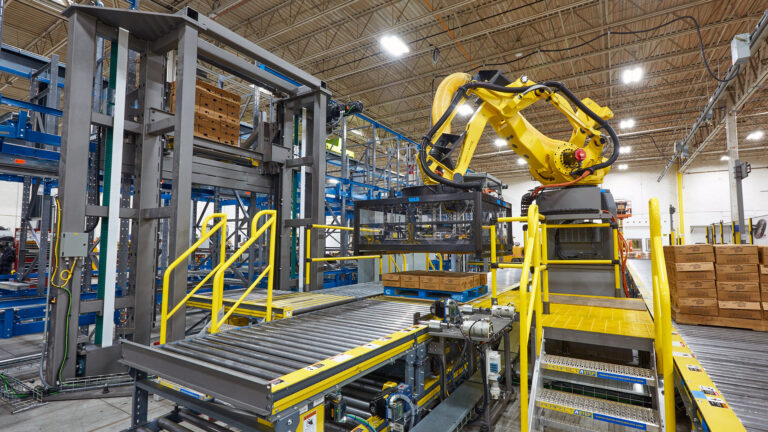
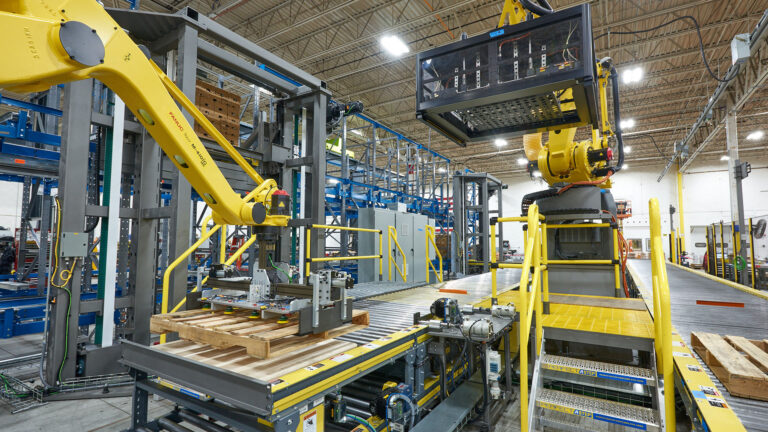
- A Fanuc layer‑picking robot with multi-tray end‑effector to lift entire case layers (up to 550 lbs) from source pallets
- A second Fanuc robot dedicated to empty pallet and slip-sheet handling
- WMS-connected software that sequences order builds and optimizes pick patterns
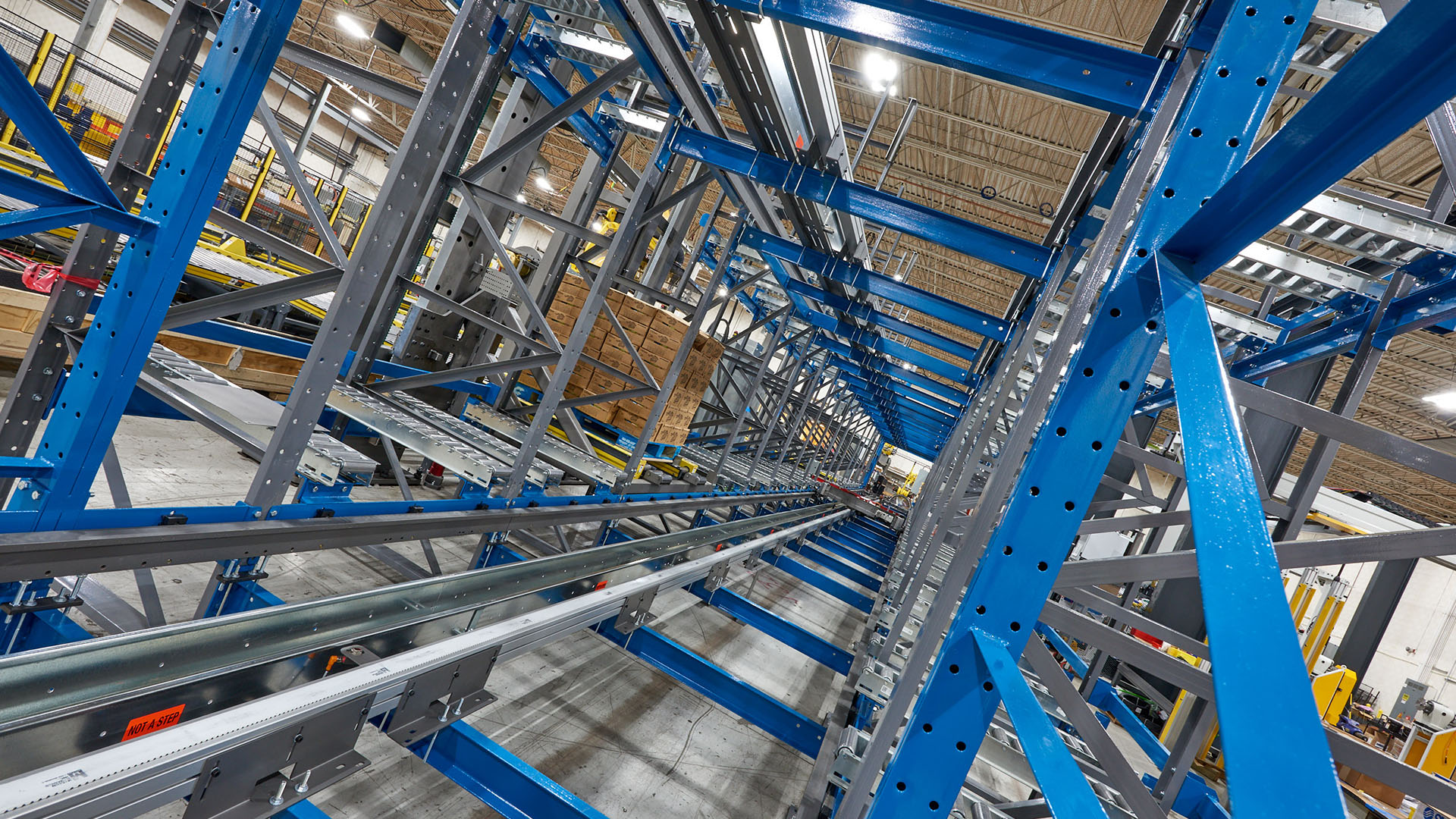
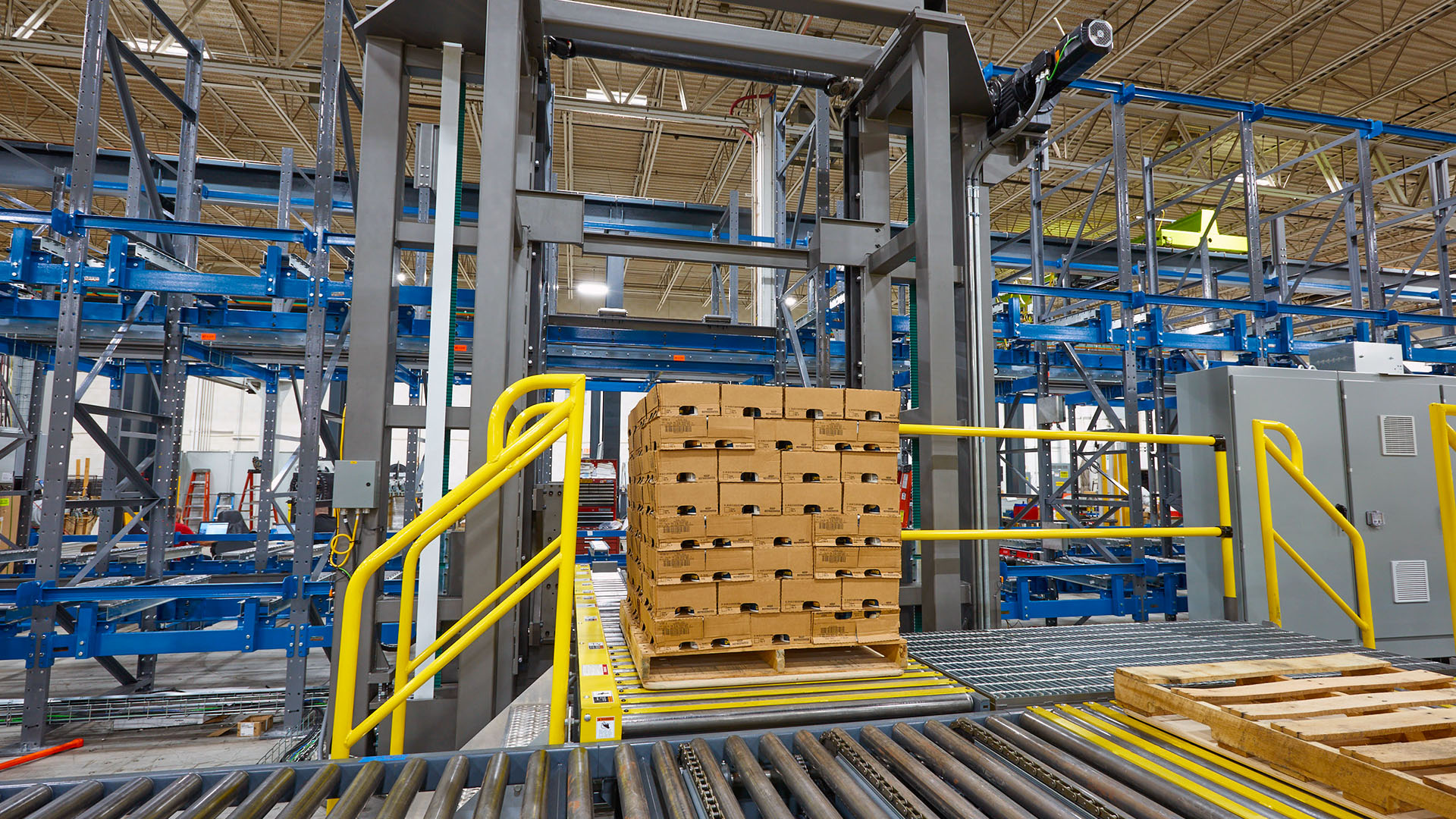
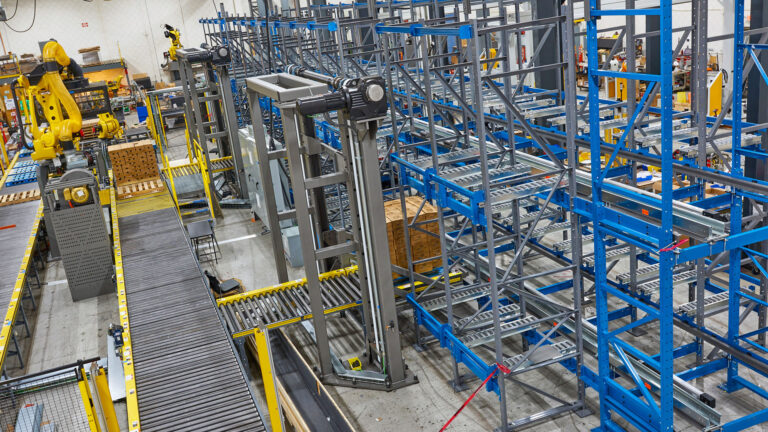
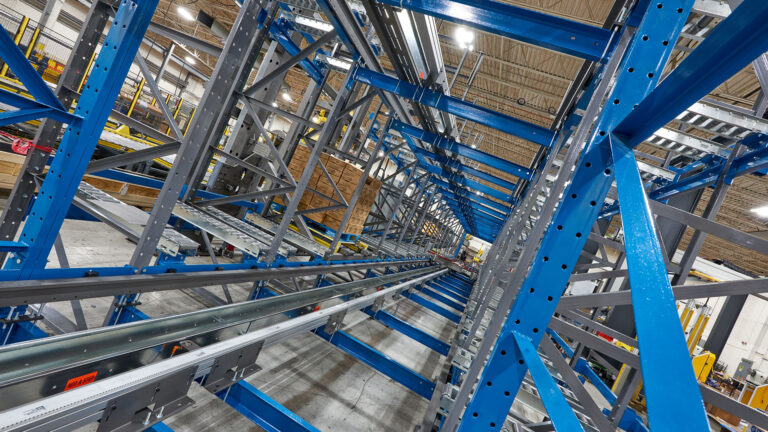
- AS/RS rack system staging partial orders until additional SKUs are available
- Automated stretch-wrapping and labeling before final ship out
The system intelligently orchestrates layer picking, buffering, and automated packaging—supporting high throughput with minimal manual intervention.
Summary: This automation integrates WMS-driven order logic, layer-pick robotics, and AS/RS buffering to deliver mixed-SKU orders in real time within a compact footprint.
The Results
120 Layer Picks/Hour, Flexible Order Assembly & Reduced Labor Dependency
The implemented system unlocked diverse operational benefits:
- Sustained throughput of approximately 120 layer picks per hour
- Minimization of required floor space (only ~65 × 32 ft)
- Support for up to 56 pallet buffer positions for in-process orders
- Reduced manual labor, improved ergonomics, and higher order accuracy
By combining precise robotics with smart buffering logic, MWES enabled faster, more accurate cold-storage fulfillment while reducing workforce and spatial burden.