The Challenge
Manual Beveling Was Labor Intensive and Difficult to Standardize
Prior to automation, the beveling process required operators to manually handle panels, align them, and run them through machining operations. This created several challenges:
• Repetitive manual lifting and repositioning
• Variability in panel alignment prior to machining
• Inconsistent bevel positioning
• Limited ability to scale production without adding labor
The customer processes a range of metal panel sizes and thicknesses, including parts up to 72 inches wide and 140 inches long, with maximum weights approaching 700 pounds. Handling these panels manually added ergonomic risk and reduced overall process efficiency.
The goal was not simply automation for speed, but automation for consistency, safety, and labor optimization.
The Solution
Integrated Unstacking, Servo Alignment, and Automated Beveling
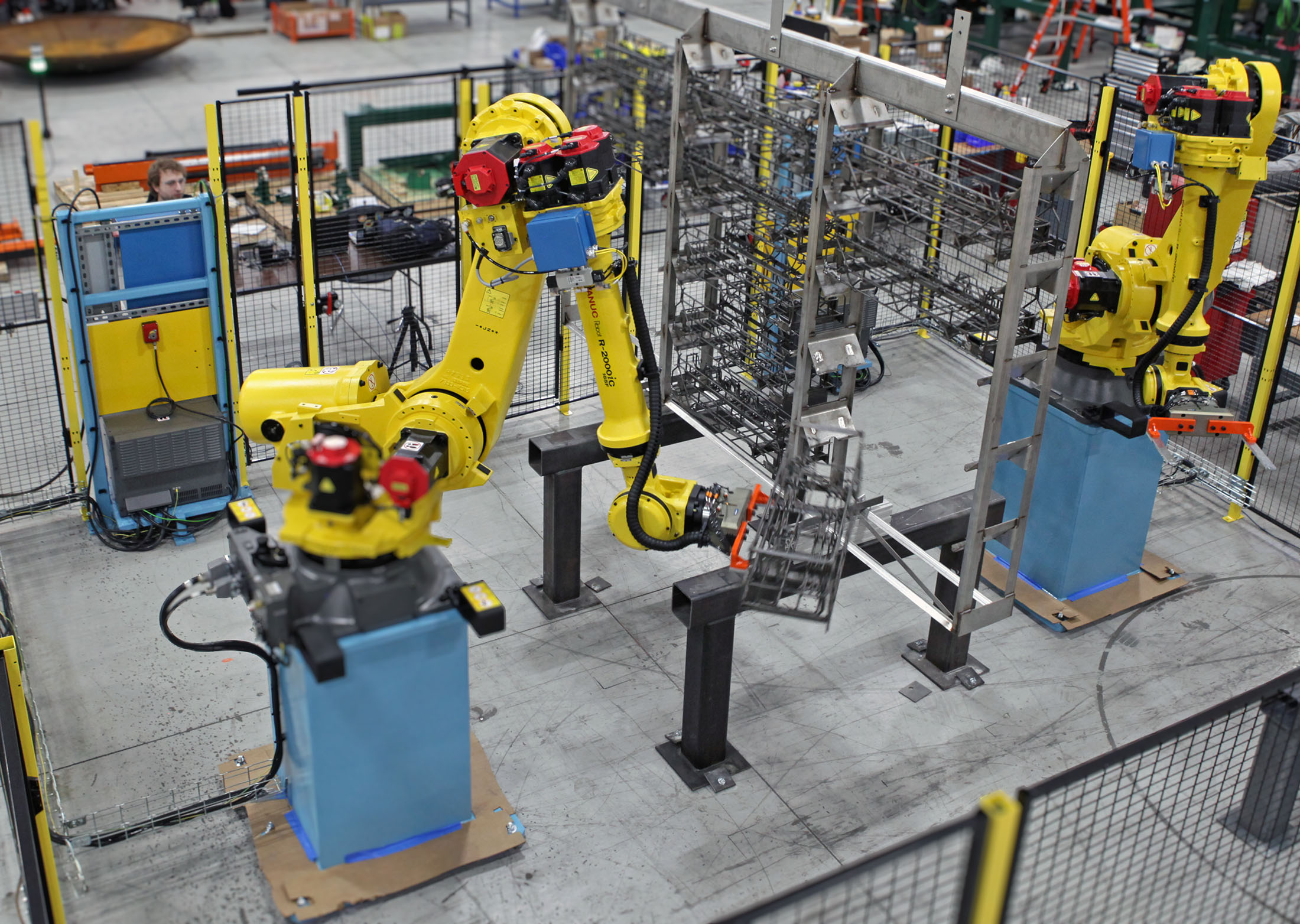
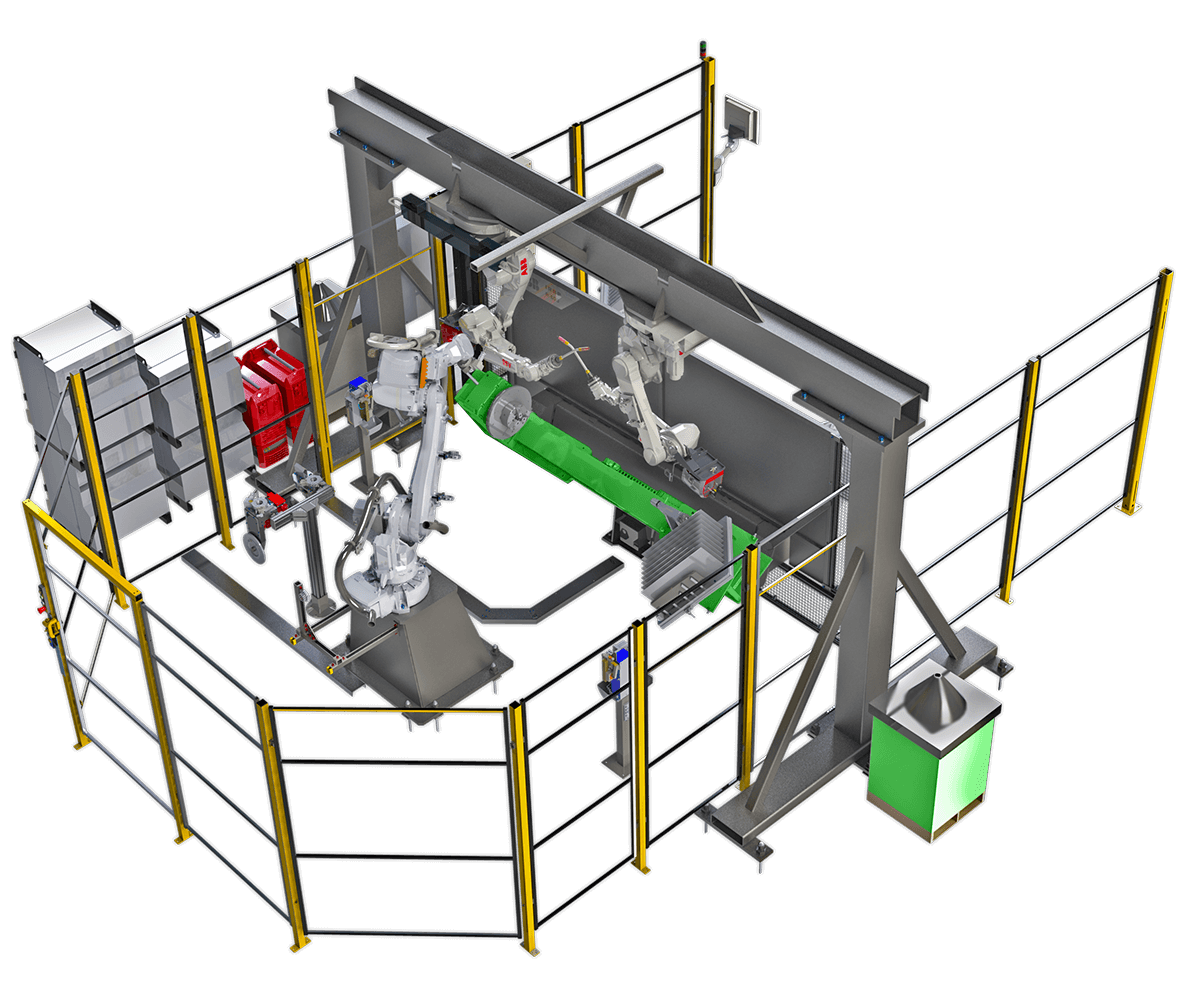
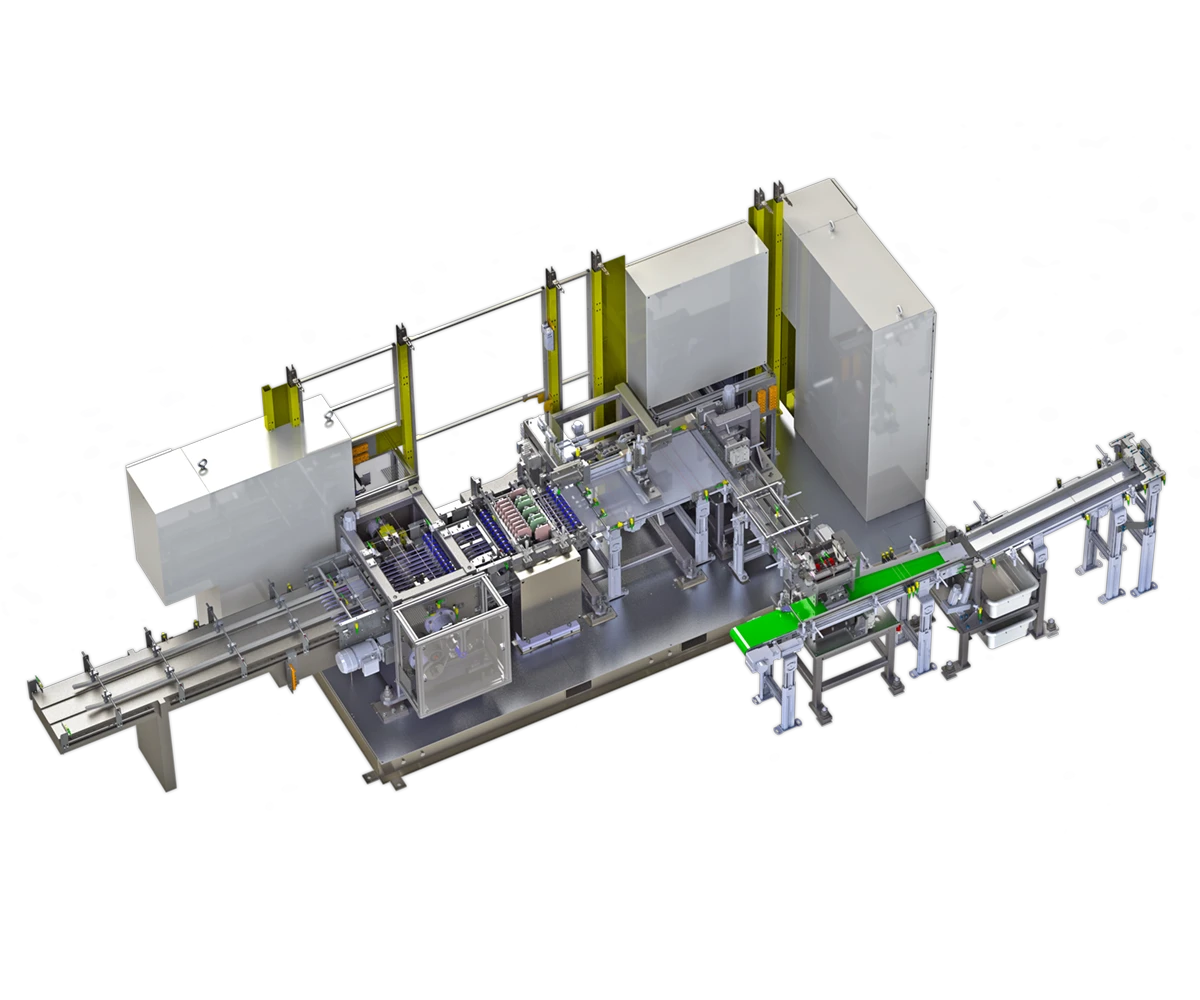
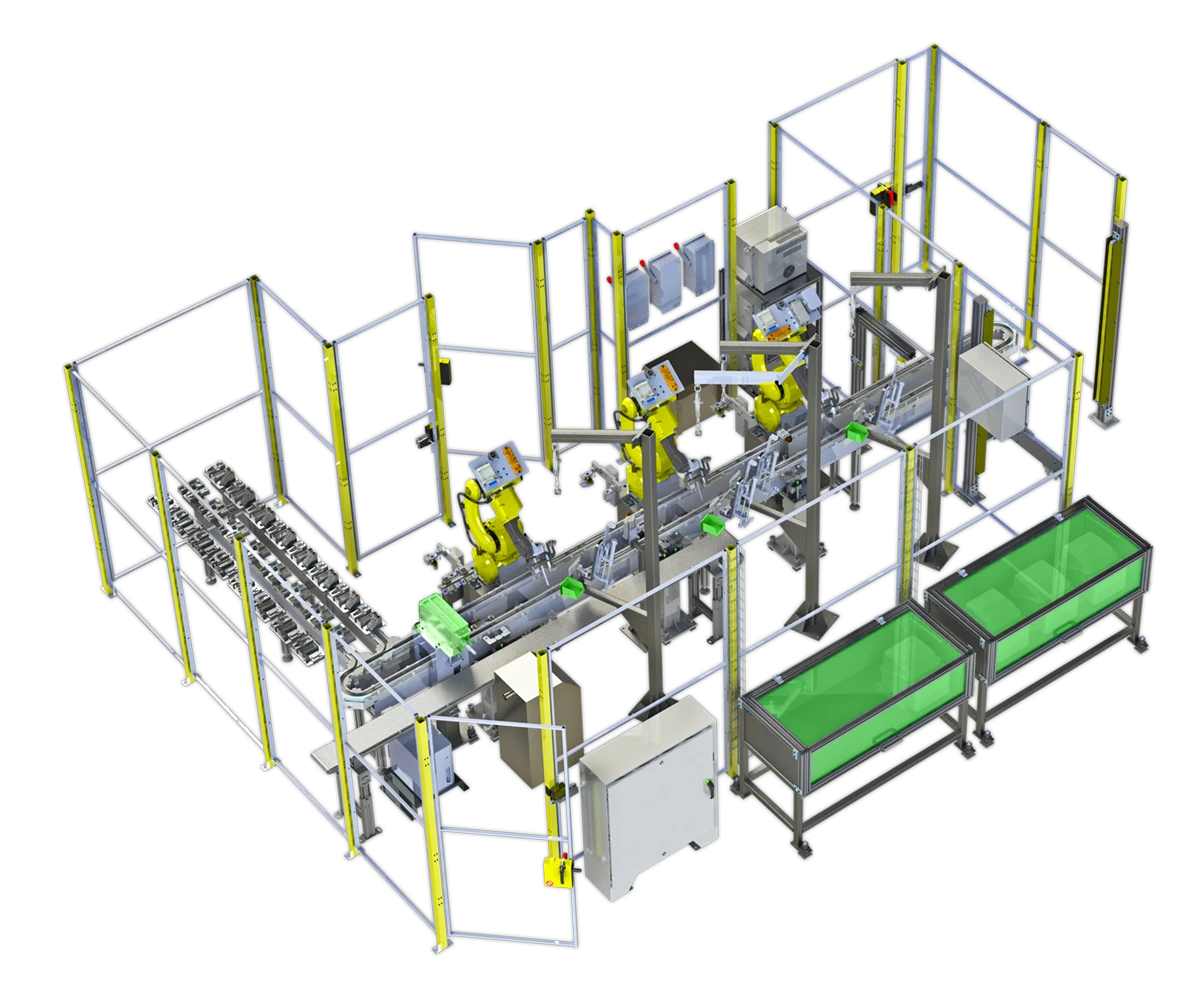
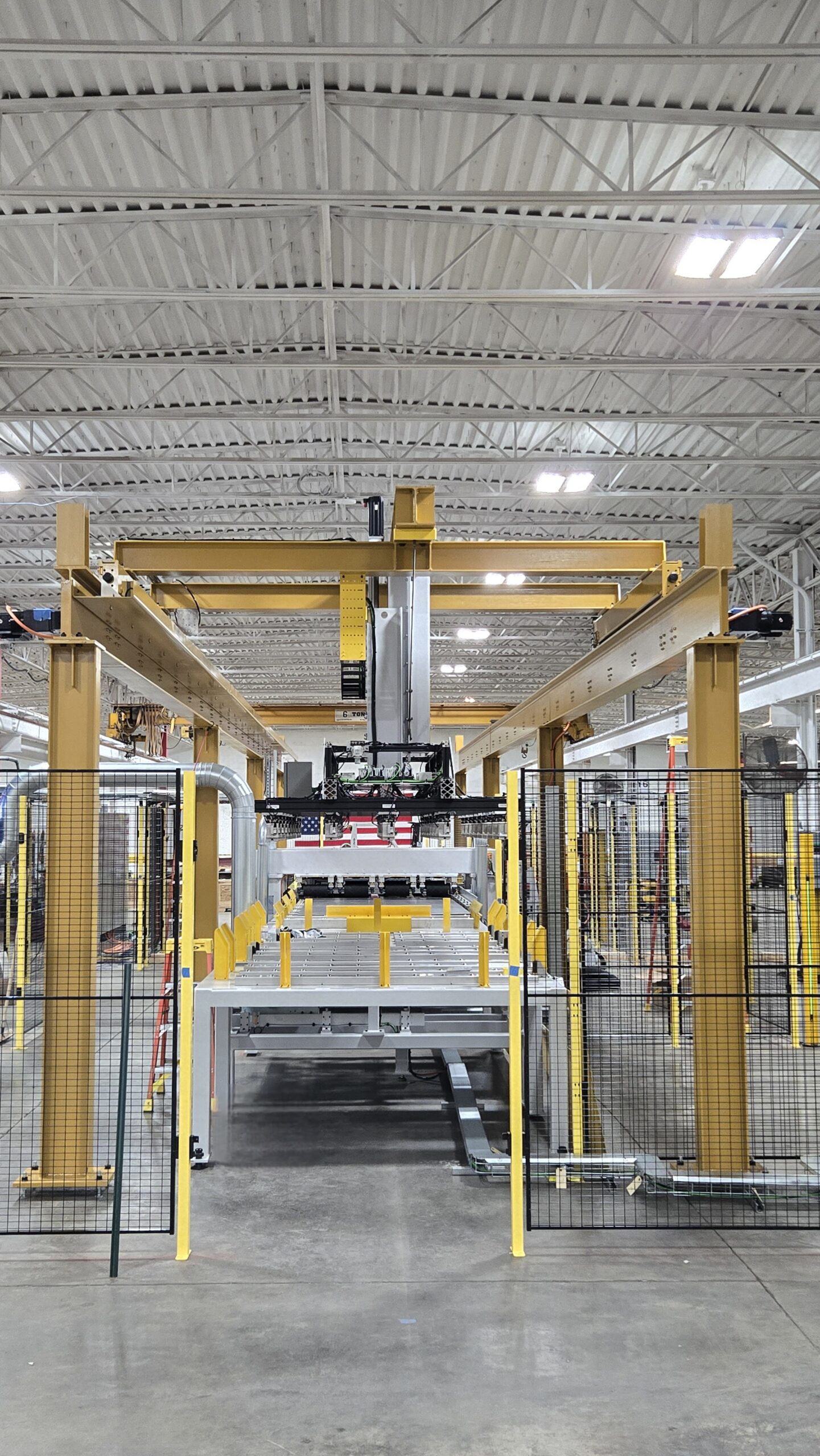
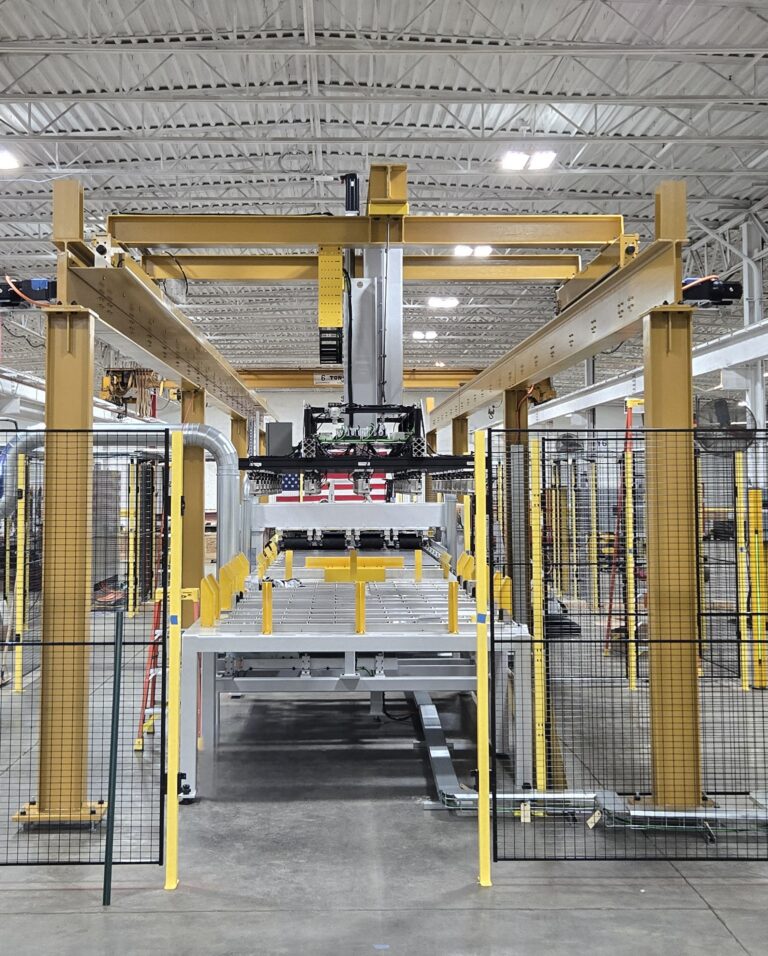
MWES engineered a five zone automated beveling system designed for batch pallet processing of metal panels.
Stack Load Station
Palletized stacks are loaded by fork truck onto a pallet locator stand. Once the operator confirms batch configuration through the HMI, the automated sequence begins.
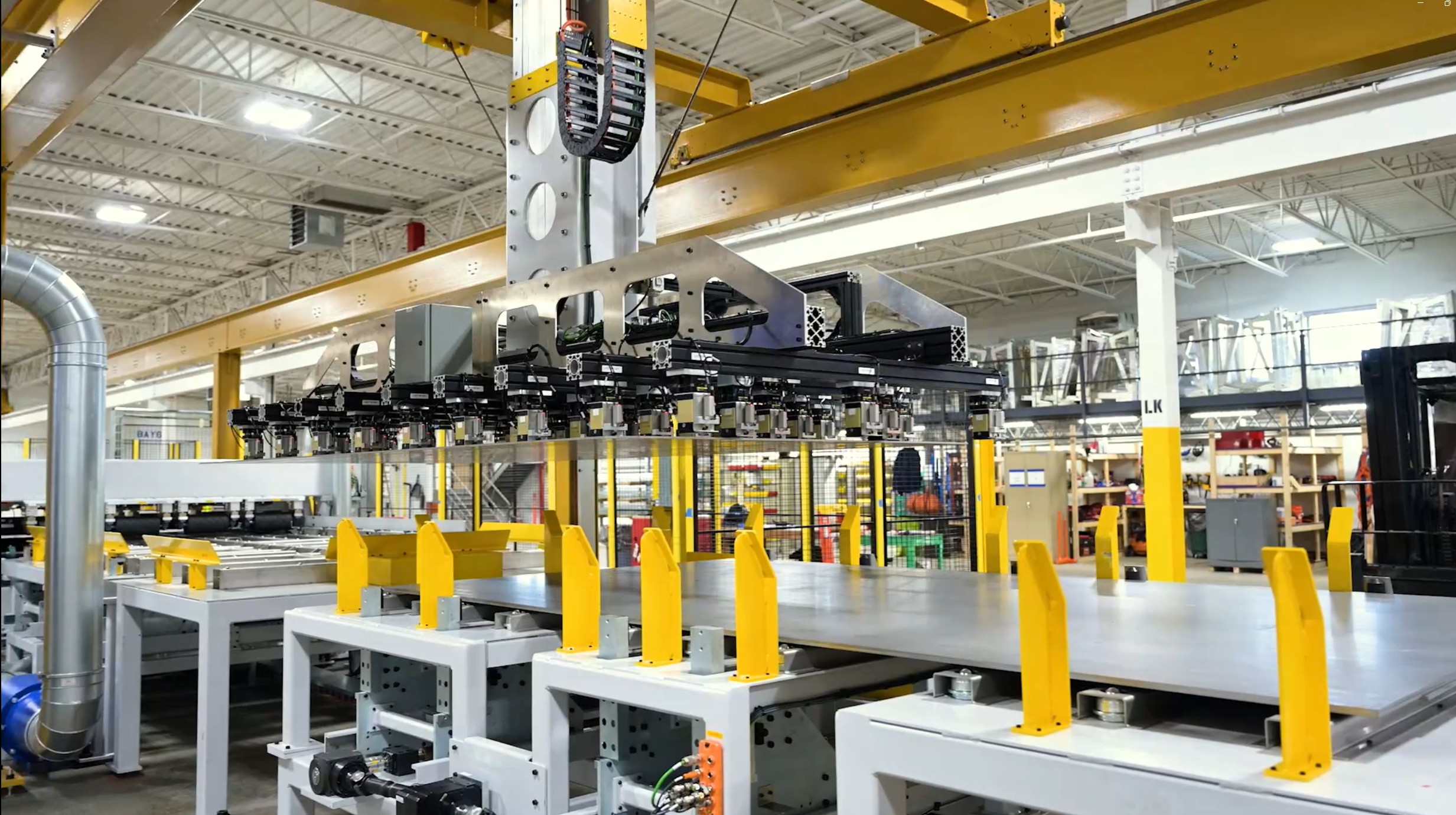
Unstack Gantry with Double Blank Detection
A two axis gantry equipped with a vacuum end of arm tool lifts individual panels from the stack. A double blank detection sensor verifies that only one sheet is picked before transferring it to the infeed conveyor.
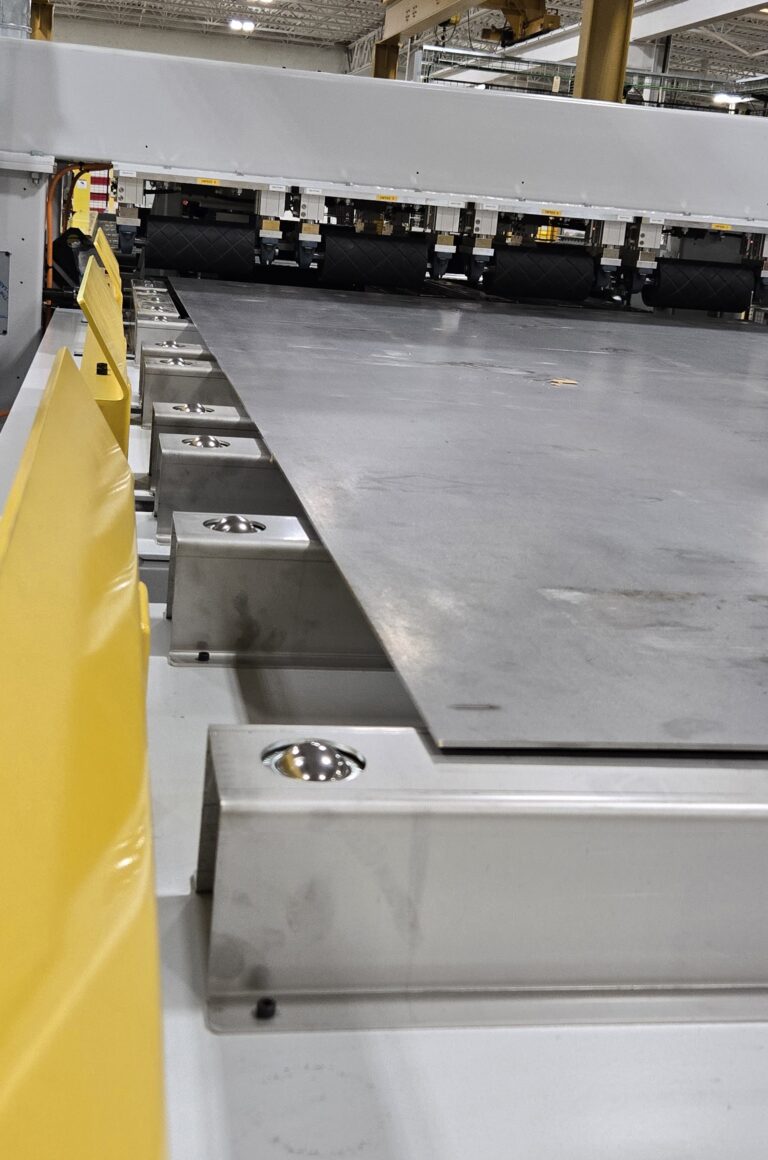
Servo Controlled Crowding and Width Verification
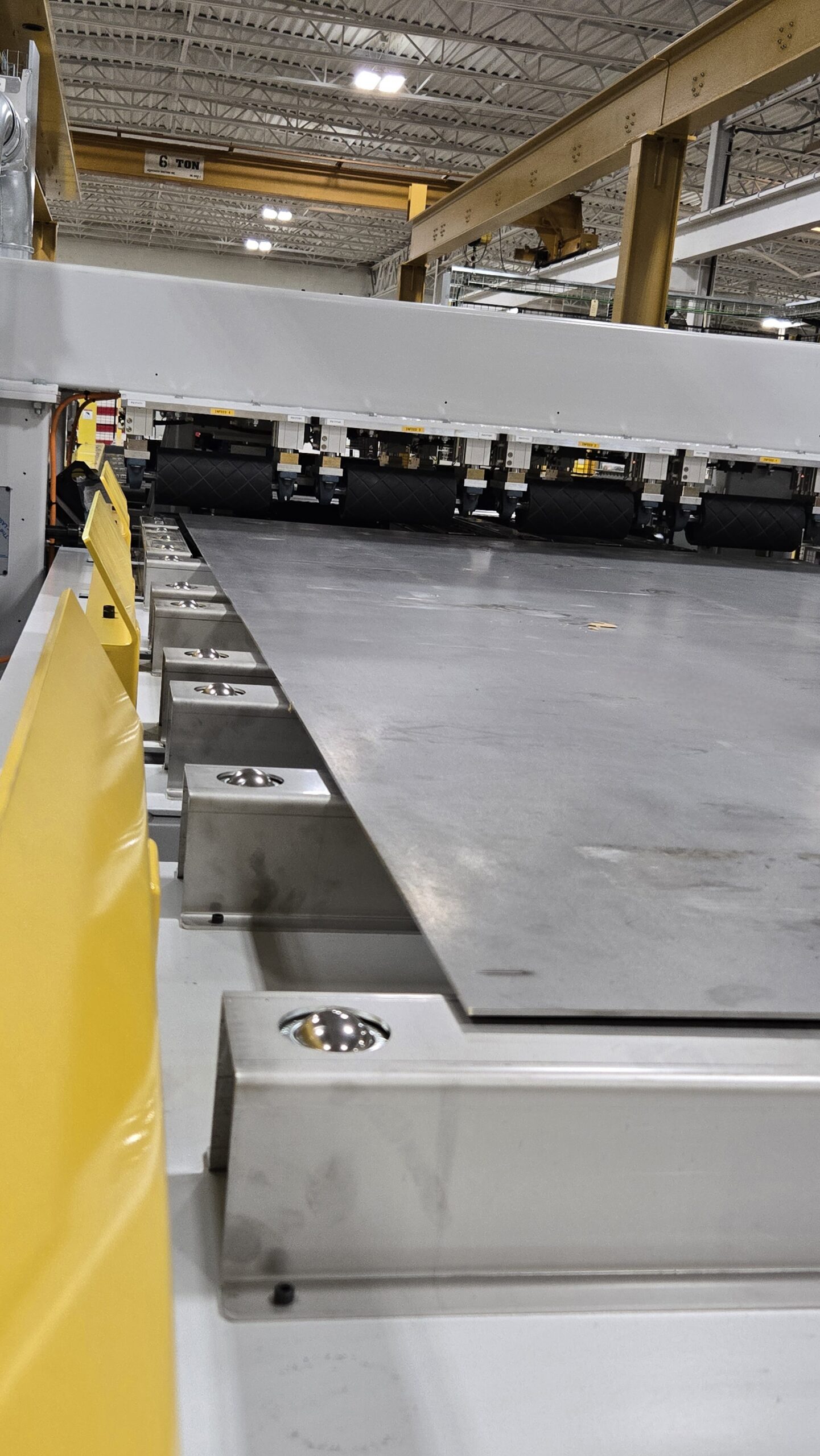
Once placed on the infeed conveyor, a servo controlled crowding system aligns the panel against a fixed reference edge. Sensors measure part width to confirm correct positioning before entry into the beveling station.
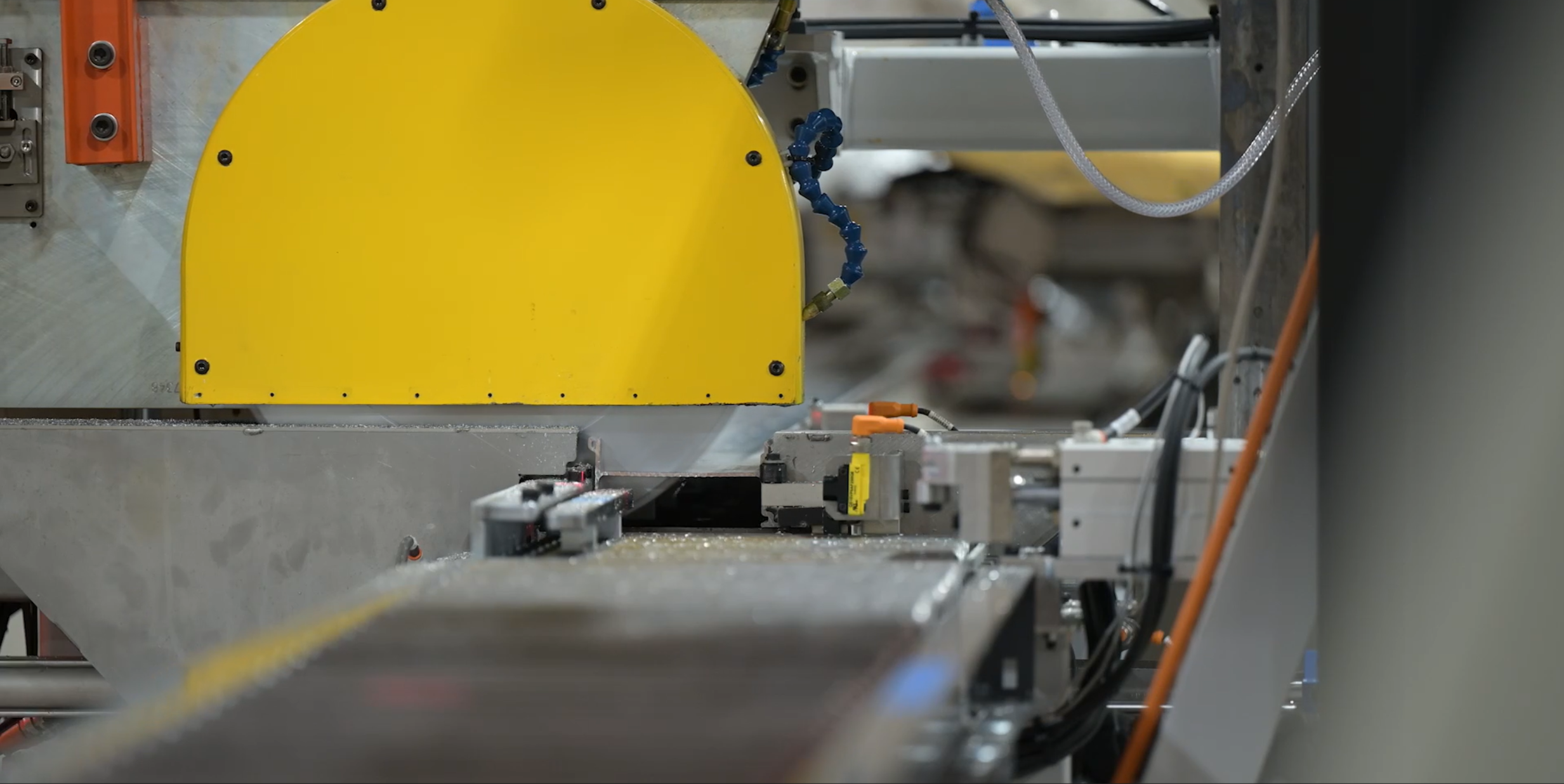
Automated Beveling Station
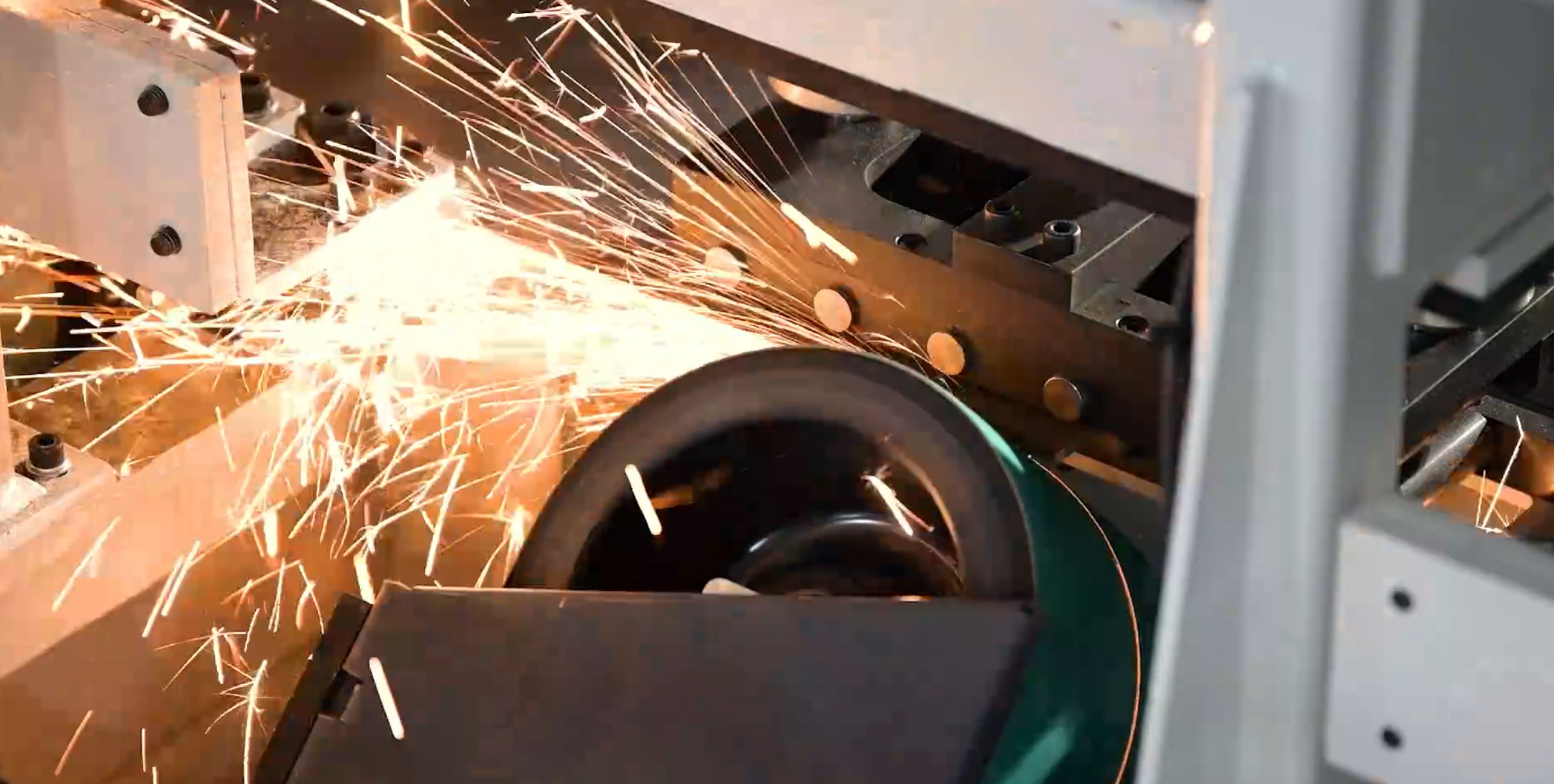
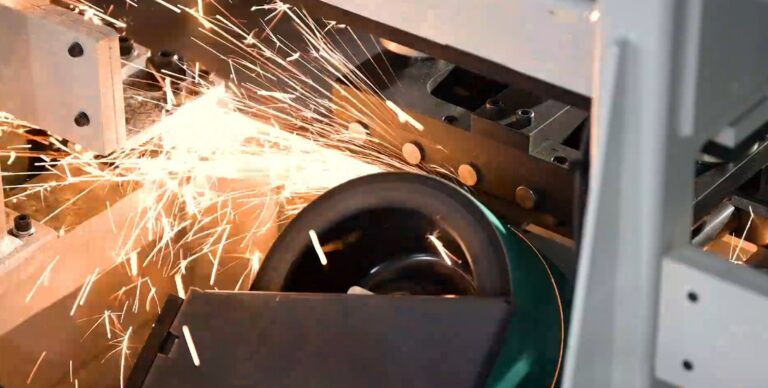
Panels are driven through the beveling station using top and bottom rollers. The system machines a 45 degree bevel into the long edges of the part. The bevel depth is set relative to the bottom datum surface and targets half of the nominal material thickness, with allowable variation based on actual thickness.
The beveling station includes:
• Servo adjusted width control
• Upper rubber pinch rollers
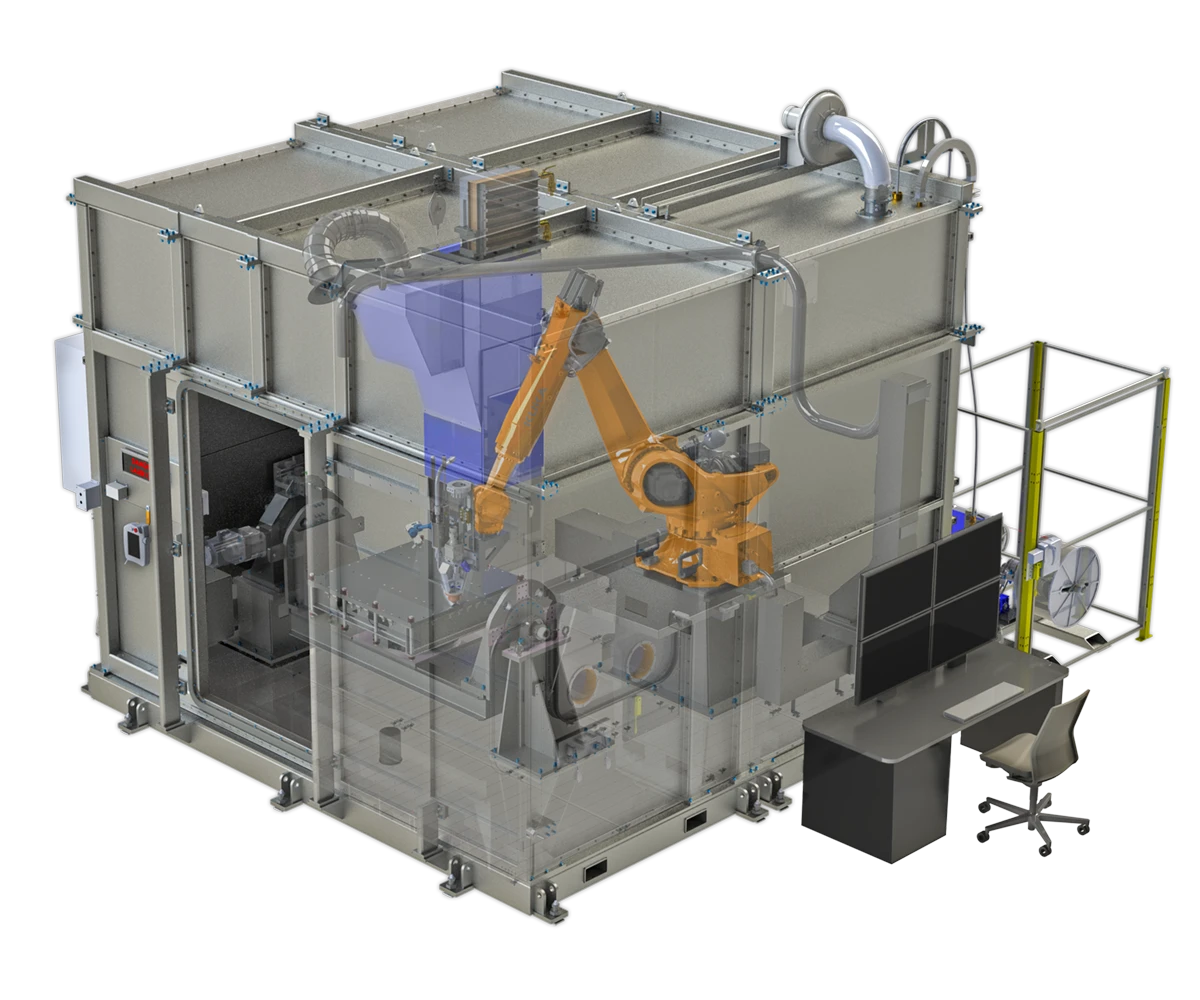
• Integrated dust collection
• Chip collection tray
Stacking Gantry and Unload Station
A second gantry removes finished panels from the outfeed conveyor and stacks them onto an outgoing pallet. Once complete, the stack is removed by fork truck.
The system is controlled by an Allen Bradley CompactLogix PLC with a PanelView HMI and was engineered to comply with ANSI integrator safety requirements.
The Results
Improved Consistency and Redeployed Skilled Labor
By automating the beveling process, the manufacturer achieved:
• Consistent 45 degree bevel application on long edges
• Controlled panel alignment prior to machining
• Automated unstacking and restacking of metal panels
• Integrated dust and chip management
• Reduced manual handling of heavy parts
By integrating material handling, edge alignment, machining, and restacking into a single automation cell, MWES delivered a repeatable beveling solution designed to improve process control and reduce manual handling. Most importantly, the previously manual beveling operation no longer required dedicated labor. The workforce assigned to this repetitive task was redeployed to higher value fabrication activities, improving overall plant productivity without increasing headcount.