The Challenge
Manual Cutlery Handling Was Slow, Repetitive, and Prone to Error
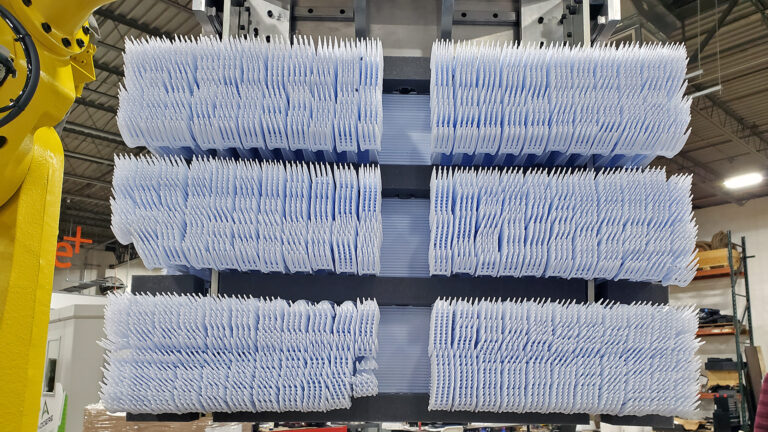
After injection molding, forks and spoons were nested in dunnage with spacer bars and sprues that required separation and stacking. The existing manual process created several operational constraints:
- Labor intensive removal of parts from dunnage
- Manual break off of utensils from molded runners
- Inconsistent stack counts
- Risk of missing utensils in finished cases
- Repetitive motion tasks that increased operator fatigue
The customer required a high speed automation system capable of maintaining precise 30 piece stack quantities, forming 600 count cases, and sustaining aggressive production targets without sacrificing quality.
MWES was selected to deliver a scalable robotic solution capable of handling large volumes with zero drops and precise stacking at line speeds.
The Solution
Vision-Guided Robotic Packaging with Integrated Stack Verification
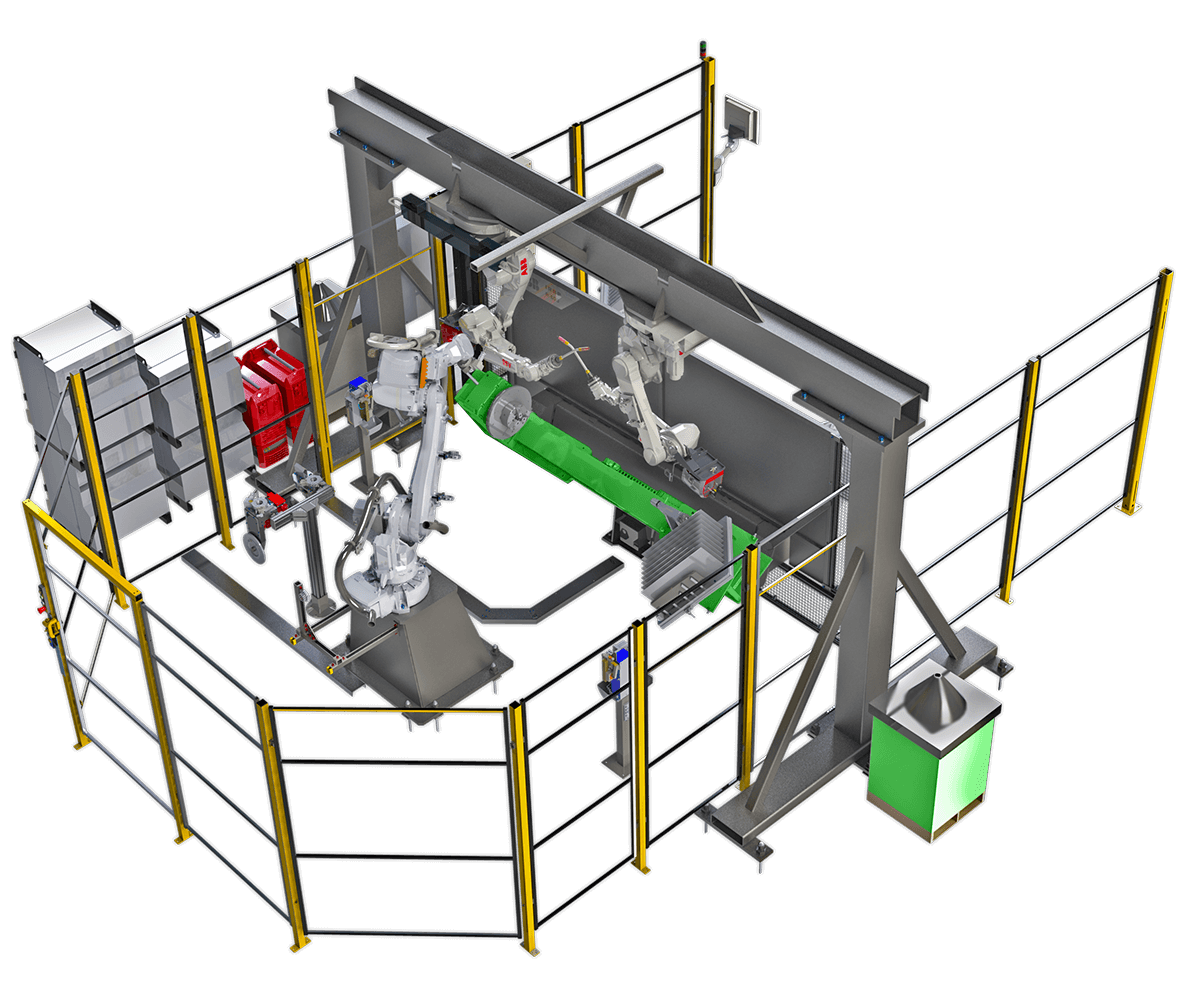
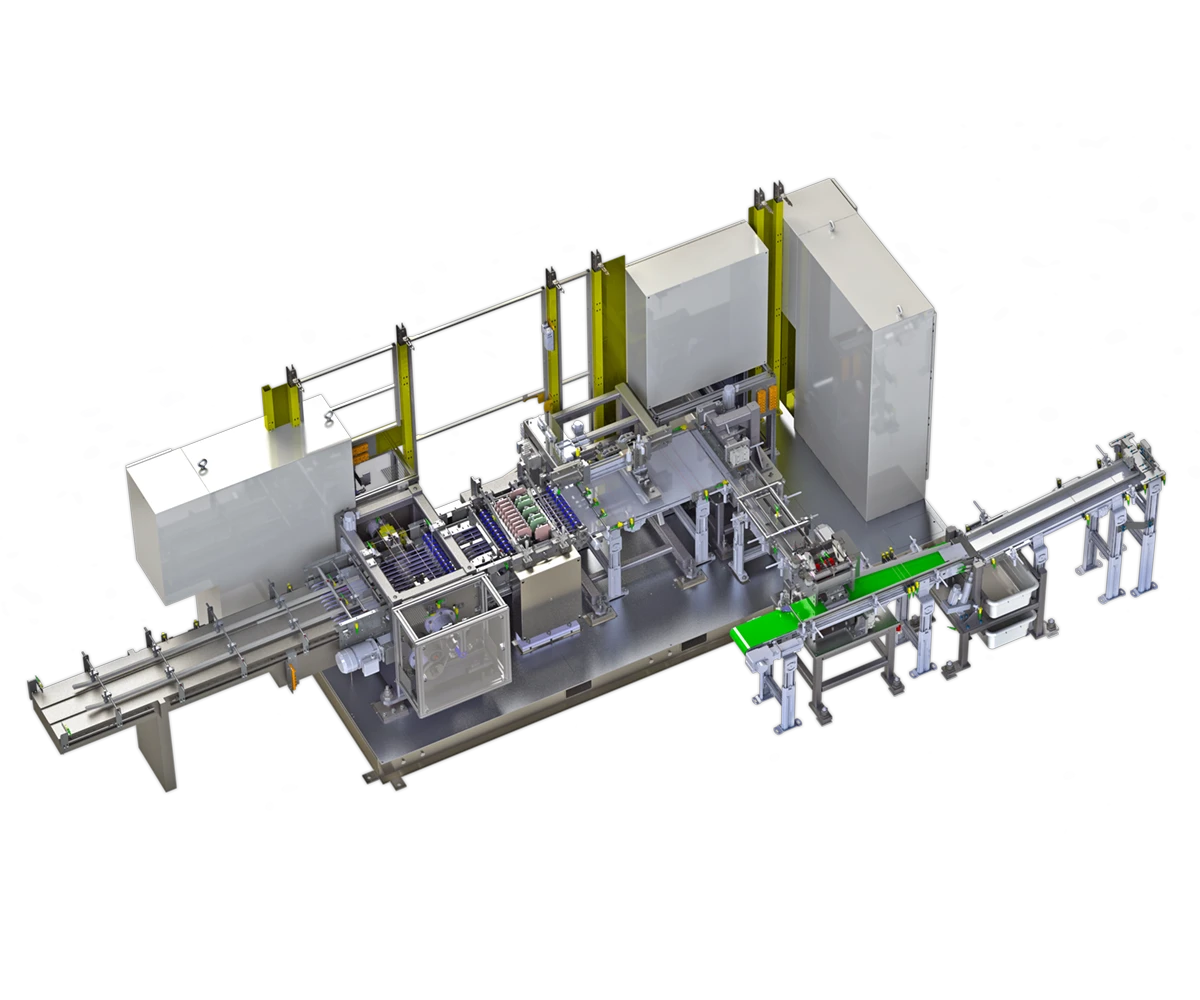
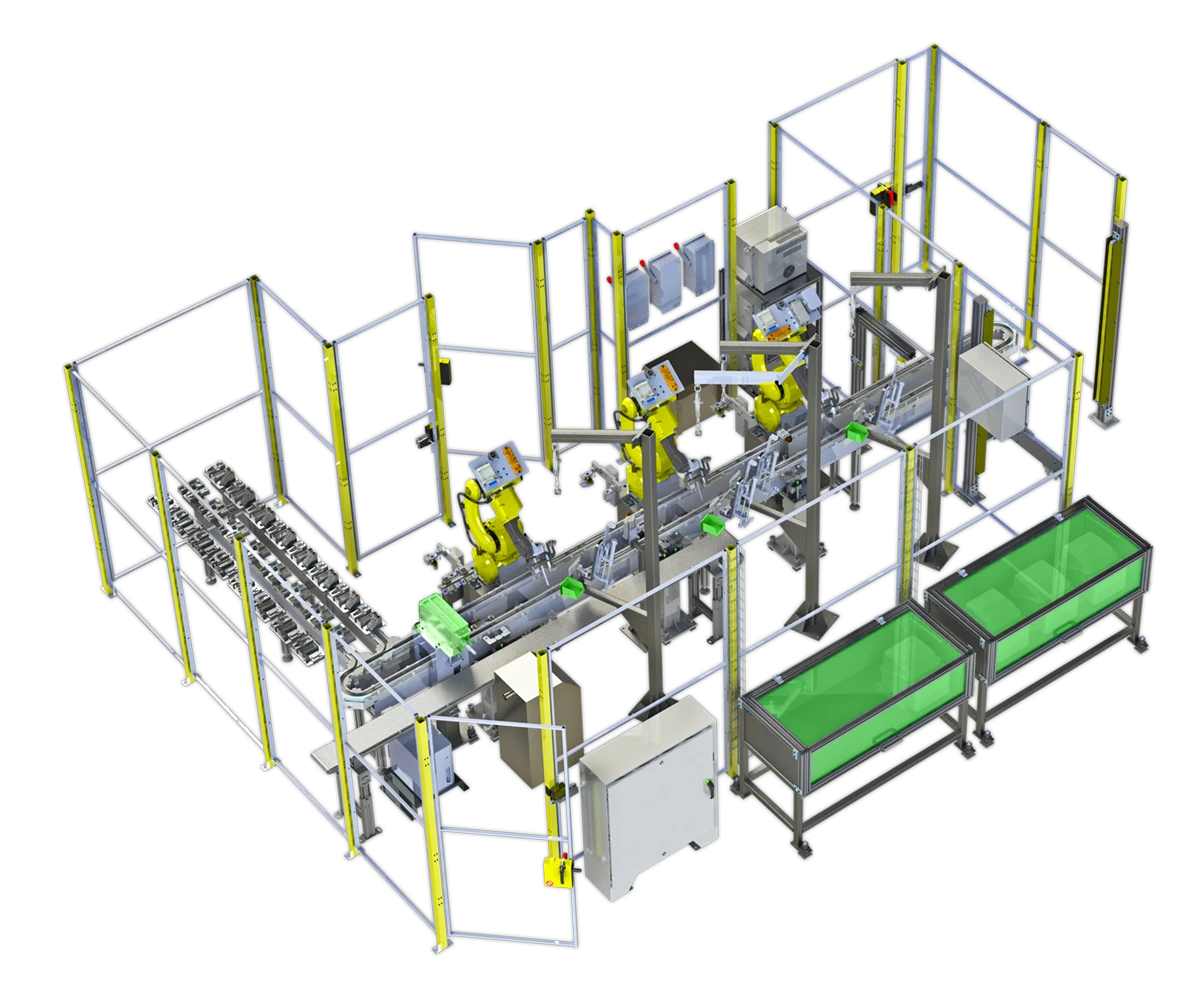
MWES engineered a multi stage automated packaging system designed for continuous operation from dunnage unload through sealed case outfeed.
The system includes:
Automated Dunnage Unload
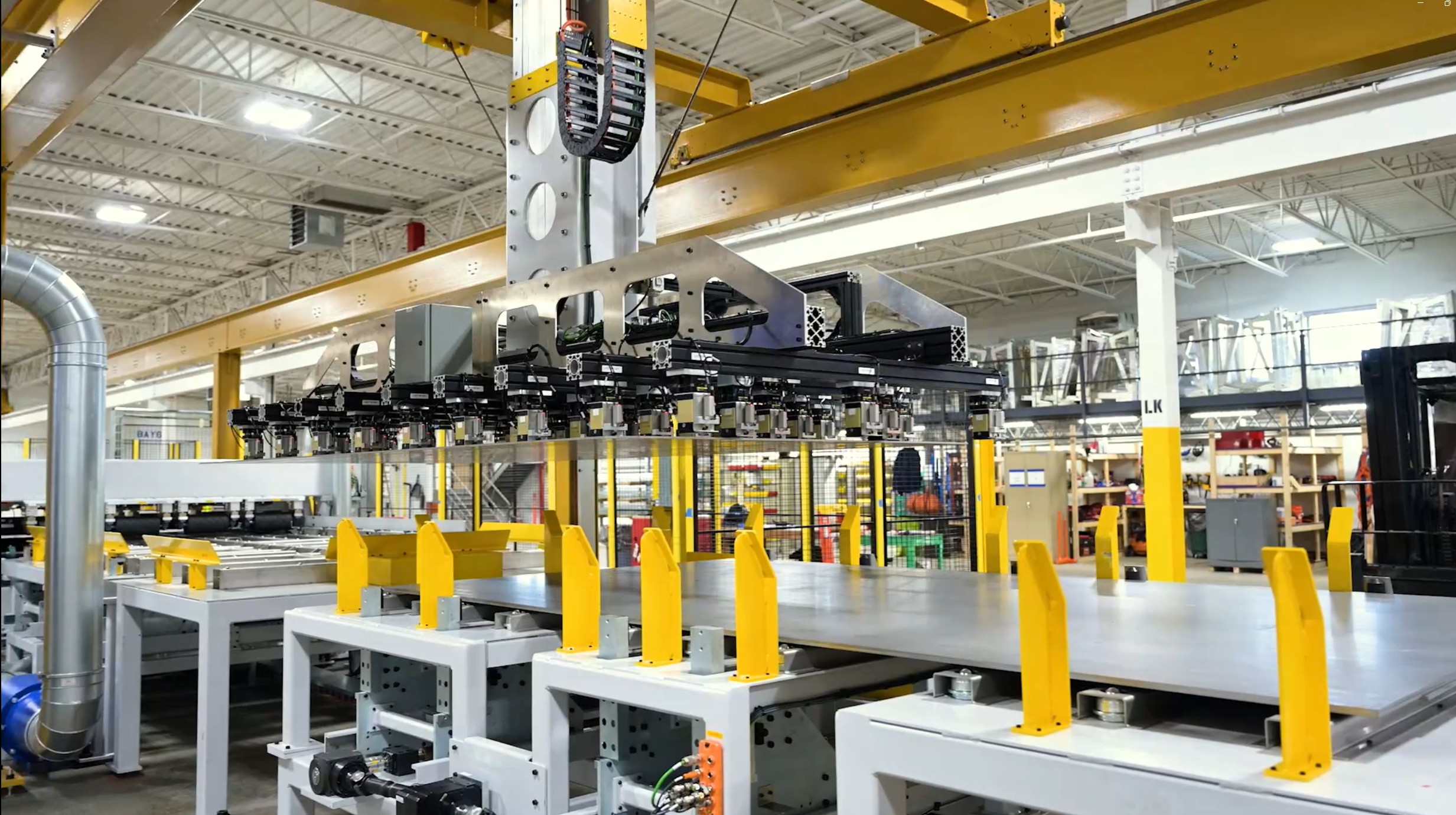
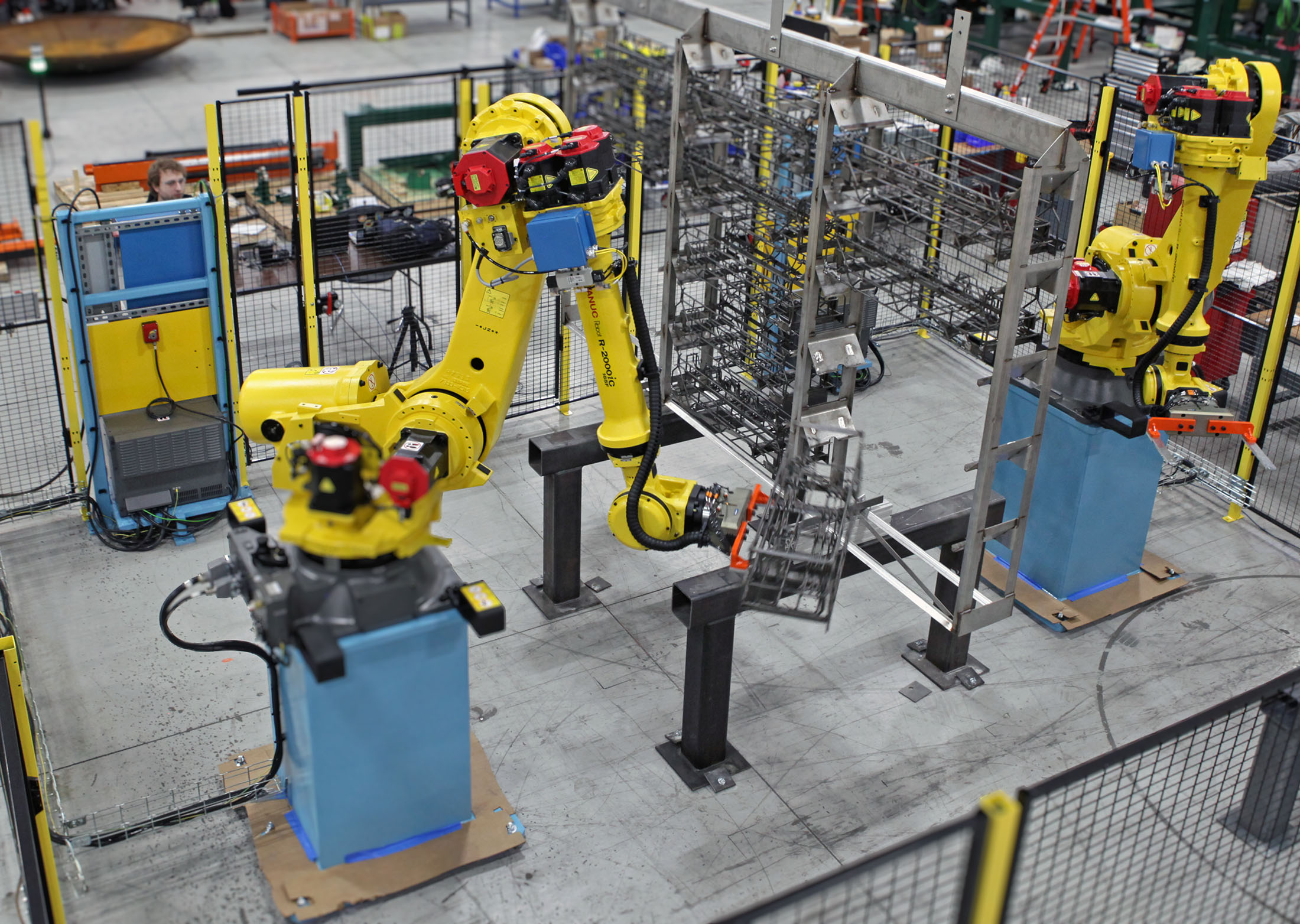
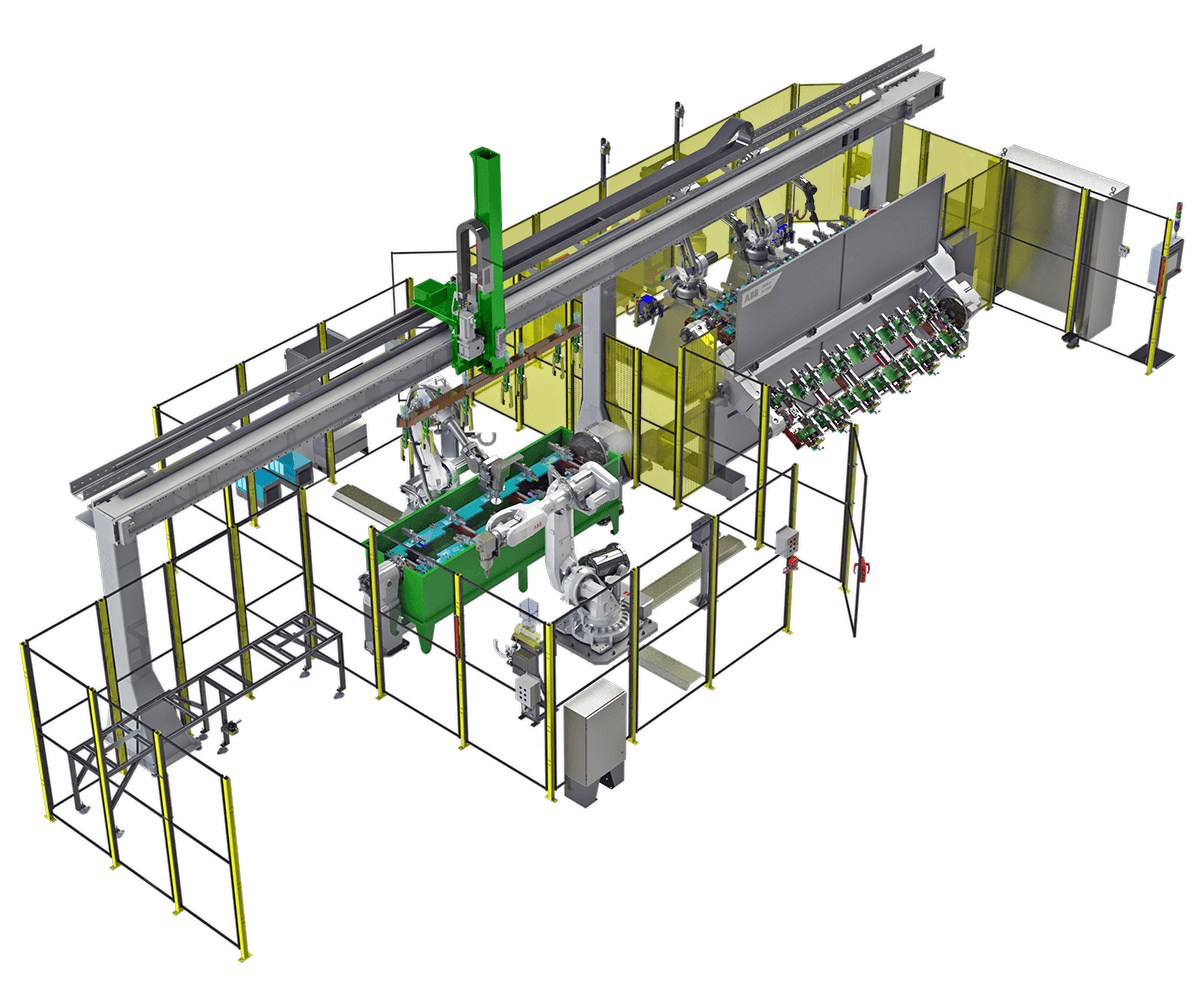
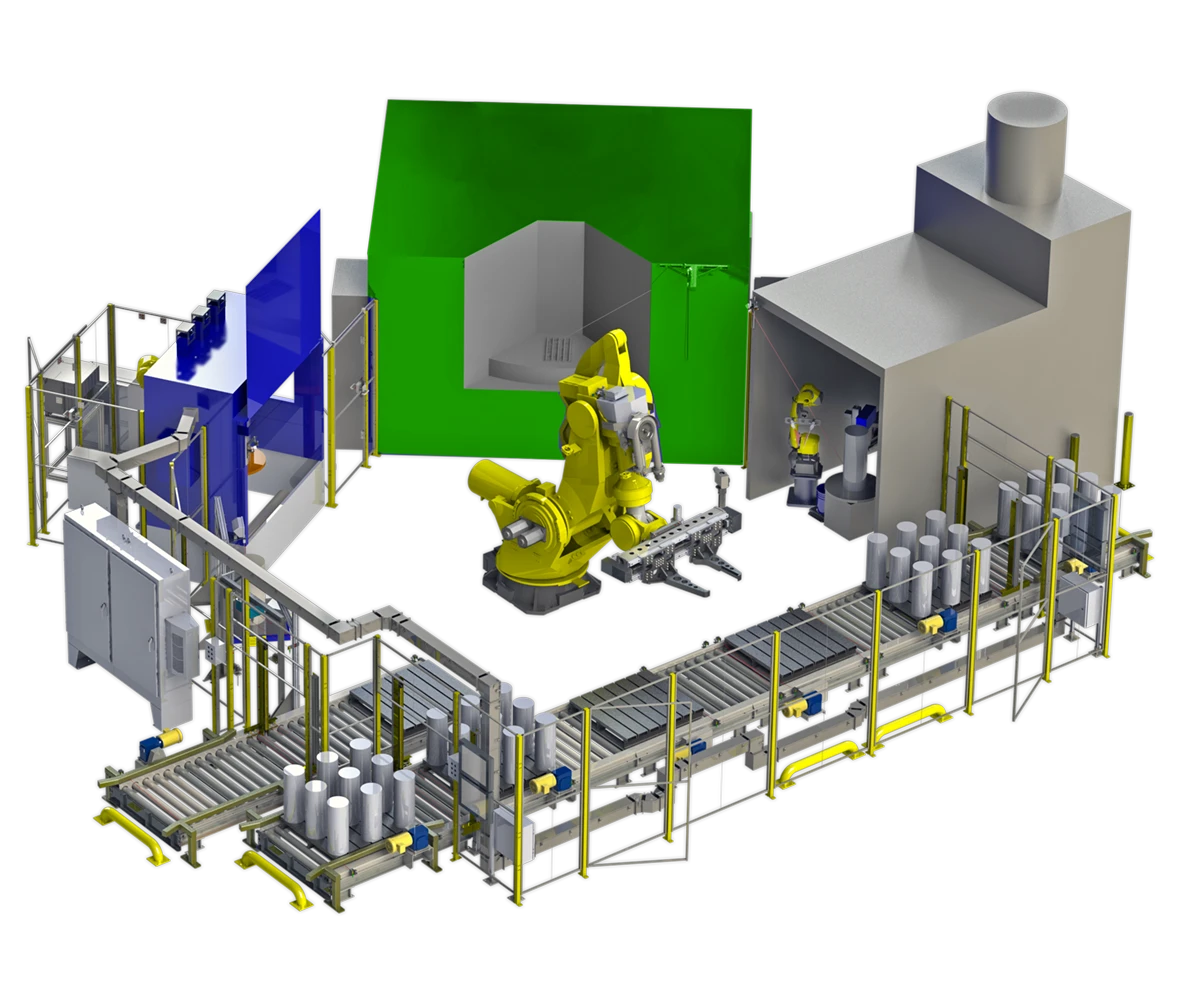
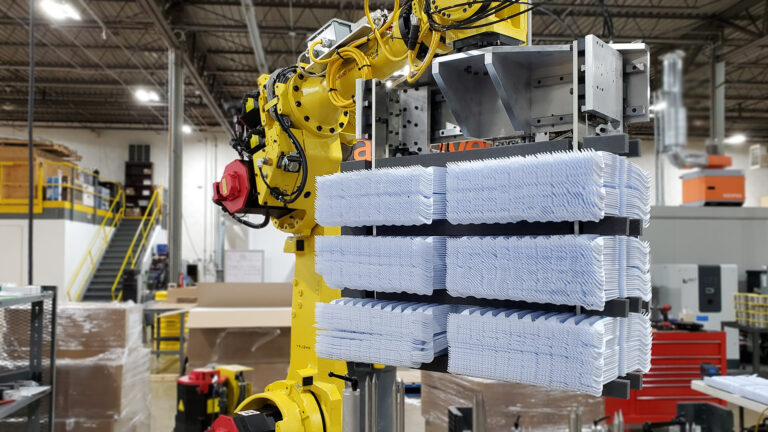
A Fanuc robot removes molded cutlery rows from dunnage containers positioned on a chain driven live roller conveyor. Spacer bars and scrap sprues are separated and directed to a grinding system for material recovery.
Robotic Break Off and Stack Formation
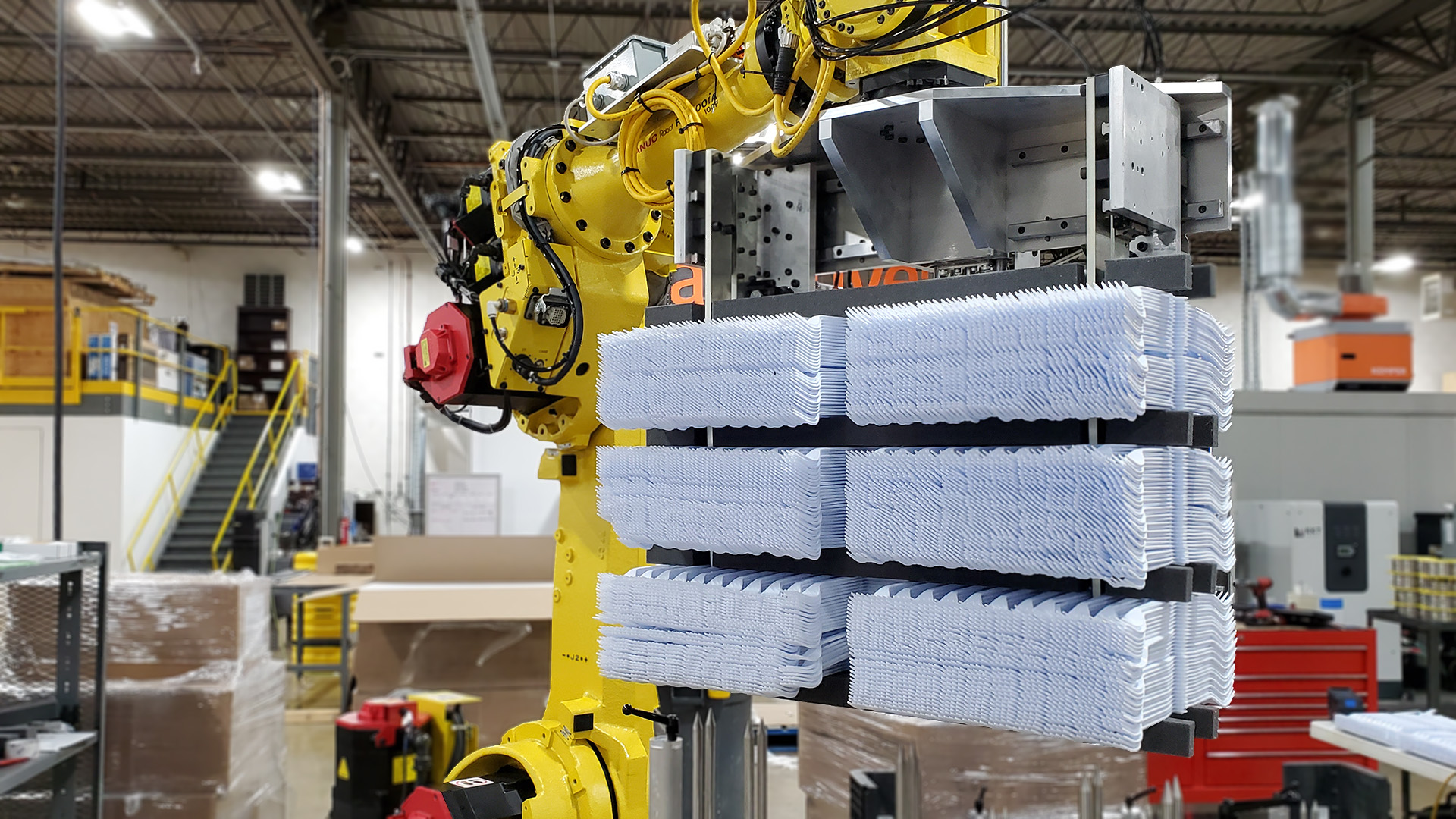
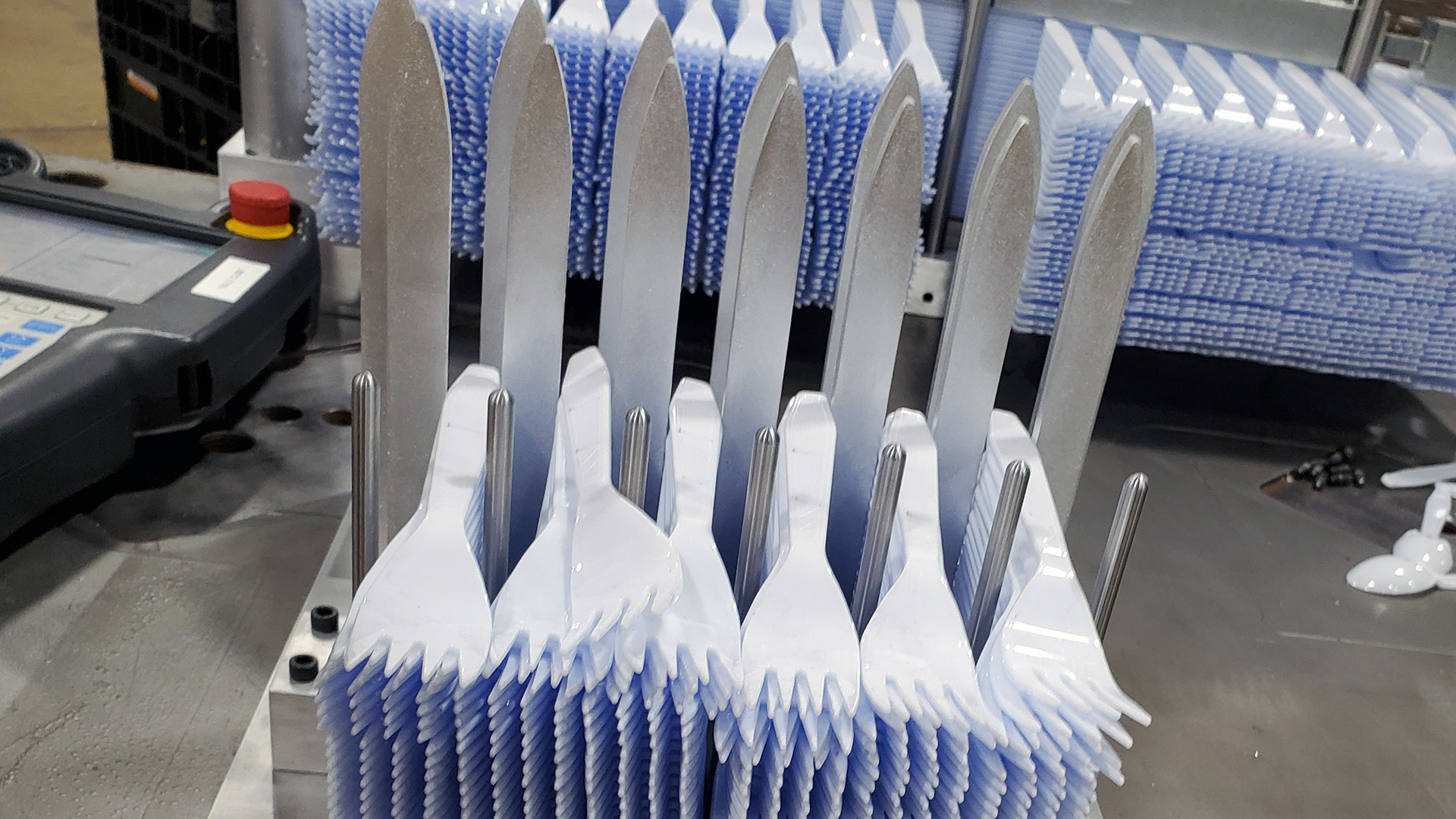
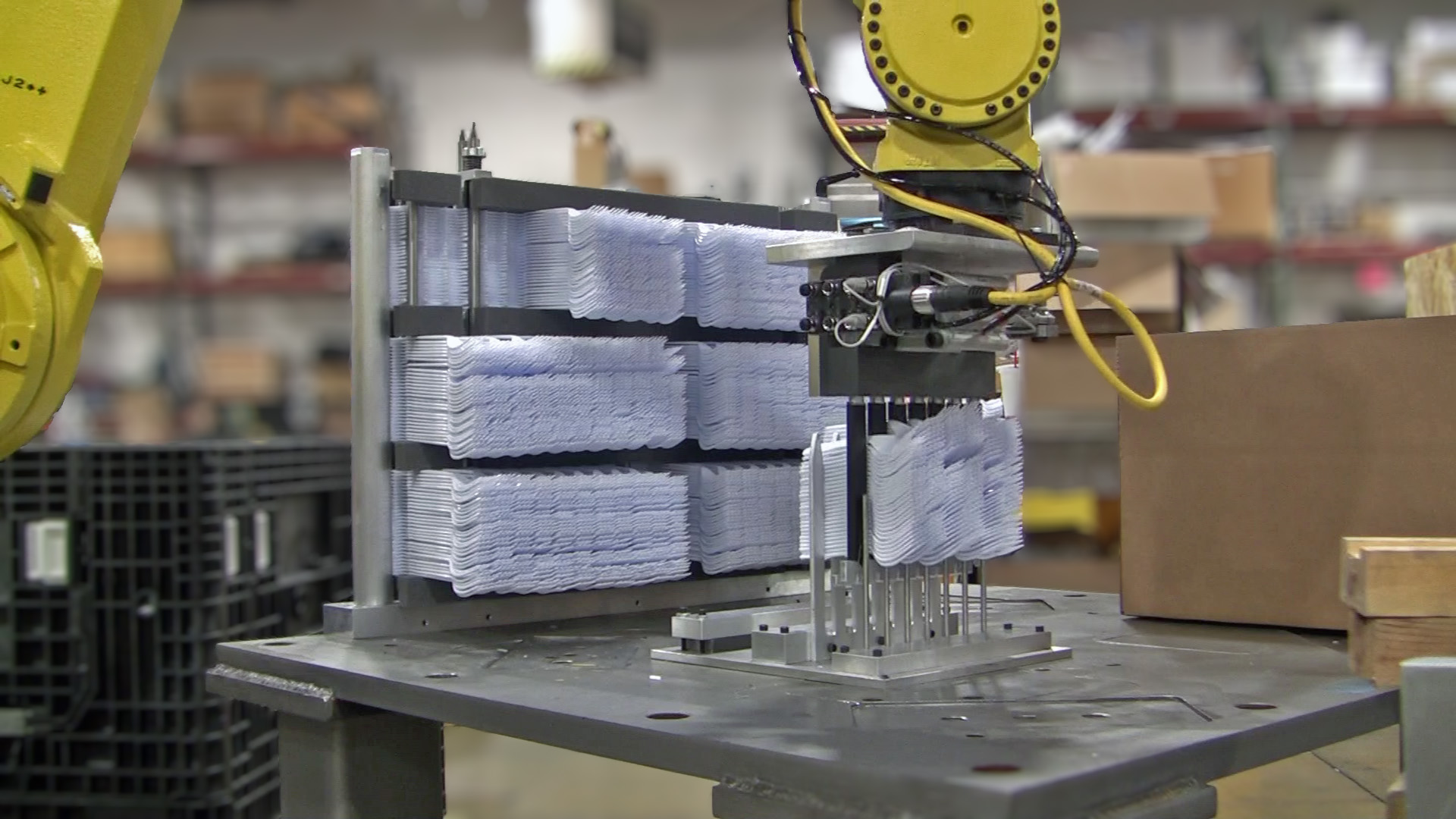
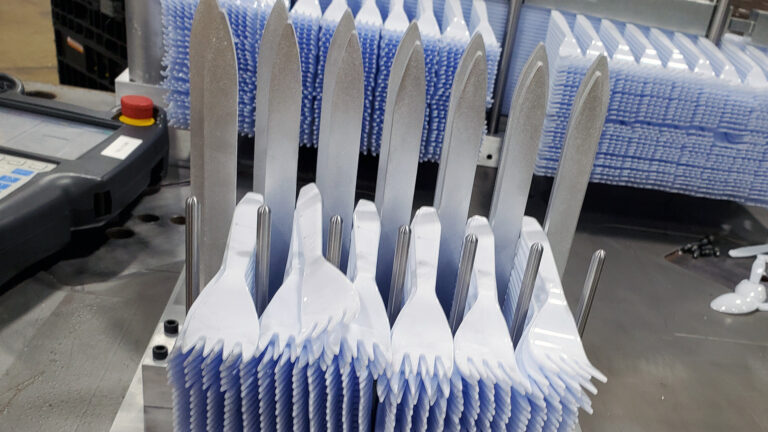
A second robotic system breaks forks or spoons from the runner in multi row groupings.
• Fork tooling: 11 rows at a time
• Spoon tooling: 10 rows at a time
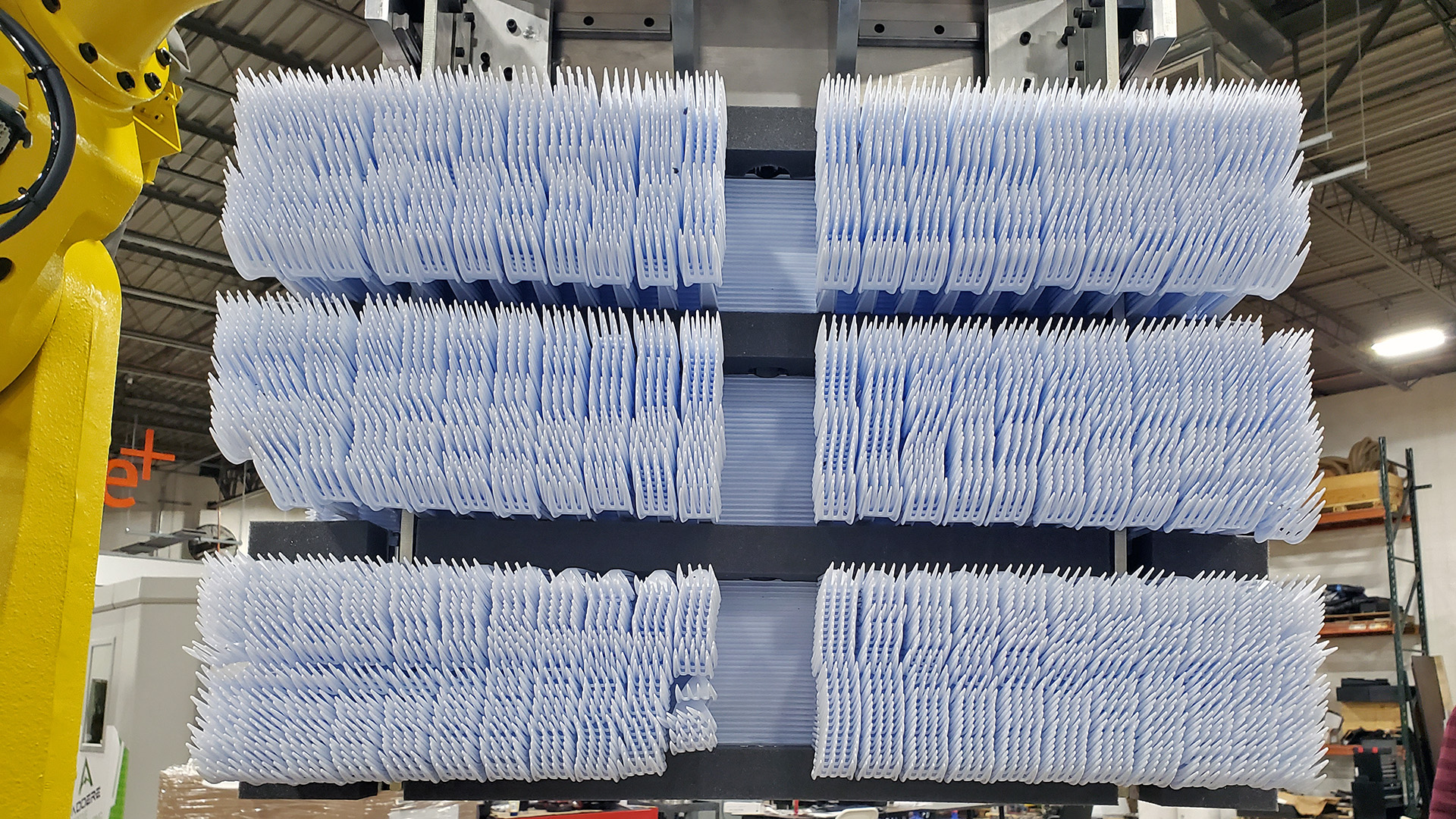
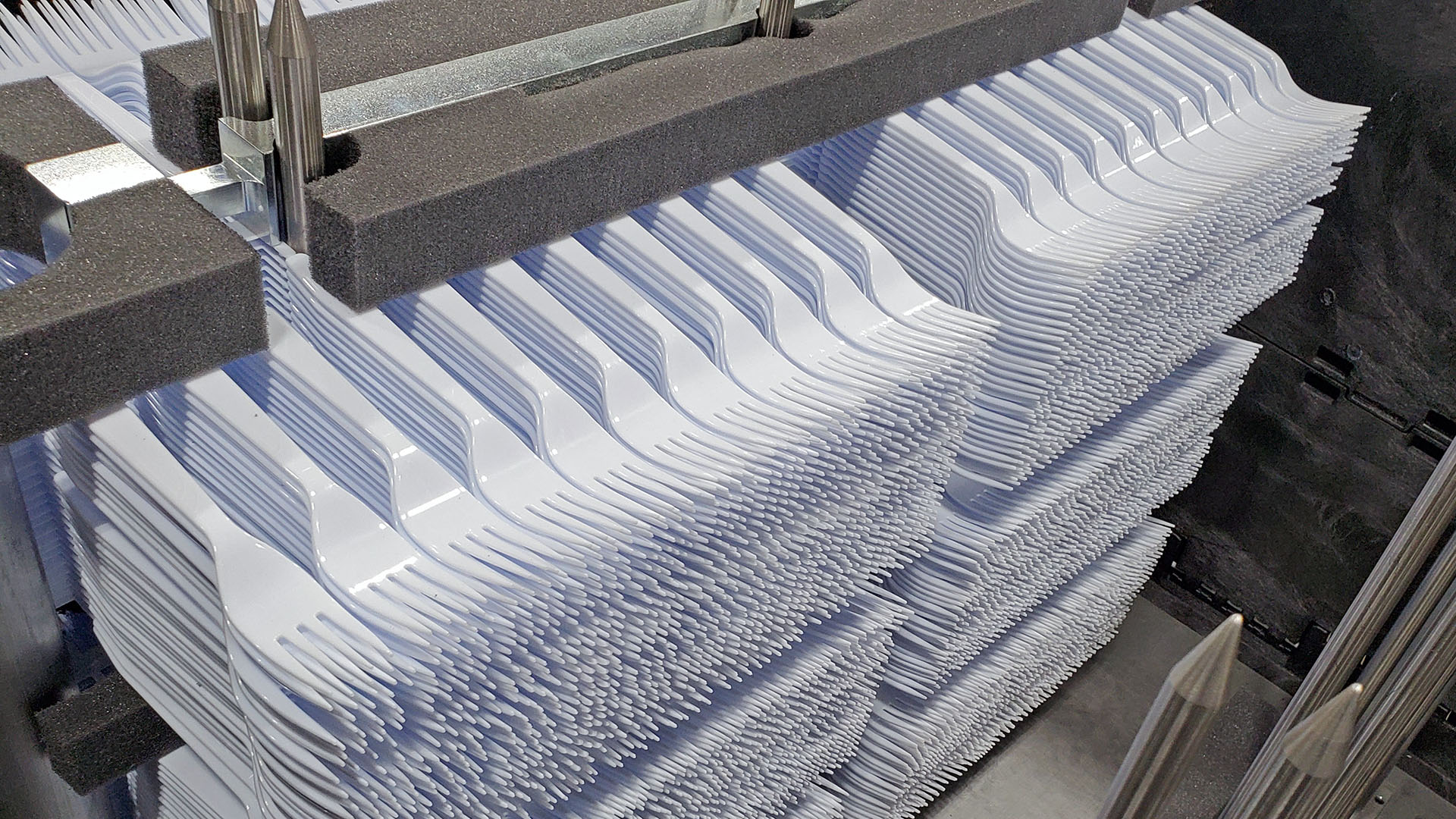
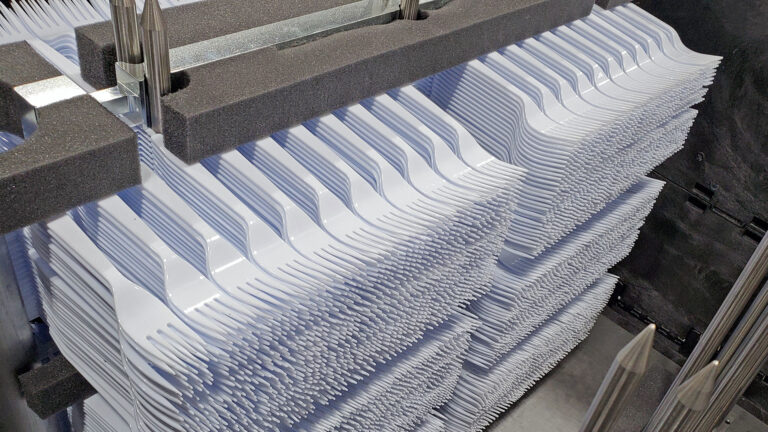
Each row is stacked into precise quantities of 30 utensils.
Carrier Based Transfer System
Stacks are placed onto pallet style carriers that move through the system for verification and case pattern arrangement.
Stack Height Verification and Correction
Two fill and leveling stations use laser measurement technology to verify stack height. If a row is short, a robot automatically retrieves parts from an overflow lane and corrects the stack to ensure exact counts before case packing.
Box Pattern Arrangement and Case Packing
Two carriers each holding ten rows of thirty utensils are combined into a 600 count pattern.
The system erects the case, loads the pattern, seals the carton, and transfers it out of the cell for operator removal.
The entire system is controlled by an Allen Bradley CompactLogix PLC with integrated HMI and full safety guarding designed to meet ANSI and ISO robotic safety standards
The Results
800 Pieces Per Minute—Fully Automated, High-Accuracy Packaging
The MWES system delivered immediate benefits:
- Achieved up to 800 parts per minute packaging speed
- Eliminated repetitive manual handling and improved ergonomics
- Improved quality through consistent stacking and laser verification
- Reduced labor costs and dependency on manual operators
By integrating dunnage unload, robotic break off, stack verification, and automated case packing into one cohesive system, MWES transformed a labor intensive packaging operation into a high speed, precision controlled production cell.
The system also includes an optional expansion path to increase production capacity to 1200 parts per minute, allowing the manufacturer to scale as demand grows